Costa Rica boosts the competitiveness of its mango industry with a quality-based strategy
 Add Fresh Fruit Portal to Google
by Francisco Seva Rivadulla, international agri-food journalist.
The mango industry in Costa Rica continues to advance with a strategy based on quality, innovation, and leveraging a privileged commercial window.
Andrés Medina, manager of Manga Rica, the country's main mango exporting company, assures that the sector has chosen to specialize in high-value-added fruit to compete in international markets.
The country concentrates its export season between February and April, a period in which global supply decreases after the end of the Peruvian campaign and before the start of the Mexican campaign. This positioning allows the country to access better prices in markets such as the United States and Europe, the main destinations for Costa Rican mango.
Although national production remains small compared to other large exporters, Manga Rica represents between 90 percent and 95 percent of the country's exports, with volumes oscillating between 1.2 and 1.5 million boxes annually.
Quality as the main competitive advantage of Costa Rican mangos
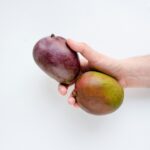
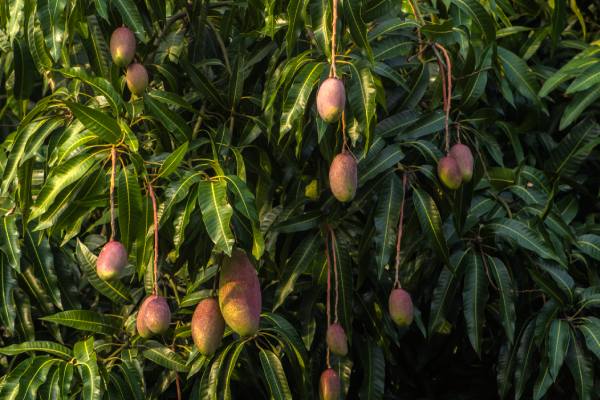
Medina recognizes that Costa Rica's high production costs force the industry to compete through product excellence rather than volume, making the Tommy Atkins and Keitt varieties the protagonists of the export offer. While the former remains the favorite of the US market, the Keitt variety is gaining prominence thanks to the growing demand from the fresh-cut mango industry.
Additionally, the company is studying the promotion of a quality seal that identifies Costa Rican mango and reinforces its international positioning.
Climate, costs, and logistics: The main challenges
Among the sector's challenges are climatic uncertainty, the appreciation of the Costa Rican currency, the increase in logistical costs, and the impact of the global geopolitical situation on maritime transport and agricultural inputs.
However, the use of technical irrigation systems allows for mitigating some of the effects of the El Niño phenomenon, and even turning certain climatic conditions into an opportunity when other producing countries reduce their supply.
One of the industry's main objectives is to improve plantation efficiency through new planting densities, more efficient pruning systems, and agronomic research that allow for reducing the productive alternation characteristic of mango cultivation.
According to Medina, Manga Rica is also working to accelerate varietal conversion, a process that traditionally requires between five and six years, but which the company hopes to reduce considerably through new management techniques.
New markets and consumption trends
Although Europe and the United States account for about 95 percent of exports, the sector is also striving to access Asian markets such as Japan, South Korea, Vietnam, or China. However, phytosanitary protocols, high logistical costs, and long transit times hinder this expansion in the short run.
On the other hand, Medina believes that the growth in mango consumption will continue to be driven by two major trends: the increase in demand for fresh-cut fruit and the growing interest in products obtained under more sustainable and, when conditions permit, organic production systems.
The forecasts for the sector are optimistic. Manga Rica estimates increasing its production by between 15 percent and 20 percent annually thanks to the improvement of its cultivation techniques and the increased productivity of its farms, whose potential exceeds two million boxes per season.
The company's goal is to continue adapting to consumer preferences, incorporating new technologies, and consolidating the image of Costa Rican mango as a high-quality product capable of competing successfully in international markets.
*All images are referential via Shutterstock.
Related stories
Colombian mango conquers the world: The challenges and opportunities of its international expansion