Climate is reshaping the European fruit production map, Rabobank says
 Add Fresh Fruit Portal to Google
With weather patterns cutting crop estimates across continents and commodities, European fruit growers may yet prove more resilient. A recent report by Rabobank’s RaboResearch notes that the changing climate is pushing growers away from traditionally productive regions, with the main challenge now being a race for adaptation.
False springs, summer heatwaves, frost, and droughts have become overlapping annual risks rather than isolated shocks, the bank states, and this new landscape is making uncertainty the biggest headache for the industry.
"Instead of threatening overall supply, it is making yields, quality, and harvest timing less predictable," the assessment says.
For growers and supply-chain companies, the report identifies operational measures, long-term orchard investments, and supply-chain diversification as three key strategies to help businesses manage increasing volatility.
European fruit yields under the weather
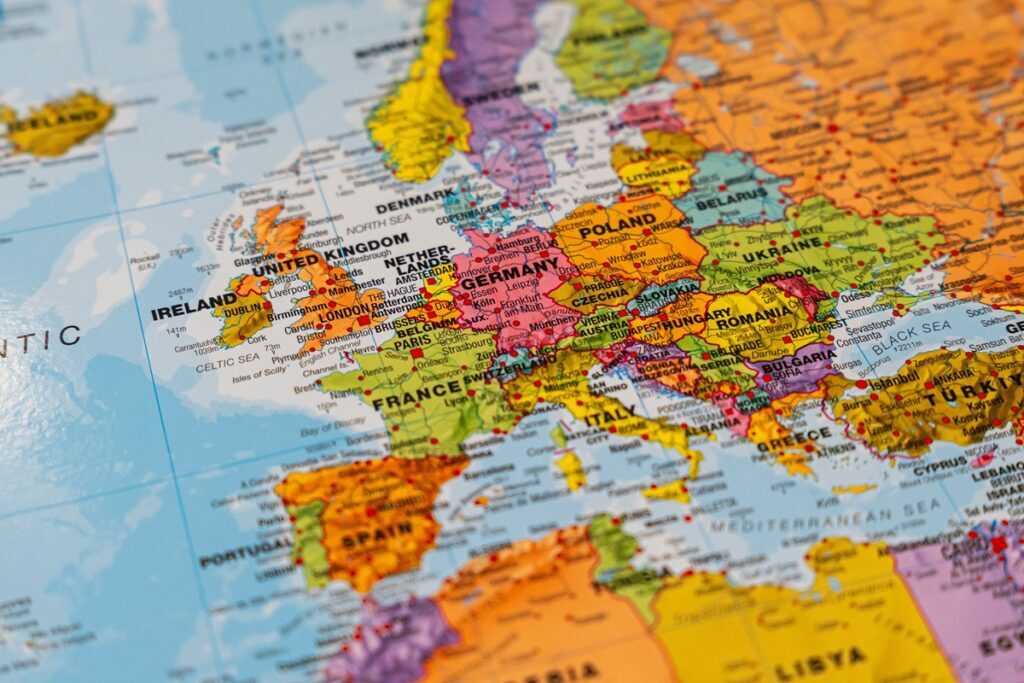
The Mediterranean, which remains central to European fruit production, currently faces some of the most significant climate risks, the bank warns.
Spain accounts for approximately 55 to 60 percent of European citrus production, while Italy accounts for 20 to 25 percent, and Greece for 10 percent, the report points out.
The category faces increasing pressure, as summer heat-stress days above 86 degrees Fahrenheit have increased by 15 to 20 days every year since the mid-1990s. Some growing areas are now experiencing 80 to 100 such days annually.

Image by Unsplash
“More frequent and persistent heat waves increase the risk of sunburn, fruit damage, and premature fruit drop,” the document warns. Consequently, Spanish citrus production averaged more than 10 percent lower between 2023 and 2025 than between 2013 and 2015.
Water availability adds another challenge. The report indicates that scarcity can result in “faster soil moisture depletion, greater dependence on irrigation, and higher exposure to combined heat and water stress during flowering and fruit development.”
Opposite phenomena can deal similarly grave damage to European fruit operations. The October 2024 floods in Valencia illustrate Mediterranean production's exposure to both ends of the water spectrum.
“Conversely, intense rainfall can waterlog soils, damage root systems, and increase disease pressure during a critical stage of the growing season," RaboResearch notes.
Pome fruit faces a different climate-related problem. Warmer winters and earlier spring temperatures have advanced flowering by 10 to 15 days in recent decades. Far from giving the season an early start, this phenomenon leaves fields more vulnerable to later weather woes.
“As a result, frost risk is becoming less a question of frequency and more one of timing. Even as the number of frost days declines in most regions, exposure during critical flowering stages remains high,” Rabobank states.
Frost across central and eastern European fruit-producing regions, including Poland, Germany, and Austria, contributed to an 11 percent decline in EU apple production in 2024, according to RaboResearch.
Pear production is also feeling the stress. Italy and Spain have experienced sharp production declines as heat and water stress increase, while cooler countries such as the Netherlands and Belgium have expanded their share of the market.
Image by Unsplash
Stone fruit growers, meanwhile, face another biological constraint: winter chill. Peaches, nectarines, cherries and plums require sufficient exposure to cool temperatures during winter dormancy to achieve normal budbreak, flowering, and fruit set.
“Mediterranean production areas consistently record the lowest chill accumulation, and recent trends suggest further reductions in several southern regions,” RaboResearch says, warning that rising heat during dormancy increases the risk of abnormal conditions that can lead to poor fruit set.
A growing divide
In contrast, central and eastern regions have seen stable or slightly increasing winter chill accumulation, making them more suitable for growing.
"Parts of eastern Europe, including Poland, Serbia, and Slovakia, are attracting investment in modern apple orchards, supported by lower labor costs and opportunities to develop protected, large-scale production systems," the assessment notes.
Climate suitability alone, however, will not determine where commercial production moves. RaboResearch says access to water, grower expertise, labor, logistics, and supply-chain infrastructure will also determine whether emerging production regions can compete at scale.
Against this backdrop, financing will most likely emerge as the main barrier to climate adaptation for European fruit growers, according to Rabobank. As a result, the business case is generally stronger for high-value, well-branded, or export-oriented fruit than for lower-margin commodity varieties.
“This could widen the gap between well-capitalized growers and smaller or older farms that are less willing or able to invest," the report cautions.
*Main image by daily_creativity | Shutterstock; other images via Unsplash.
Related stories
European apple production down 16 percent, WAPA says
From European orchards to Colombia: The 6,200-mile journey of an apple