Pollination woes are reducing blueberry volumes, yields, and profits in British Columbia
 Add Fresh Fruit Portal to Google
It’s not a good season for British Columbia blueberries.
During the current campaign, the industry is coping with a one-two upper cut from Mother Nature, resulting in decreasing volumes and raising costs that are jeopardizing sector competitiveness in international markets.
A short winter that cut plant hibernation short was then followed by unfruitful pollination efforts resulting from a whopping honeybee supply gap in Canada. The latter has considerably increased production costs for farmers in the past year.
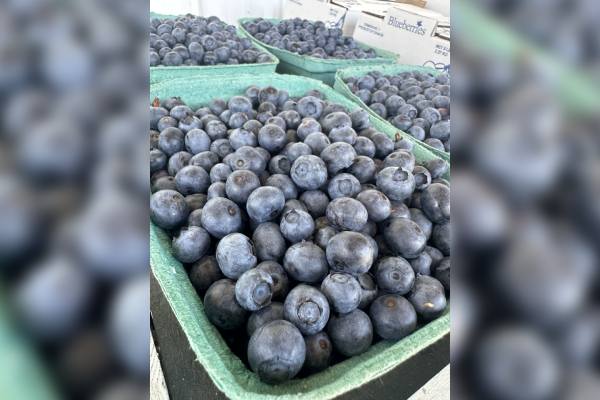
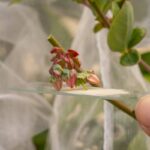
Image courtesy of BC Blueberry Council
To make matters worse, operations that were able to pony up to meet industry pollination standards also experienced low fertilization levels, resulting in reduced average berry size and lower yields.
According to Sudeshna Nambiar, Executive Director of the British Columbia Blueberry Council (BCBC), the situation hasn’t affected all growers equally, which should offer some reprieve. However, production conditions have been chaotic enough that the industry body is having a hard time coming up with a projection for the current season.
“[Farmers] are not doing anything wrong. They don't have any other way,” she told FreshFruitPortal.com. “This is all over the place.”
The warmest winter in 43 years
For blueberry plants, a proper winter season is essential, as it guarantees an adequate hibernation period. On the contrary, a shorter time spent in low temperatures might not affect foliage production, but it could hinder flowering and fruiting.
“Winter was short,” Nambiar explained about this year. “That means our plants are not getting proper hibernation.”
As an example, Vancouver registered the first snow-less winter since 1982, with average temperatures more than 1.5 degrees Celsius above that of a normal year. And there might be more coming.
"This doesn't really surprise me in terms of the effect that we know that climate change is having on warming temperatures," University of British Columbia Assistant Professor in atmospheric sciences Rachel White told local news outlet Sudbury.com.
Fewer bees, bad pollination
British Columbia growers are also suffering from a bout of poor pollination, a critical problem considering blueberries are highly dependent on honeybees. Unfortunately, for the Canadian industry, the problem is twofold.
On one hand, there’s a dramatic honeybee shortage that, according to Nambiar, is above 100 percent. Following industry guidelines, each of the 33,000 planted acres of blueberries in BC needs two hives for proper pollination, bringing demand to a grand total of 66,000 hives.
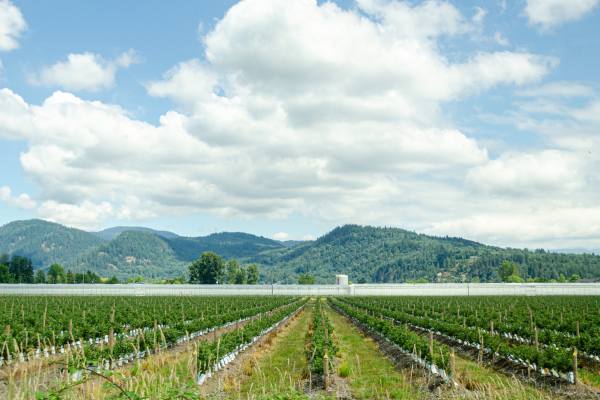
“But if we go back and ask, ‘Hey, how many commercial honeybees are available for blueberry farmers for pollination purposes?’ That comes between 25,000 and 30,000 hives,” she explained.
The situation is compounded by the fact that Canada has banned honeybee imports from the United States, which would greatly help bridge the supply gap. As a result, pollination costs have gone up considerably, with hive rental costing around CA$400 per acre, which, according to Nambiar, is double what American growers pay.
High prices have reduced the ability of BC growers to properly equip their fields and ensure high yields and good volume. Unfortunately, the industry’s problem is not only a subpar honeybee count, but also inefficient pollination. To that effect, the head of the blueberry industry says some producers have gone the extra mile and invested large amounts of money in beehives for their crops with no proportional results.
The bad pollination is mostly affecting the Duke variety, which represents a little over 45 percent of the total BC crop. However, the impact is not uniform, the executive said, and declines can range from 20 percent to 60 percent.
“In different areas, the effect is different. So some are 25 percent down, some are only 10 percent down, some are 70 percent,” she explained. “There’s crop variation, and that's what’s making the production estimate very difficult because it is not a normal year.”
According to Nambiar, the industry’s early numbers point to a projection that could be anywhere between 130 million pounds and 150 million pounds. In the best-case scenario, the estimate would sit 15 percent below last season’s 176 million pounds; in the worst, the campaign could reflect a drop of up to 26 percent.
When it comes to finding the culprit of the industry’s pollination woes, the executive is cautious and explains that, at the moment, there are only theories.
“We don't know the science behind it. So it's very important that we consult science and research before we comment on that,” she said.
She mentioned that her organization is actively working with government authorities and local research institutions to figure out the pollination problem and come up with a solution.
The link between honeybees and blueberry market share
In the meantime, the situation is also threatening the competitiveness of BC blueberries on the global stage.
Smaller berry sizes and raising production costs mean less access to more profitable and demanding markets, pushing local growers to mitigate risk by selling their crop across the border.
The United States currently absorbs the grand majority of BC blueberries, and as that share grows, market diversification seems to fade in the rearview mirror. Nambiar said there’s a level of uneasiness to the number, as shifting market conditions in the US could result in a very difficult time for Canadian growers.
Despite the headwinds, the BCBC leader is hopeful. She says that even though there’s sadness among growers, there’s resilience and faith in better things to come.
“I have full trust in the industry because we went through many other things in the past, and this is not going to be the most devastating one. We are farmers, and we will get back up, and we will persevere,” she concluded.
*All images are referential via Shutterstock unless stated otherwise.
Related stories
Pacific Northwest blueberry volumes rise across key growing regions
The blueberry global market boom: consumption, production, and leading markets