Opinion | Genetics, scale, and strategy: The three decades shifting Mexican blueberries
 Add Fresh Fruit Portal to Google
 Por Miguel Ángel Curiel, Aneberries President, and Driscoll’s Vice President of Operations and General Director for Mexico.
As we finish the 2025-2026 Mexico Blueberry Season in June with around 81,600 tons exported, we see clear signs that the Mexican Blueberry industry is recovering in hectares, volume, and, most importantly, high-quality fruit for the winter/spring market in North America.
After reaching peak export volumes in the 2021-2022 Season, a little over 99,000 tons, the Mexican Blueberry Industry dropped to a low of 68,000 tons in the 2023-2024 campaign. A more competitive market, with Peru coming into the picture in the fall and winter, higher production costs, and a more demanding consumer, forced the Mexican blueberry industry to reinvent itself.
Taking a historical perspective on the Mexican Blueberry industry, we can say that, even though there were some trials happening in the late 90s, the industry started with serious blueberry plantings in Central Mexico in the early 2000s when entrepreneurs and industry pioneers trialed plantings in the central west coast states of Michoacan, Jalisco, and Colima.
In these early days, most of the plantings were made with Biloxi, which, at the time, naturally produced peak volumes in the spring, with some trials in regions with cooler weather showing production potential in the fall.
In 2007, an important project in the state of Jalisco planted a little over 7,400 acres in the region in what is now called the “blueberry boom” in Central Mexico. This project was a coordination between the government, marketing, and plant propagation companies. By 2010, there were around 12,350 acres planted, with 90 percent of the area in Central Mexico accounting for Biloxi.
Between 2010 and 2020, the industry went through a significant growth supported by the introduction of new genetics that offered improved yields, improved size, and, most importantly, improved flavor. The industry peaked at 37,000 acres by 2020. During this decade, the most important berry companies in North America had an interest in Mexico through direct investments or key partnerships with local growers.
The latest evolution of the Mexican blueberry industry
During the last five to six years, and having the 2020 COVID pandemic as a reference point, the Mexican Blueberry industry is going through its third genetic evolution.
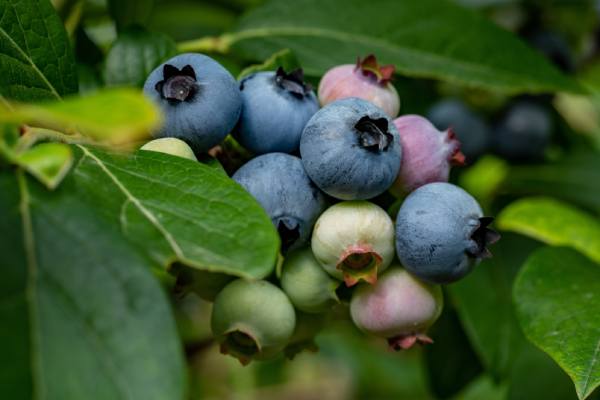
Genetic companies in the industry are bringing the best varietals available, suited to Mexico's agroclimatic conditions. Significant improvements in yields, kilos per plant, are helping counter the cost pressures the industry is going through with a tighter labor market and an unfavorable exchange rate. Increased fruit sizes have been well received by consumers, but also by collaborators picking the fruit, as higher calibers are easier to pick and pack. The most important advancement we have seen during this third genetic evolution is the improved flavor of Mexican blueberries.
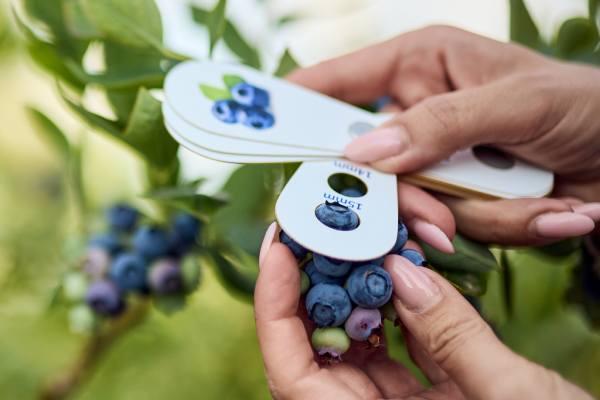
During these three decades, we have seen a path toward a consolidated blueberry industry in Mexico where larger, scalable operations will be better suited to serve the market. As consumers become more demanding on flavor, quality, condition, and appearance, product consistency is becoming a right-to-play. The Mexican blueberry industry, which has traditionally hand-packed most of its production, will be pressured by customers and economic factors to move toward packing lines that deliver a more consistent product.
Of the four berries that are commercially produced in Mexico, only blueberries compete in a truly global market. Because of its short shelf life, the rest of the category (strawberries, raspberries, and blackberries) is mainly marketed within North America (Mexico, the US, and Canada).
Traditionally, blueberry exports from Mexico have been focused on the US and Canada. Lately, however, the Mexican domestic market has become appealing for blueberries. Even though exports to countries outside the North American region are few (Japan, Europe, and the Middle East), there is an opportunity for the Mexican blueberry industry to play a global role in the supply of the berry during the spring season, when Mexican production naturally peaks. The industry is working with governments to open new markets for Mexican blueberries.
As we are prepared to start the 2026-2027 Mexico blueberry season with nearly 25,000 new acres coming into production, a consolidated industry with strong players, strong genetic pools, higher yields, and higher quality, the Mexican blueberry industry seems to be on the right path to become a consistent and reliable supplier to the North American and global market during the spring, offering a high-quality product that will fulfill consumer demand.
This editorial was originally published on the International Blueberry Organization's website on July 8, 2026.
*Miguel Ángel Curiel's portrait courtesy of the IBO; all other images are referential.
Related stories
Blueberries and raspberries drive Mexico’s berry production expansion
Keys behind the Mexican blueberry spot market spike
Mexican berries secure dominance with projected 4 percent production rise in 2026