Australian pineapple growers raise the alarm over potential Indian and Indonesian imports
 Add Fresh Fruit Portal to Google
Growers in Australia are citing high biosecurity risks to stop the government’s proposal to grant market access to decrowned pineapple imports from India and Indonesia. The sector says the phytosanitary measures recommended by the authorities might be insufficient to keep local production safe.
"We realize fair trade has to happen, but the issue we have is that they have identified numerous pests they have over there, and we no longer have the chemicals available to us in Australia to deal with those pests," Pineapple Growers Association Australia chair Scott Maxwell said.
In July, the Australian Department of Agriculture, Forestry, and Fisheries (DAFF) released a draft report recommending the foreign fruit be allowed into the country subject to one of two methods. The first option is methyl bromide fumigation or irradiation, which the DAFF considered “effective against all life stages of hard scales, mealybugs and thrips.” Likewise, the government agency recommended a systems approach approved by the department, which it also considered effective in battling the identified pest risks.
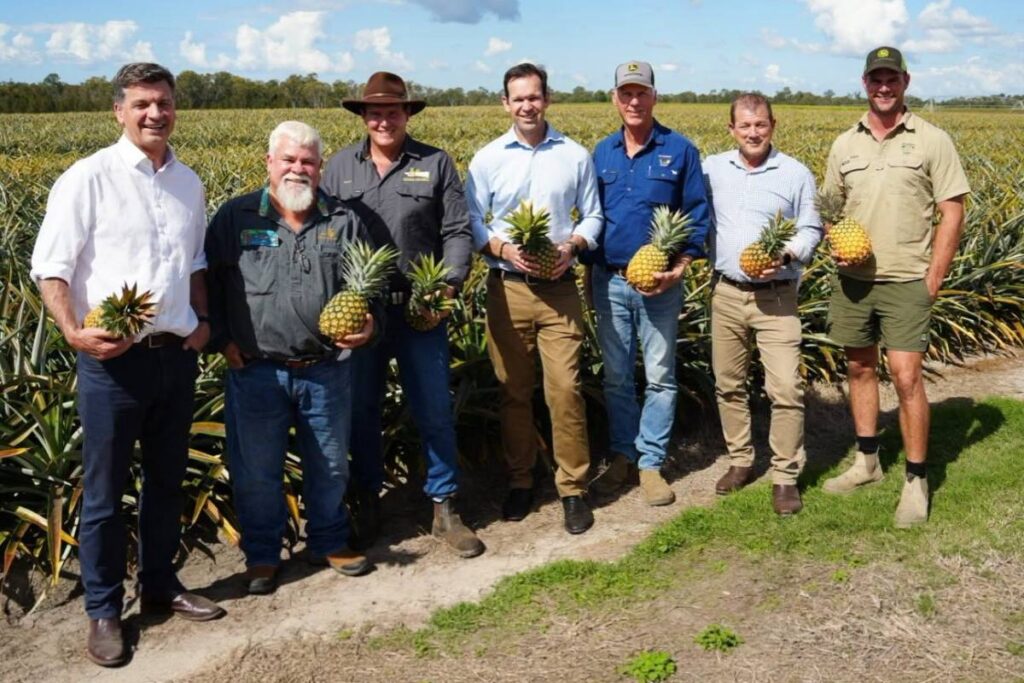
Courtesy of Matt Canavan via Facebook.
These measures, however, are not enough, local growers say.
"Biosecurity isn't something you get a second chance at," Queensland Fruit and Vegetable Growers (QFVG) chief executive Scott Kompo-Harms told local news outlet Good Fruits & Vegetables. “Once an exotic pest is here, growers are left to deal with the consequences.”
Drawbacks of broader market access for pineapples
According to the news site, Australia’s pineapple production is concentrated in the state of Queensland, which harvests around 47,000 metric tons of fruit annually for a value of AUD $80 million ($56.3 million). Of that, virtually all of the fruit is sold domestically.
The country has allowed market access to countries such as the Philippines, the Solomon Islands, Sri Lanka, Taiwan, and Thailand. However, their market share remains low in comparison to local production, with only 18 metric tons imported in 2025 in total.
This landscape unveils a delicate balance for Australian growers, who might see their market share dramatically disrupted by lower-priced imports from India and Indonesia.
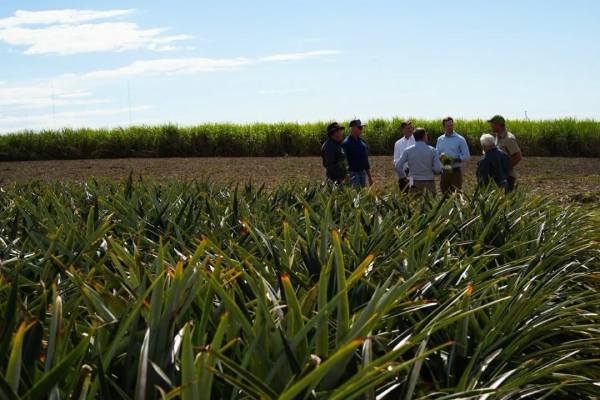
Courtesy of Matt Canavan via Facebook.
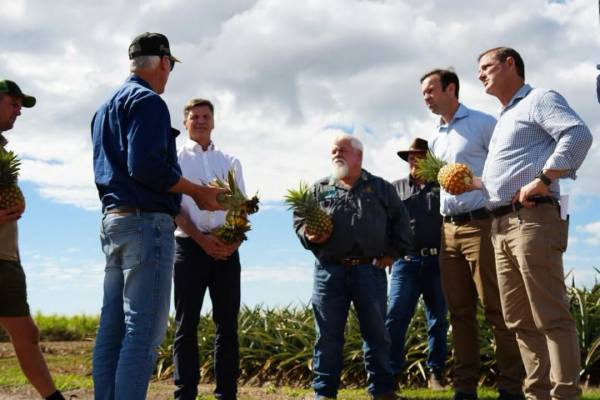
During a field visit to pineapple farmers in Hervey Bay, Matt Canavan, a Queensland senator for the conservative Nationals party, emphasized that Australian pineapple exports are minimal, with the country shipping only about eight tonnes of fresh or dried fruit in 2024.
"Growers have told me they have no meaningful alternative market if additional imports displace Australian fruit or reduce domestic prices," Canavan said. "Even modest import volumes could have a commercial effect if they arrive during peak Queensland production, particularly when growers are already facing rising input, labor and freight costs."
The government is currently accepting public comments on the provisional document until September 14. The final report is expected to be published in the second half of 2027.
*All images courtesy of Matt Canavan via Facebook.
Related stories
Exotic, sweet, and year-round: Fruit trends driving US specialty produce sales
From dessert to daily treat: Key reasons why pineapples are now a top fruit choice
Newly developed varieties bring hope for the Australian purple passion fruit sector