New Brazilian pear scores higher yields, longer shelf life, and improved pest resilience
 Add Fresh Fruit Portal to Google
A newly introduced pear variety could give Brazilian growers a more resilient and plentiful harvest.
BRS Áurea, the first pear cultivar developed by the Brazilian Agricultural Research Corporation (Embrapa)’s Grape & Wine breeding program, is producing yields ranging from 11.2 to 13.4 tons per acre in trials across southern Brazil.
The variety resulted from a 2006 cross between Asian pear Hosui and European Abate Fetel. It has already been registered with Brazil’s Ministry of Agriculture and Livestock National Cultivar Registry in May 2025.
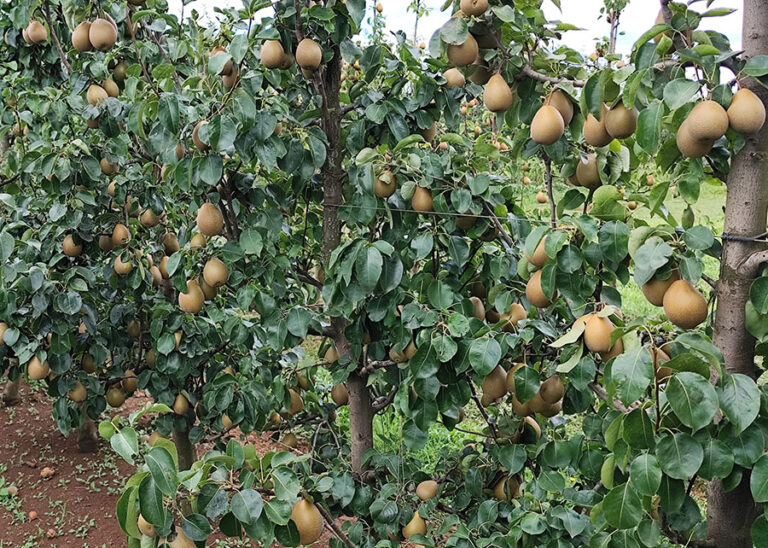
Image by Fábio Ribeiro | Embrapa
BRS Áurea could also present growers with improved market access thanks to its early harvest window, which usually takes place between early and mid-January. Its cycle runs about 106 days from full bloom to harvest maturity, according to Embrapa.
Brazil relies heavily on international shipments to meet domestic demand, with roughly 90 to 95 percent of the country’s pear consumption met by imports, particularly from Argentina and Chile.
The early timing could allow growers to bring domestic pears to market sooner and extend the Brazilian sales window, the entity said.
BRS Áurea’s key advantages
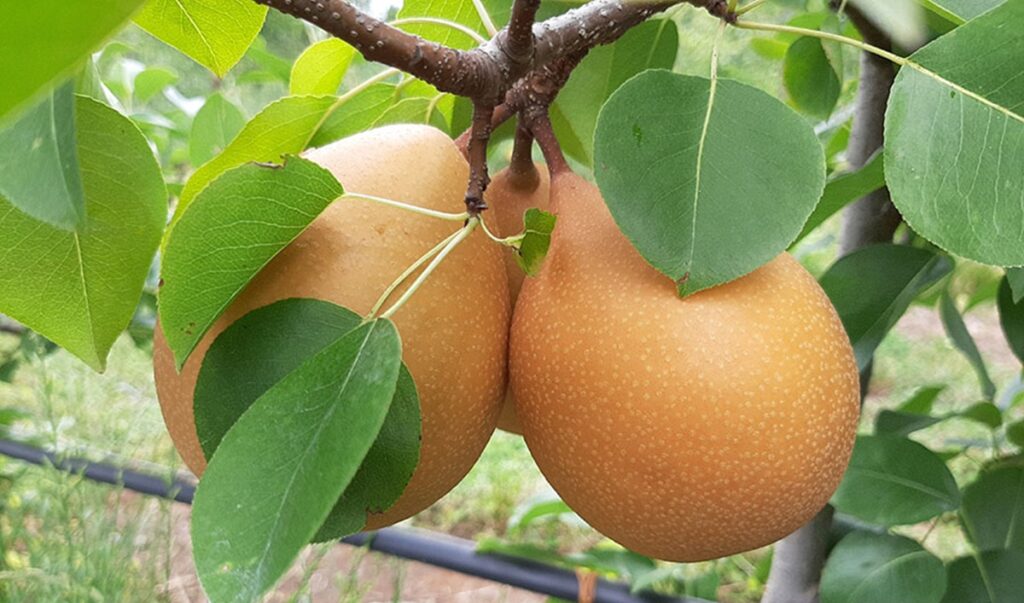
The new variety produces medium to large fruit weighing 5.1 to 6.7 ounces. Embrapa describes it as having smooth skin that changes from yellowish-orange to golden as it ripens, with a white, crisp, juicy flesh.
"BRS Áurea brings together strong adaptation to southern Brazil's climate, high yield capacity, and excellent fruit quality,” said Embrapa researcher and breeder João Caetano Fioravanço. “These attributes are critical to stimulating domestic pear production."
The organization recommends cultivation in areas receiving 400 to 600 chilling hours below 45 degrees Fahrenheit during winter. Estimated productivity reaches 11.2 to 13.4 tons per acre in high-density plantings.
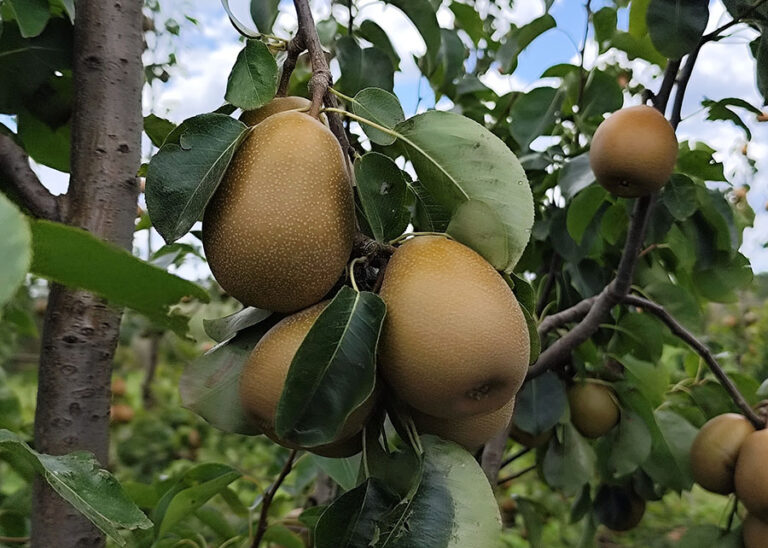
Image by Fábio Ribeiro | Embrapa
As for shelf life, post-harvest trials found that fruit maintained commercial quality for 90 days in cold storage at 33 degrees Fahrenheit, followed by seven days of shelf life at 68 degrees Fahrenheit. Controlled-atmosphere storage extended the trial period to 165 days at 33 degrees Fahrenheit, with fruit retaining greater firmness after removal from storage, Embrapa said.
"BRS Áurea offers highly appealing traits for the fresh fruit market due to its post-harvest stability, an essential factor for extending the shipping window and facilitating logistics," said Lucimara Antoniolli, a post-harvest researcher at Embrapa Grape & Wine.
The variety does have a handling consideration. Embrapa said its delicate skin makes the fruit susceptible to impact bruising during harvest and transit, and recommends gentle handling.
Enhanced pest resilience
Beyond strong yields and long-haul endurance, field and laboratory trials also showed lower susceptibility to the South American fruit fly when compared with the more popular Rocha variety from Portugal, another of Brazil’s key trading partners.
In field trials under natural pest pressure, 10 percent of BRS Áurea fruit showed infestation, compared with 70 percent for Rocha. Laboratory tests showed an even clearer advantage for the new cultivar, with infestation rates reaching 40 percent for BRS Áurea versus 100 percent for Rocha.
Image by Fábio Ribeiro | Embrapa
Embrapa said the variety also showed resistance to Fabraea leaf spot and pear scab, two of the most significant fungal diseases affecting pear orchards. If left unmanaged, they can cause severe defoliation, fruit distortion, and yield losses.
The agency said BRS Áurea’s combination of early maturity, yield potential, and post-harvest characteristics could give southern Brazilian growers another option for diversifying pear orchards and strengthening domestic production.
*All images courtesy of Embrapa.
Related stories