



French-Dutch partnership tackles heat tolerance in strawberries

 Add Fresh Fruit Portal to Google
Scientists are arming strawberries against the pressures of a warming world. While tried-and-true cultivars such as Albion and Camarosa can thrive in intense sun, abnormal weather patterns are increasing risks for growers across the produce industry, where heat tolerance has become a crucial trait for any commercial crop.
To address this, genetics technology firm Hudson River and engineering French company Plantik are combining gene-editing and elite-germplasm technologies to develop strawberries that can better withstand heat stress. First commercial field trials are slated for spring and summer 2028.
The European firm’s co-founder and CEO Ying Shao told FreshFruitPortal.com that her team identified a tomato genetic region associated with heat tolerance, which provided the starting point.
“[The genetic region] is very well conserved across species, which gives us a strong shortcut in terms of where to look in the strawberry genome,” she said.
Plantik’s proprietary cloud data infrastructure and machine learning platform ATLANTIS has been pivotal to the work, Shao added.
“Using ATLANTIS, we are able to identify additional, adjacent target regions that also ranked high according to our algorithm and demonstrated high potential,” she said. “This combination of a conserved primary target plus newly discovered adjacent targets gives us confidence that the trait will translate effectively.”
Beyond heat tolerance
Fruit set is a critical production phase, and heat can significantly interfere with it, Shao explained. That is why Plantik plans to evaluate several strawberry performance measures in upcoming trials slated for 2028.
“Beyond yield, fruit quality may also be altered under heat stress, including berry size shrinking and the sugar content being affected, which is particularly important for consumers in certain markets,” the CEO noted.
Shao said their approach aims to create a conditional response to heat stress while minimizing potential effects on normal plant development.
“The goal is for the plant to have a better mechanism to fight heat only when the stressor is present, throughout its lifecycle,” Shao said. “When heat stress isn't present, the plant develops and behaves just like the unedited plant.”
Shao stressed that the company also plans to use the technology to reduce the likelihood of unintended effects associated with altering genes, and that other commodities may soon benefit from the process.
“The next crops in line for trait transfer that are generating strong interest from partners include soybeans, potatoes, pepper, and lettuce”, she said.
Hudson River focuses on elite germplasm
Meanwhile, in Wageningen, Netherlands, Hudson River is tackling the issue directly at its genetic core. The firm uses its BioMaas platform, an advanced, DNA-free plant genome-editing system to refine and enhance elite commercial varieties.
Chief Science Officer Lotte Westerhof explained to FreshFruitPortal.com that the time savings compared with conventional crossing and backcrossing depend on crop genetics and generation length. In tomatoes, however, the company estimates that direct editing of elite germplasm can take two to three times less time than introducing the same trait through conventional breeding.
For crops with more complex genetics or longer generation cycles, Westerhof said the advantage could exceed tenfold.
“BioMaas allows us to introduce the desired change directly into the elite variety, avoiding the repeated crossing and selection needed to recover the original genetic background,” she said.
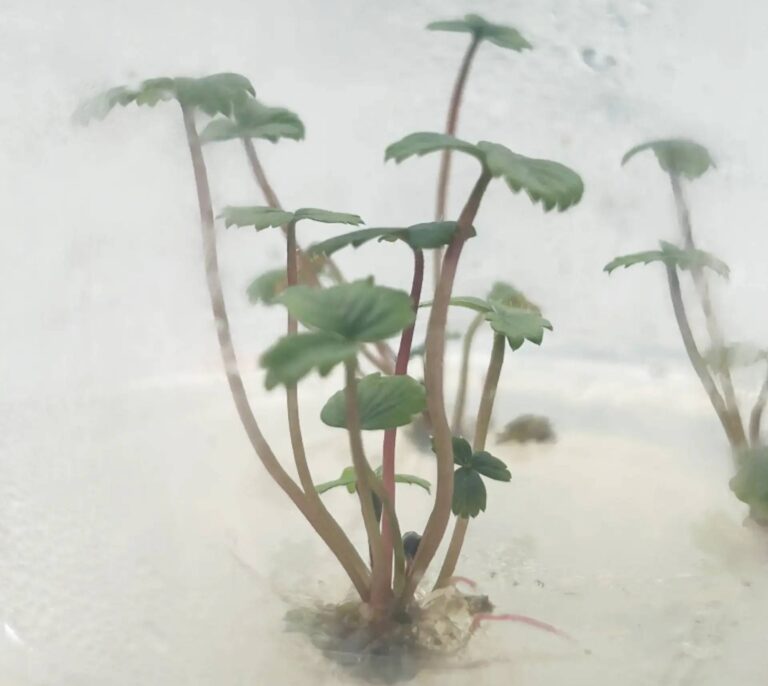
For strawberries, the executive said Hudson River has tested more than 30 genotypes through its platform and has developed methods to address differences in regeneration efficiency among commercial varieties.
“One of the key elements is our proprietary hydrogel technology, which provides a highly supportive environment for individual protoplasts to re-enter the cell cycle and develop into callus,” Westerhof explained.
The company combines that technology with its accumulated knowledge of regeneration parameters to work across a wider range of commercial strawberry germplasm, she said.
Both companies expect regulatory requirements to remain smooth sailing. Westerhof said the United States already has regulatory pathways for many transgene-free edited crops, while Europe is developing a framework for qualifying Category 1 New Genomic Technique (NGT-1) plants.
The BioMaas pipeline could eventually extend beyond heat tolerance. Westerhof said the platform is intended to address drought tolerance, disease resistance, yield stability, quality, and shelf life, with market needs determining further priorities.
“Our focus is not on developing traits simply because they are technically interesting, but on bringing forward the traits that solve the most relevant problems for breeders and growers,” she concluded.
*Images by Plantik/Hudson River.
Related stories
India puts 19 strawberry varieties to the test in hydroponic trial