


Solgrapes Multiseason: Solplast highlights field research, crop protection and global manufacturing strength at ITGS 2026
 Add Fresh Fruit Portal to Google
By Solplast
As a Platinum Sponsor of the 11th International Table Grape Symposium in Murcia, Spain, Solplast welcomed industry professionals to its manufacturing facilities and presented specialized covering solutions supported by field research on temperature management, water-use efficiency, and agricultural film durability.
Climate variability, increasingly demanding quality specifications, rising production costs and the need to meet precise export windows are reshaping the global table grape industry.
For growers and exporters, crop protection is becoming an increasingly strategic decision. Choosing the appropriate covering film can influence not only protection against adverse weather but also crop management, harvest planning, resource efficiency and commercial performance.
These challenges were central to Solplast's participation in the 11th International Table Grape Symposium (11th ITGS), held in Murcia, Spain, from September 28 to October 2, 2026.
As a Platinum Sponsor, Solplast, part of Armando Alvarez Group, presented its Solgrapes Multiseason and OASIS SecondSky™ Solgrapes Multiseason covering solutions to international growers, agronomists, researchers and exporters.
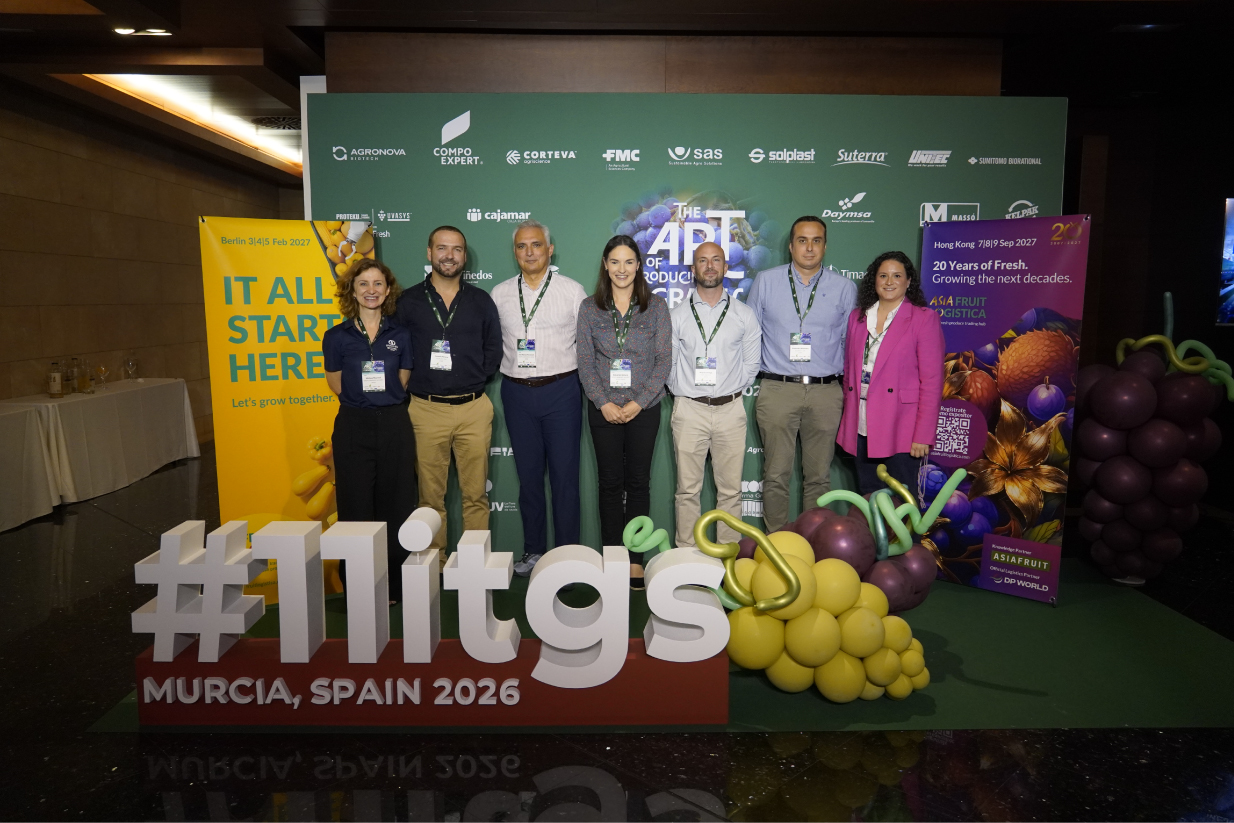
Image by Solplast
A global gathering for the table grape industry
The Symposium recorded 725 registered participants from 33 countries, representing more than 400 companies and organizations.
Major table grape markets represented included Spain, Italy, South Africa, Chile, Peru, Brazil, Mexico, the United States, and Australia, alongside participants from other producing and trading regions.
The technical program involved 68 speakers and 10 moderators, featuring four keynote presentations, seven technical sessions, two expert panels and two roundtables.
The event provided a valuable forum for discussing new varieties, sustainable production, climate adaptation, agronomic innovation and market requirements.
For Solplast, the international gathering offered an opportunity to understand the different challenges faced by growers and demonstrate how specialized covering systems can be adapted to specific climates, varieties, vineyard structures and commercial objectives.
Visiting Solplast: industrial expertise behind agricultural innovation
One of the highlights of Solplast's participation was welcoming Symposium attendees to its manufacturing facilities in Spain's Murcia region.
Visitors explored the company's production capabilities, manufacturing processes and technologies used to develop agricultural films for table grape cultivation.
The visits highlighted the importance of material formulation, optical properties, mechanical reinforcement, and production quality when developing films expected to perform under demanding agricultural conditions.
For international growers, manufacturing capabilities and supply reliability are essential considerations.
Covering materials must be available when required by each production cycle, particularly when growers need to coordinate installation with flowering, crop development, and harvest schedules.
Solplast combines specialized product development with the industrial strength of Armando Alvarez Group to support these requirements.
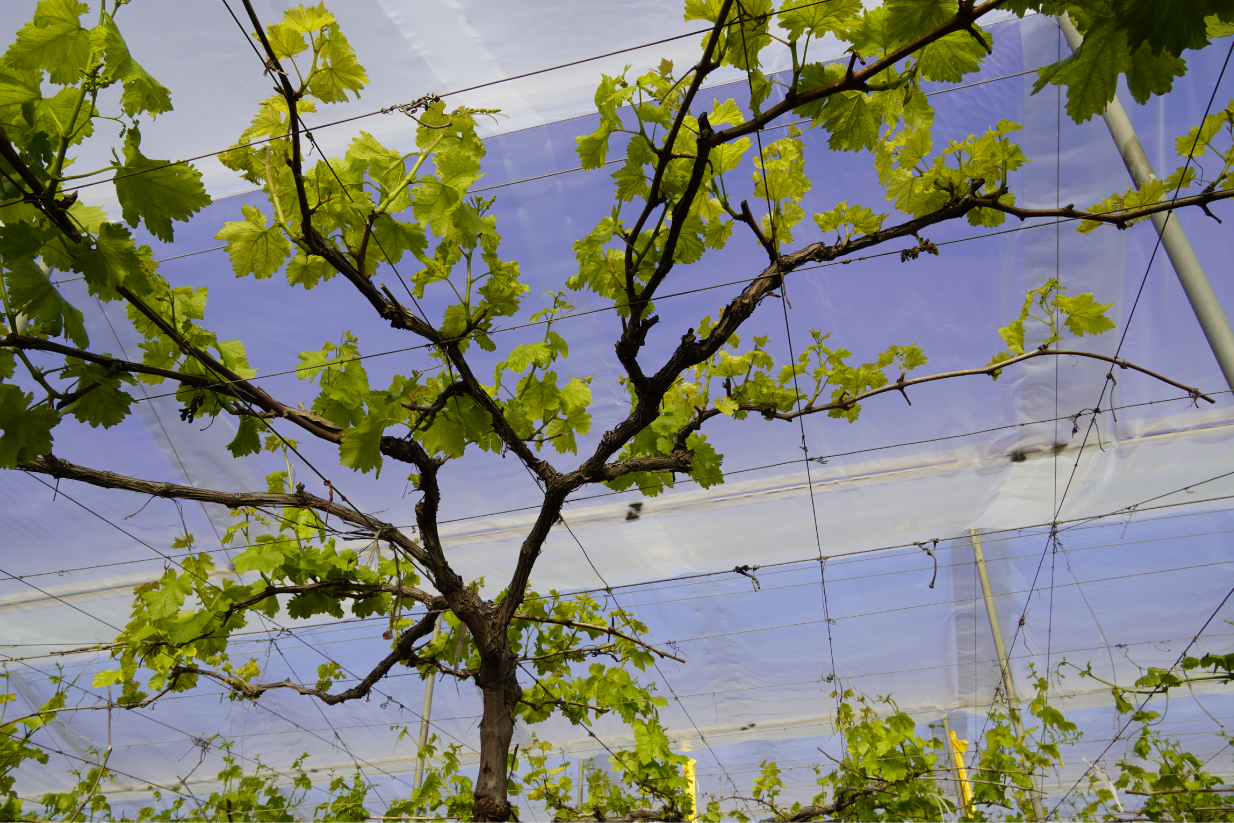
Image by Solplast
Solgrapes Multiseason: protection with commercial value
Solgrapes Multiseason is a range of covering films specifically developed for table grape production and designed for use across multiple growing seasons.
Its benefits begin with protection against adverse weather, particularly rainfall and humidity, which can compromise fruit quality during sensitive stages of crop development.
However, the role of agricultural covers extends beyond physical protection.
By modifying the growing environment, covering films can support the management of temperature, humidity and light, allowing growers to develop strategies suited to their varieties and harvest objectives.
This can be particularly valuable for export-oriented businesses seeking consistent fruit quality, predictable production programs, and efficient harvesting operations.
Solgrapes multiseason films incorporate mechanical reinforcements designed to withstand stress at attachment points. The integrated cord reinforcement cord system helps distribute tension and facilitates certain installation and handling operations. Solgrapes film cord is 100 percent recyclable.
Multiseason use can also reduce the annual amount of plastic required compared with single-season alternatives, while spreading material and installation costs across multiple production cycles.
Actual service life depends on environmental conditions, installation, maintenance and crop protection practices.
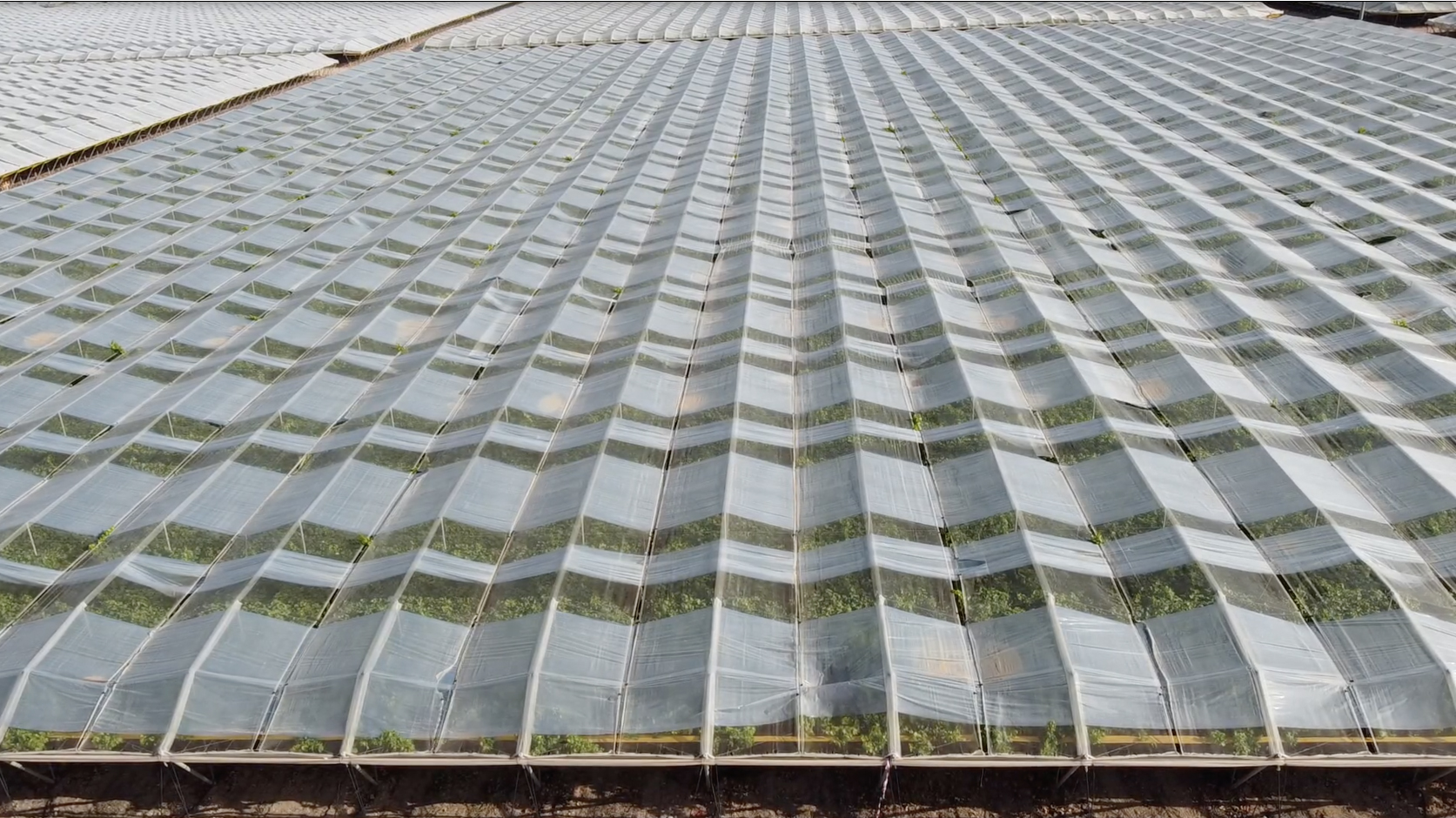
Image by Solplast
OASIS SecondSky™: field research demonstrates the potential of anti-thermal technology
A key innovation presented by Solplast was OASIS SecondSky™ Solgrapes Multiseason, which incorporates optical technology developed by iyris to help reduce the thermal load experienced by crops.
The technology selectively filters solar radiation while maintaining much of the photosynthetically active radiation (PAR) required for plant development.
The potential benefits of this approach were explored in a research study presented by Erwin Weber during the congress, from the agronomical consultancy firm GPlant, titled “Agronomic comparison of plastic covers with different additives in Autumn Crisp table grapes: radiation, climate and productive efficiency over three seasons”.
Conducted in Cieza, Murcia, within a 2024-2026 research program, the study compared three treatments:
- Conventional Solplast T-180 film.
- T-180 with iyris additive.
- T-180 with iyris additive and 21 percent less irrigation.
Radiation measurements reported for 2025 showed that the iyris-enhanced film transmitted 27 percent less accumulated solar radiation than conventional T-180, while average daily PAR transmission was only 4.2 percent lower.
Temperature measurements also revealed important differences
Compared with uncovered outdoor conditions, conventional T-180 recorded a maximum temperature increase of 6.35 degrees Celsius, whereas the iyris-enhanced film recorded 4.10 degrees Celsius.
This represented a 2.25 degrees Celsius difference in maximum temperature between the two covering materials under the study conditions.
The trial also reported encouraging production results:
- 47,877 kilos per hectare with conventional T-180.
- 52,368 kilos per hectare with iyris-enhanced T-180, a 9.4 percent increase.
- 51,744 kilos per hectare with iyris-enhanced T-180 and 21 percent less irrigation, an 8.1 percent increase over conventional T-180.
The reduced-irrigation treatment saved 1,123 m³ of water per hectare, while production was only 1.2 percent lower than under the iyris-enhanced treatment with standard irrigation.
Berry weight reached 8.9 grams under the iyris treatment, compared with 8.2 grams under conventional T-180. Sugar measurements were 15.2 degrees Brix and 15.6 degrees Brix, respectively.

Image by Solplast
These observations indicate promising opportunities for managing heat load and improving resource-use efficiency.
The findings reflect the specific experimental conditions reported in the abstract presented during the congress, which indicated that final confirmation of the 2026 results was still pending at the time of writing.
Understanding durability: How sulfur applications affect Solgrapes multiseason films
A second scientific study addressed another critical consideration for growers: the durability of plastic covering materials over successive seasons. This study illustrates why phytosanitary management and conditions of use of covers are crucial for maximizing the service life of multi-season films.
Presented as a technical poster by GPlant, the research examined the “Physicochemical degradation of table grape plastic covers over three seasons: the influence of sulfur applications and their effect on transmitted UV radiation.”
The study focused on Solgrapes T-160, a 130-micron film designed for three growing seasons under specified production conditions.
Researchers evaluated three Grupo El Ciruelo vineyards, Cabezuelas, Campico, and Raiguero, after three full seasons, comparing their different accumulated sulfur applications.
The results demonstrated a relationship between greater sulfur exposure and increased material degradation.
At Cabezuelas, where cumulative sulfur applications reached 82.5 kilos per hectare, the film retained 55 percent of its protective additive, with a carbonyl index of 23, indicating an acceptable condition.
At Campico, cumulative sulfur reached 109 kilos per hectare, with 50 percent residual additive and a carbonyl index of 26.8.
At Raiguero, where sulfur applications totaled 135 kilos per hectare, residual additive fell to 35 percent, while the carbonyl index reached 36, indicating advanced degradation.
The researchers also observed that UV transmission increased progressively as the films deteriorated, reaching between 40 percent and 45 percent, around twice the initial values.
The study identified sulfur accumulation as a major factor influencing degradation and highlighted the usefulness of monitoring UV transmission to assess film condition.
For growers, these findings emphasize the importance of considering crop protection practices, material specifications, and long-term maintenance when evaluating the economic performance of multi-season covers.
Three field testimonials: connecting innovation with grower experience
Beyond laboratory measurements and scientific trials, practical experience remains essential when evaluating agricultural technologies.
To illustrate this, Solplast presents a video bringing together three field testimonials from Gregorio Velasco, R&D Director at Gplant; Roque Victoria, manager at The Best Agrícola farm; and Juan Daniel Costa, a farmer at the Jurramienta farm owned by Moyca Grapes.
Together, these experiences illustrate how collaboration between manufacturers, researchers and commercial growers contributes to developing technologies that address real production challenges.
Armando Alvarez Group: Industrial strength and international support
Solplast's value proposition extends beyond agricultural film technology.
As part of Armando Alvarez Group, a leading Spanish industrial group specializing in plastic film manufacturing and processing, Solplast benefits from extensive industrial capabilities and an international commercial network.
With an annual production capacity exceeding 60,000 metric tons and exports to more than 50 countries, Solplast is positioned to support growers and distribution partners across major agricultural regions.
This global structure helps Solplast offer delivery and pricing commitments, international availability, and personalized technical support, all important factors when planning large-scale table grape production.
Contact Information:
sales@armandoalvarez.com
-
LinkedIn: https://www.
linkedin.com/company/solplast- s-a/ -
Facebook: https://www.
facebook.com/solplastSA/ -
Youtube: https://www.youtube.
com/@solplasts.a.132 -
Instagram: https://www.
instagram.com/solplast_sa -
Web: www.solplast.com
Related stories
Global Grape Group launches first-ever Global Table Grape Report at ITGS 2026