


Opinion | 5 things you need to know before sourcing African fresh produce for the first time
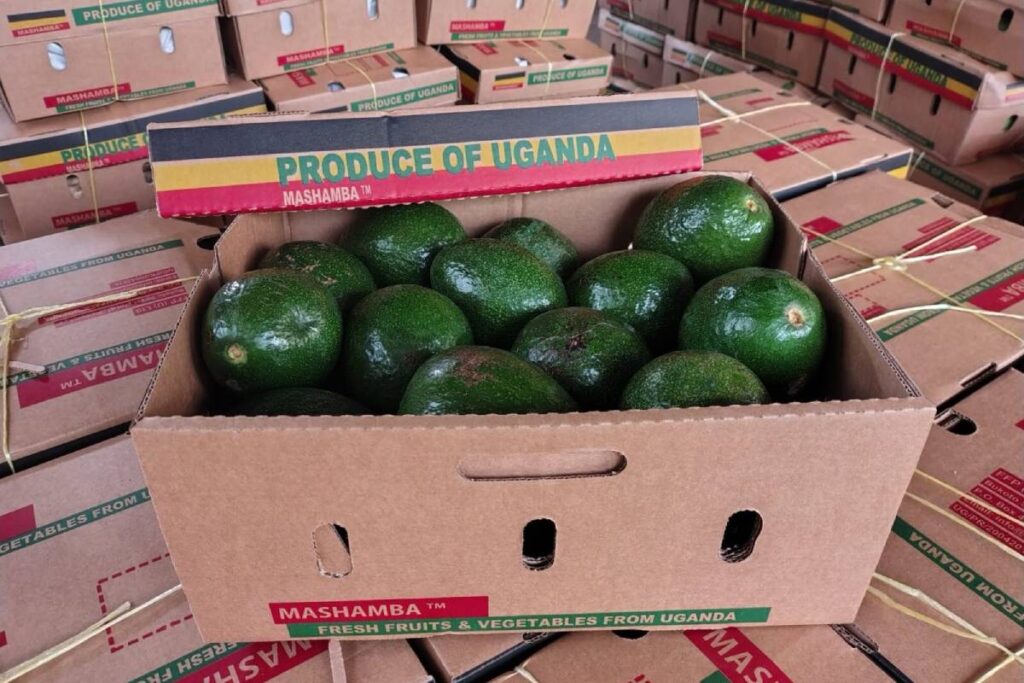
 Add Fresh Fruit Portal to Google
 By Eric Potgieter, Marketing Division, Mashamba FFP (U) Ltd
A first order from a new African origin is rarely decided in the field, but rather in the calendar, at the border, and in the contract.
Buyers come to Africa for a counter-seasonal window, or because a customer asked for hot peppers, ginger, or cooking bananas that a nearer origin cannot supply.
Whatever the reason, the same five things need settling first.
1. Africa is not one season. Buy the calendar, not the continent
Africa stretches far north and far south of the equator, and a band of countries sits right on it. That gives a buyer three different kinds of supply in one place.
The Southern Hemisphere supplies the northern summer. South Africa's citrus harvest, for example, runs from March for mandarins and navels through September for Valencias, according to the US Department of Agriculture’s (USDA) Foreign Agricultural Service. The industry shipped a record 203.4 million 15-kilogram cartons in 2025, up 22 percent on the year.
Meanwhile, North Africa supplies the northern winter. Egypt is the world's leading exporter of oranges, and its export season opens in mid-December and runs into the summer. Morocco supplied 73.7 percent of the tomatoes the European Union imported from outside the bloc in 2022, by value.
The equator supplies across more of the calendar. Kenya's avocado main season runs from March to August, with a second window from October to December. Uganda has two growing seasons across much of the country and multiple harvests a year. For hot peppers, the Netherlands' CBI advises that Europe's own crop is available from June to September, and that December to February are the best months for off-season supply.
So the first question is not "Can Africa supply this?" but "Which African origin supplies this in the weeks I need it?" A buyer who maps the calendar first usually ends up with two or three origins for one line, and a program rather than a series of emergencies.
2. Check admissibility before you ask for a sample
Not every crop from every African country may enter every market. The answer is public.
In the United States, the Agricultural Commodity Import Requirements database, known as ACIR, lists the import requirements for fresh fruits and vegetables by commodity and country of origin. Where a permit is needed, the importer applies through APHIS eFile.
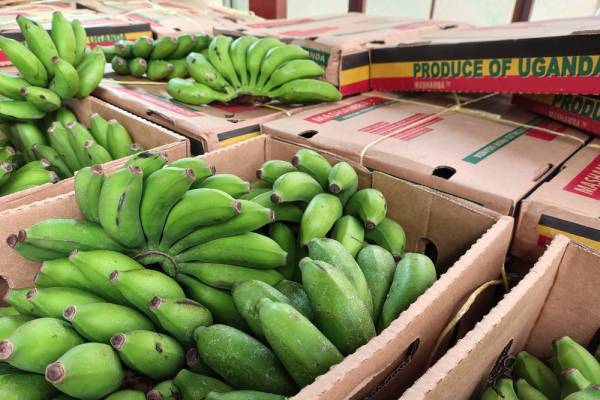
Image by Mashamba FFP (U) Ltd
In the European Union, most fresh fruit and vegetables must arrive with a phytosanitary certificate under the EU plant health rules. Five fruits are exempt from the certificate itself: pineapples, coconuts, durians, bananas, and dates. Great Britain runs its own list of medium- and high-risk plant products that need a certificate, set out in Defra's import guidance.
Phytosanitary certificates follow an international standard. Under the International Plant Protection Convention's standard ISPM 12, a phytosanitary certificate is issued only by the exporting country's national plant protection organization, or by officers it has authorized. It attests that the consignment meets the importing country's requirements.
In Uganda, that authority is the Ministry of Agriculture, Animal Industry, and Fisheries, which now issues the certificate electronically through its ePhyto system.
Ten minutes in ACIR or the EU rules before the first call to your African supplier saves a month of back and forth.
3. Know which paperwork is yours
First-time buyers often assume the exporter, in Africa and elsewhere, handles all the compliance, but under the current rules, half of it sits on the importer's desk.
In the US, the Foreign Supplier Verification Program (FSVP) under FSMA puts the obligation on the US owner or consignee of the food. The FSVP importer must develop, maintain, and follow a program that gives adequate assurance that the foreign supplier meets US food safety standards (21 CFR Part 1, Subpart L). Separately, Prior Notice of the shipment must reach the Food and Drug Administration (FDA) no less than four hours before arrival by air and eight hours by sea (21 CFR 1.279). Foreign facilities that pack or hold food for the US market generally register with the FDA, and the next renewal window runs from October 1 to December 31, 2026.
In the European Union, the operator responsible for the consignment gives the border control post at least one working day's notice before arrival (Commission Implementing Regulation (EU) 2019/1013). That notice is filed in TRACES as the first part of the Common Health Entry Document for plants. Since January 2025, the EU marketing standards for fresh fruit and vegetables have applied under Delegated Regulation (EU) 2023/2429. Produce must be sound, fair, and of marketable quality, with the country of origin shown.
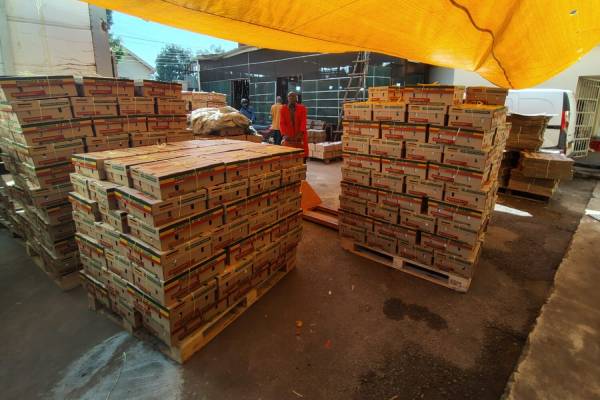
Image by Mashamba FFP (U) Ltd
In Great Britain, the importer or agent pre-notifies high- and medium-risk plant goods in IPAFFS at least four working hours before an air consignment lands (Defra, August 2026).
These steps are manageable when they are agreed with the exporter before the first pallet moves, so that the origin documents and the destination filings line up.
4. Choose air or sea by the crop, then check the hub
The crop's shelf life usually decides the mode. Long-life fruit such as citrus and increasingly avocados travel by sea.
When Hapag-Lloyd launched its dedicated citrus service in 2024, it quoted 21 days from Gqeberha to Rotterdam and 25 days from Durban. Most Kenyan avocados already move to Europe and the Middle East by sea, according to the USDA. Kenya has stated an aim to shift half of its horticultural exports from air to sea within a decade.
Short-life vegetables and specialty lines still fly. Entebbe International Airport handled 69,595 metric tons of cargo in 2025, up from 67,098 the year before. Exports outweigh imports there, with fresh produce, fish, and flowers making up the bulk.
Before you commit, ask two questions of the African exporter: Which airport or port, and how many departures a week to my market? A twice-weekly flight and a daily flight are two different supply programs.
5. Agree the terms, then build the program
Trade preferences can also work in the buyer's favor. Least developed African countries such as Uganda have duty-free, quota-free access to the European Union for everything except arms, under the Everything But Arms arrangement. The renewed scheme applies from January 1, 2027. The United Kingdom's Developing Countries Trading Scheme gives countries in its Comprehensive Preferences tier, Uganda among them, zero tariffs on 99.8 percent of products. In both cases, the goods must meet the scheme's rules of origin.
Then settle the Incoterms. Under the ICC's Incoterms 2020, FCA means the buyer books the carriage and takes on the risk when the goods are handed to its carrier at the named place, usually the origin airport. Under CIP, the seller arranges carriage and insurance to the named destination, though risk still passes at handover to the first carrier.
FOB and CIF, which the CBI says are the terms most often used in the chili trade, are ICC rules for sea and inland waterway transport only. For airfreight, FCA and CIP are the matching terms. Neither is right or wrong. Make agreements in writing before the first booking, along with the grade, the carton, the count, the label, the payment terms, and the paperwork set.
At Mashamba FFP (U) Ltd in Uganda, a new buyer relationship starts with a calendar: which crops, which weeks, how many cartons a week, and which arrival airport. Our own London program, for example, ships from Entebbe to London Gatwick three times a week. The documents follow from that plan, not the other way around.
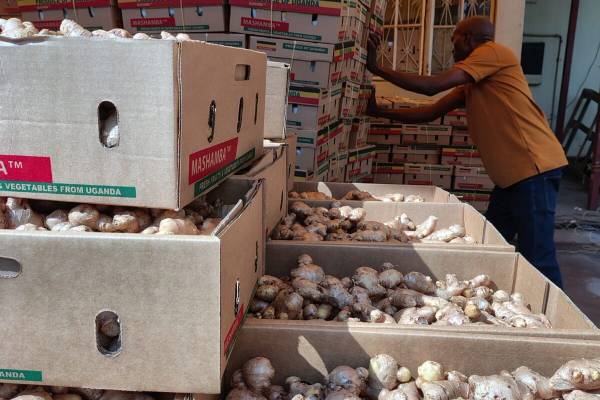
Image by Mashamba FFP (U) Ltd
Africa offers a buyer more than one season, more than one climate and more than one route to market. For a first-time buyer, the work is the same as for any new origin: know the season, check the rules, settle the paperwork, pick the mode, and agree the terms.
Do it in that order, and the first shipment from Africa is the start of a program, not an experiment.
Eric Potgieter runs the marketing division at Mashamba FFP (U) Ltd, a Ugandan fresh produce exporter with export operations since 2001 and more than 23 million kilos airfreighted to buyers across the UK, Europe, and the Arabian Gulf. ffpmashamba.com
*All images courtesy of Mashamba FFP (U) Ltd.
Related stories
Opinion | Africa's second generation of produce exporters is redrawing the map
South African table grape industry champions quality, consistency, and data collaboration