


The table grape trade spans dozens of producing countries, each with its own statistics, sources and reporting calendars. For growers, marketers and buyers, piecing together a reliable global view has long meant chasing figures across many different places.
The Global Table Grape Report sets out to change that. Developed by the Global Grape Group and Agronometrics, the report draws on data from producing countries worldwide.
The South African Table Grape Industry (SATI) contributed to South Africa's section. We sat down with CEO Mecia Petersen to hear what the report means for South Africa and the wider industry.

For Petersen, the report's first and most obvious value is consolidation. "Data exists in different places, from different sources, but it's not often you can find it in one consolidated source," she said. "That will be the value."
It matters just as much that the information is easy to pick up and read. Someone weighing expansion into a new market, or looking to buy or sell, needs to find the key indicators quickly. "I think we have achieved that with the report," she said.
She also sees room for the report to grow into a forward-looking tool. Future editions could bring in other stakeholders, such as breeders' views on where varieties are heading and evolving consumer trends. That would let producers plan beyond the current season.
"In table grapes, it's a long-term industry. When you plant vines, you keep them for 20 years or more," she noted. "If you can see what the future trends are leaning towards, it helps you make those informed decisions," Petersen added.
Asked what South Africa wants to communicate to the world, Petersen started with quality. "Quality will always remain our focus," she said. From farm to packhouse, inspection services, cold stores and logistics back the value chain. Growers apply good agricultural practices, precision farming and other innovations to protect fruit quality.

Photo by J Yeo via Unsplash.
That focus underpins South Africa's strong position in the global marketplace, and the industry is determined to keep it. Petersen summed it up as: quality, consistency and reliability.
She pointed to the historical trend lines as evidence. South Africa's hectares and production volumes have stayed relatively stable, which tells buyers the country can supply consistently. SATI's crop estimates over the past five to ten years have also fallen within range of actual volumes.
Competitors who share information
Supplying countries compete, and Petersen expects that to continue. But markets are connected: when one supplier moves, the effects ripple through the rest of the supply chain. That makes it important for everyone to work from the same accurate information.
For the South African industry, she said, the report's immediate value is the message it sends about sharing information with other Southern Hemisphere suppliers. "Yes, we compete, but there is certain information where it's valuable to collaborate," she said. In her view, collaboration will be key to the long-term sustainability of an industry that impacts everyone in it.
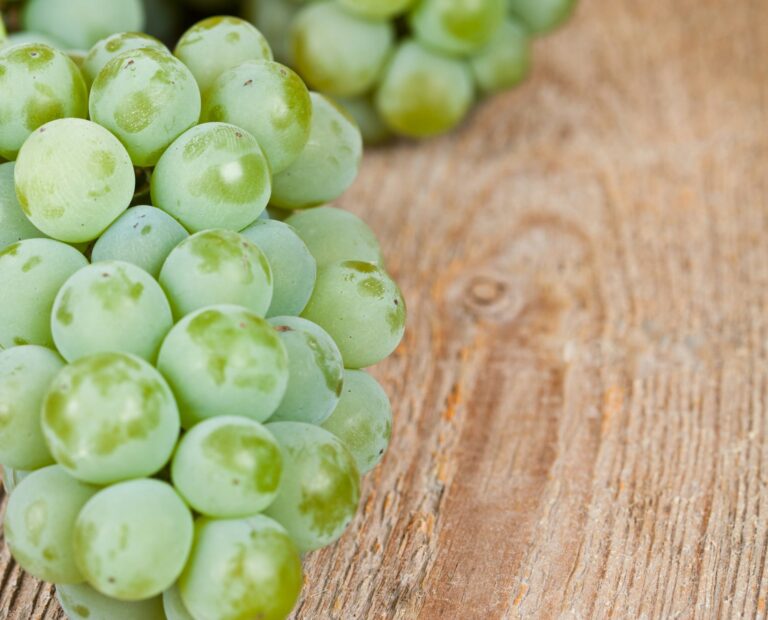
Photo by Maria Kovalets via Unsplash.
Petersen describes a clear progression. "Data is step one," she said. That data then has to become insight, and those insights inform decisions, such as whether to change production practices or move further towards modern farming.
The biggest gap the report can fill, she said, is the lack of a single consolidated source of true data. She also sees an opportunity to widen access to information. Some producers have far better access to market data than others, and a shared global publication can help close that gap. For South Africa, better information supports the industry's goal of continuing to set itself apart on quality, consistency and reliability.
Petersen's case for broader participation in the Global Grape Group comes back to the consumer. Grapes are a luxury purchase, and household budgets are under growing pressure. That makes it more important than ever for the industry to build awareness of grapes and their health benefits.
"We need to work hard to build awareness and education as to why grapes are a good choice," she said. The more associations that take part, the stronger the data, and the stronger the industry's collective voice in growing global grape consumption.
For Petersen, the logic is simple: the better the industry understands itself, the better it can make the case for grapes.
*Main image by Maria Kovalets via Unsplash.
Related stories