Opinion | Africa's second generation of produce exporters is redrawing the map
 Add Fresh Fruit Portal to Google
 By Eric Potgieter, Marketing Division, Mashamba FFP (U) Ltd
For fifty years, the map of African fresh produce that a buyer carried in their head had a handful of names on it: Kenya, South Africa, Egypt, Morocco, Côte d'Ivoire. Those origins built the trade, and they still anchor it.
But the map is out of date. A second generation of exporting countries, barely on a buyer's radar a decade ago, is changing what Africa ships, how it proves what it ships, and where it sends it.
For anyone sourcing produce in Rotterdam, Dubai, or Los Angeles, that changes what to expect from an African supplier.
Three shifts are happening at once.
The origins are multiplying
Start with the crop everyone watches. Rabobank's Global Avocado Update 2026 puts African avocado exports at 450,000 metric tons in 2025, up 16 percent on the year. Kenya and South Africa are among the continent's leading suppliers, but the report also identifies Tanzania, Rwanda, Uganda, Mozambique, Zimbabwe, and Cameroon among those expanding their avocado exports.
The document also notes that African shipments between September and February have grown significantly since 2022, meaning that the continent's window is widening, not just its volume.
And it’s not only avocados. In the year to June, Rwanda reached a major milestone, surpassing $1 billion in agricultural exports for the first time, up 23 percent year-on-year from $893 million, and Kenya’s horticultural exports reached 457,860 metric tons in 2025, worth about $1.11 billion.
Several equatorial African origins can supply crops during periods when temperate markets have limited domestic production. Hot peppers, ginger, cooking bananas, sweet potato, cocoyam, and eggplant feed Indian, Caribbean, West African, and Middle Eastern kitchens from Birmingham to Brooklyn.
For many of those lines, the range of commercially established origins was narrower a decade ago. Today, a buyer can look across a wider set of African countries, with longer harvest windows and, increasingly, the systems to back them.
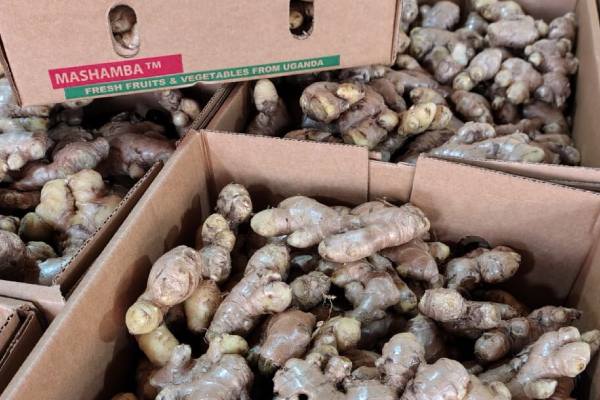
Image by Mashamba FFP (U) Ltd
Compliance is becoming national infrastructure
This is the shift I would ask buyers to pay the most attention to, as it turns a promising origin into a dependable one.
For a long time, export discipline lived inside individual companies, with serious exporters building their own grading rules, records, and relationships with the plant health inspector. The best companies did that well, and many still do, but now national systems are being built around them.
The clearest example is Kenya. In October 2025, the country’s Agriculture and Food Authority set firmer maturity and quality standards for sea-bound avocado exports. Then, in June this year, the agency launched a National Horticulture Traceability System, which records planting dates, crop varieties, inputs, and harvest timing, and follows produce from farm to packhouse to market.
Destination markets are pulling in the same direction. For certain crops and pest pathways, European Union plant health rules can require approved production sites, official inspection at origin, and a documented systems approach, rather than relying on checks at the border alone. In the United States, the Food and Drug Administration's Food Traceability Rule under FSMA Section 204 covers fresh peppers and tropical tree fruits among those subject to additional traceability records, but enforcement is not expected before July 2028. From a Kenyan packhouse to a US distribution center, the direction is the same: provenance, on record, before the produce moves.
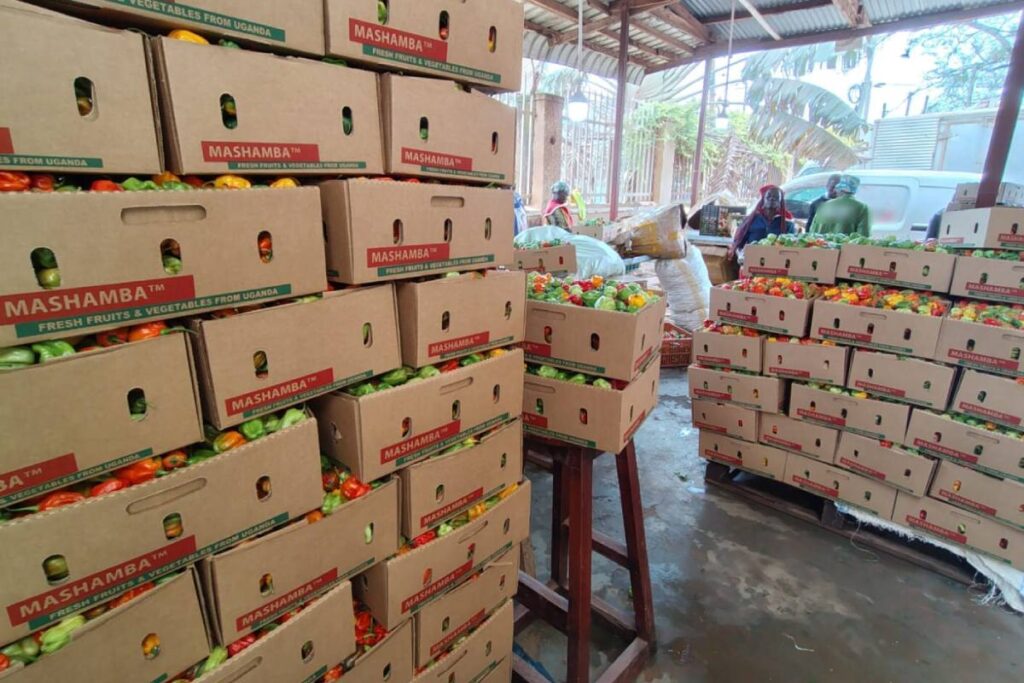
I see this from the inside. At Mashamba FFP (U) Ltd in Uganda, each consignment of hot peppers leaves with a documented export trail. The company is registered with Uganda's national agriculture and standards authorities, and a phytosanitary certificate is issued for that consignment. The production site is registered and inspected under the phytosanitary arrangements governing that crop's entry into the European Union. That is what makes an origin dependable.
The corridors are diversifying
For half a century, "export" in East African horticulture meant Europe. And that’s still true, as the Old World still accounts for around 82 percent of the value of African avocado exports over the past five years.
However, the direction of travel is clear in a dataset that breaks it out. According to USDA data, in 2025, 24 percent of Kenyan avocado exports went to the Netherlands, while the United Arab Emirates accounted for 19 percent and rising. China was up 137 percent on the year, and India, Italy, and Oman appeared as new destinations.
I wrote here in August about the Arabian Gulf as a second corridor for African produce. This piece makes a broader point. When an origin can sell to Europe, the Gulf, and Asia at once, it can offer buyers a supply program rather than a spot relationship, and keep a farm base busy across the calendar.

Image by Mashamba FFP (U) Ltd
The logistics are moving to match. IATA's 2025 figures show African airlines' cargo demand up six percent and capacity up nearly eight percent, both well ahead of the global averages of 3.4 and 3.7 percent. In August, Swissport opened a dedicated perishables cargo facility at Kilimanjaro International Airport in Tanzania, with capacity for 13,000 metric tons a year of flowers, fresh produce, seafood and pharmaceuticals.
African origins: What it means for buyers
Across the pond, the relevance is concentration. USDA's Economic Research Service (ERS) reports that imports supplied 59 percent of the fresh fruit and 35 percent of the fresh vegetables in the US market in 2023. Mexico alone provided 51 percent of fresh fruit imports and 69 percent of fresh vegetable imports by value. An earlier ERS study (2014) of 29 imported produce lines found that 18 relied on a single country for more than 80 percent of supply.
Origin concentration is a familiar supply-chain concern for category managers. Africa's newer origins are an equatorial, counter-seasonal answer, and they arrive with records showing where the produce came from.
So how does a buyer read a newer African origin? The same way you would read any supplier, with the questions adjusted for distance. Is the exporter registered with the national agriculture and standards authorities, and can it show the registration? Does every consignment travel with its own phytosanitary certificate? Where the destination market requires approved production sites, is the exporter's site covered? Is there dedicated perishables handling at the airport of departure, not just at the packhouse? And one question tells a buyer a great deal about whether an exporter can support a dependable program: does it talk about programs, weeks, and calendars, or about the next available load?
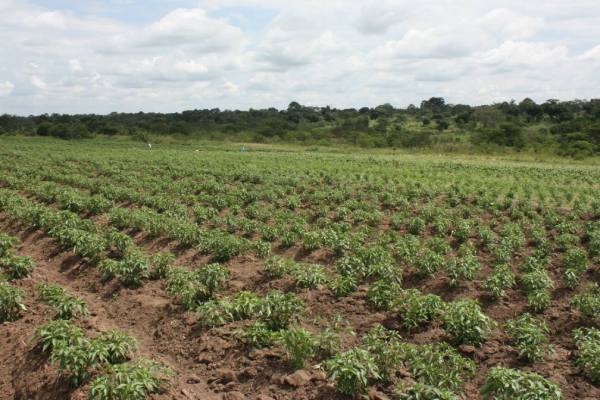
Image by Mashamba FFP (U) Ltd
Africa's established origins proved the continent could supply Europe. The newer ones are widening the set of markets Africa can serve, with documentation and traceability as part of the offer.
Climate got Africa's produce onto the plane. Paperwork is what gets it onto the shelf.
Eric Potgieter runs the marketing division at Mashamba FFP (U) Ltd, a Ugandan fresh produce exporter with export operations since 2001 and more than 23 million kilos airfreighted to buyers across the UK, Europe, and the Arabian Gulf. ffpmashamba.com
*All images courtesy of Mashamba FFP (U) Ltd.
Related stories
African avocado exports reach 450 thousand tonnes in 2025 and move toward new markets
Kenya’s avocado boom: Industry to hit record production amid shipping and regulatory headwinds