


South American avocado leaders call to strengthen promotion and sector coordination
 Add Fresh Fruit Portal to Google
As the avocado market continues to grow, the main producers in the Southern Cone met to analyze the challenges of an expanding industry, including how to boost demand, educate consumers, and improve supply planning.
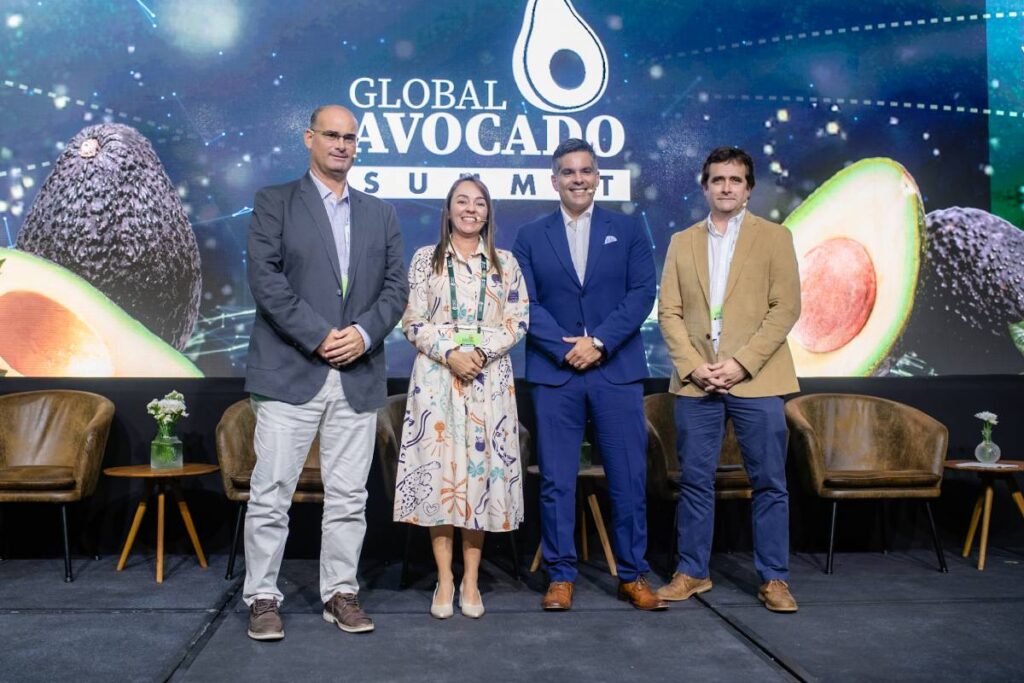
Moderated by Gonzalo Gajardo, Commercial Manager at producer and distributor Subsole, the panel at the Global Avocado Summit, held in Santiago, Chile, on November 11th, brought together key representatives of the region’s largest producers.
The lineup included Katherine Mejía, President of CorpoHass Colombia, José Antonio Castro, President of ProHass Peru, and Francisco Contardo, President of Avocados from Chile.
Colombia: Year-round production and profitability challenges
From Colombia, Katherine Mejía noted that despite being a relatively young origin, with around 15 years in the market, the country has successfully positioned itself as a complementary supplier for the global Hass avocado industry.
Its main competitive advantage is its ability to produce 52 weeks a year, allowing it to supply markets when other growing countries have lower availability. Additionally, the country’s strategic location facilitates connections with Europe, the United States, and other South American destinations, lowering export costs to a wide range of markets, including high-paying destinations.

Katherine Mejía of CorpoHass, Colombia
On the other hand, Mejía warned that Colombia's climate also poses a challenge, requiring producers to have a higher level of agricultural knowledge to successfully adapt the crop.
Furthermore, the executive raised concerns regarding producer profitability, noting that rising production costs, labor, inputs, and logistical difficulties are putting increasing pressure on business margins.
On this front, Mejía said the industry is working to help producers optimize cost structures, build strategic alliances, and ensure markets recognize the value of producing food under increasingly demanding standards.
Peru: Information and planning to anticipate supply
The Peruvian representative, José Antonio Castro, underscored the complexity of forecasting production and export volumes in his country, which currently has approximately 88,000 planted hectares of avocados.
The executive said one of his industry's main challenges is fragmentation, as fewer than a third of Peruvian exporters are members of ProHass, making it difficult to gather representative and timely data to generate accurate estimates.
Forecasting weekly volumes of Peruvian avocados remains complicated, Castro said, especially given the climate variability that has been reshaping fruit production in the country due to the El Niño phenomenon. However, despite these hurdles, accurately forecasting weekly availability by destination and balancing supply and demand are key for a healthy supply chain, especially to prevent strong downward pressure on prices.

José Antonio Castro of ProHass, Peru
For the Peruvian industry leader, global supply growth projections are a cause for concern, as he said volumes could outpace demand over the next ten years if the industry doesn’t capture new markets.
Along these lines, he highlighted the importance of expanding trade opportunities in Latin America, particularly in Chile, Argentina, and Uruguay, while continuing to strengthen avocado presence in Europe.
Chile: Quality, efficiency, and consumer value
From Chile, Francisco Contardo said industry competitiveness does not rely on a single variable, but on the ability to manage productive, logistical, commercial, and sustainability factors comprehensively.
The executive emphasized that the sector must strengthen perceived value for the end consumer to prevent avocados from becoming a commodity.
Furthermore, he highlighted the importance of maintaining the international reputation of Chilean fruit, backed by its quality and the country's market position.

Francisco Contardo, Avocados from Chile
Promotion as a tool to prevent oversupply
All representatives agreed on the need to reinforce promotions supporting avocado consumption throughout the year.
In that regard, Castro warned that, given global supply growth projections, the industry must prepare by expanding the consumer base and developing new markets.
He highlighted Italy's growth as a destination for Peruvian avocados, where promotional actions helped build consumption and establish larger-scale commercial programs, moving away from smaller operations.
Mejía shared this view and noted that Colombia has also joined international promotional efforts, understanding that growing consumption is a shared responsibility among all origins.
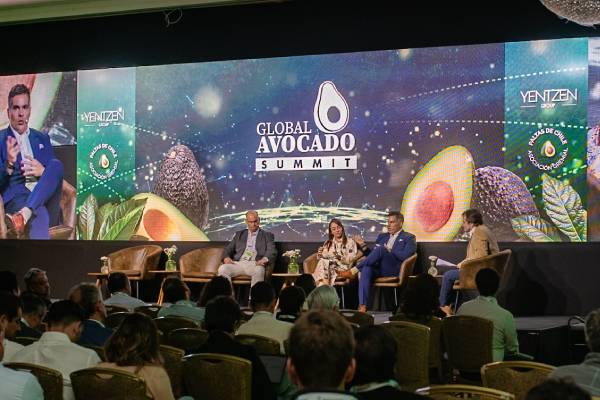
All panel representatives agreed that strengthening trade association representation is necessary to advance not only promotional strategies, but also commercial coordination and government dialogue.
Contardo noted that Chile also has opportunities to continue increasing domestic consumption and resume promotional campaigns in international markets.
For her part, the Colombian executive emphasized that the challenge is not about competing among producing countries, but working complementarily to provide consumers with a consistent experience, regardless of the fruit's origin.
Written and reported by Macarena Bravo
Related stories
Chilean avocados: the value beyond the commodity
Premiumization and growing demand: The promise of the UK avocado market