


Despite challenges, Texas watermelon industry pushes to ‘sell every pound harvested’
 Add Fresh Fruit Portal to Google
The season has presented some hurdles, including oversupply and pricing pressures. But the watermelon sector in the Lone Star State has pushed through, reporting high-quality products and strong yields for its 2025 mid-season.
Texas Watermelon Association (TWA) President Kristin P. Story told FreshFruitPortal.com that the season has been marked by a mild spring and summer, with higher levels of moisture across the state. This, she said, contributed to healthy crop development, resulting in "really good"-looking fruit.
"Yields and quality look wonderful. Texas is typically a multi-cutting crop, and our producers are very accustomed to taking care of their crop long term," Story said.
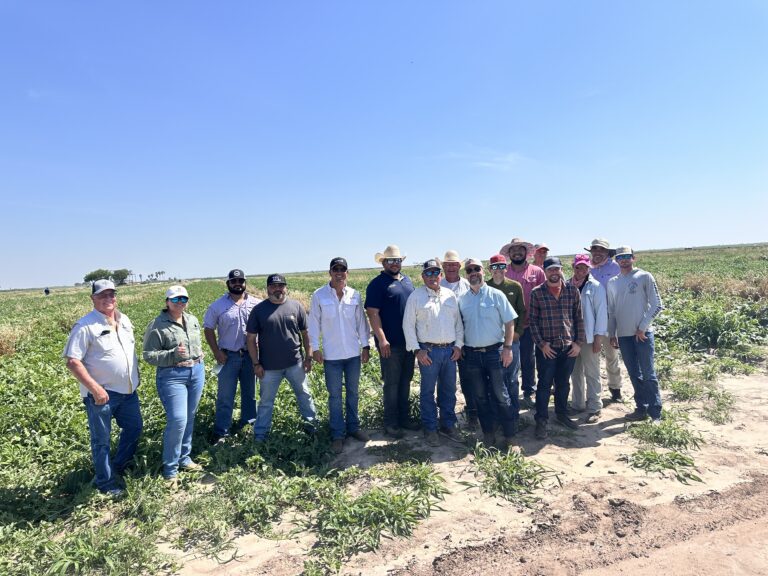
National Watermelon Association Executive Director, George Szczepanski, and a large group of TWA members at Green Gold Farms, assessing local watermelon variety trials
However, the primary challenge has been timing the harvest for optimal market entry amid market saturation, which caused prices per pound to decline at the beginning of the season. As acreage increased in Florida and Georgia, the industry faced unusual competition this year, resulting in a more extensive U.S. production landscape.
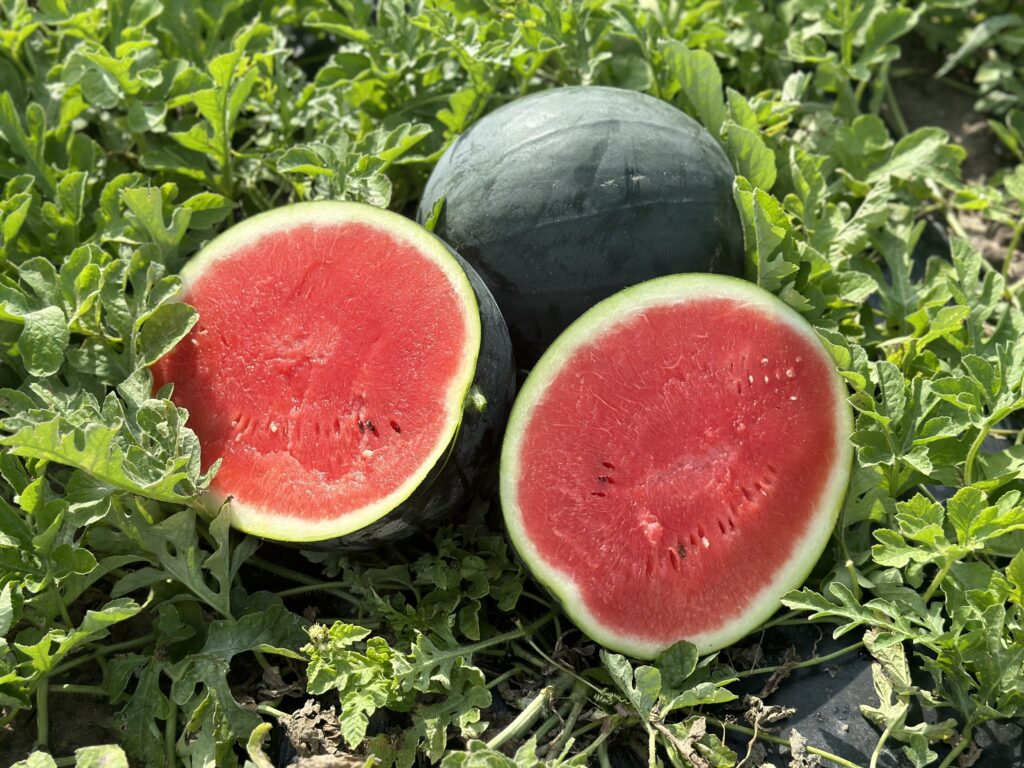
Despite this, Texas growers' efforts paid off, yielding an excellent crop quality with “good Brix and meat density,” Story stated.
Market dynamics
About half of Texas-grown watermelons stay in and around the state, according to Story. The rest mostly travel to other parts of the country, with some TWA members targeting larger eastern markets, including New York, and western growth areas, such as Colorado. There, they compete with international imports from Mexico, which are redistributed nationwide.
"Our members have a wide variety of outlets, such as retail, food service, and farm stands, and we aim to sell every pound of watermelon harvested," said Story.
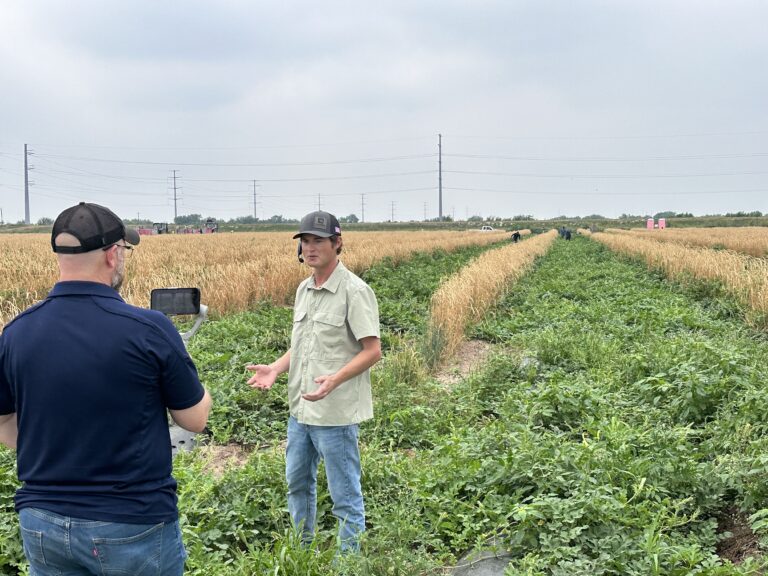
TWA Board Member Will Beckwith of Beckwith Produce teaching a live watermelon Ag in the classroom session.
Challenges beyond market dynamics include water availability, pests, and labor. While disease pressure has been moderate, water access remains a concern after five years of drought. Recently, Texas received a $280 million federal grant to support farmers and ranchers, including watermelon producers. However, Story pointed out that funding is spread across a large territory and takes time to reach recipients.
Labor also remains a key issue, said Story, especially with H-2A program reforms underway: "Many members use H-2A labor, but improvements are needed in the approval process and timely worker arrivals."
Trends and outlooks
The head of the TWA said the resurgence of a wider range of watermelon varieties, including seedless, seeded, and yellow and orange meat options, has driven trends.
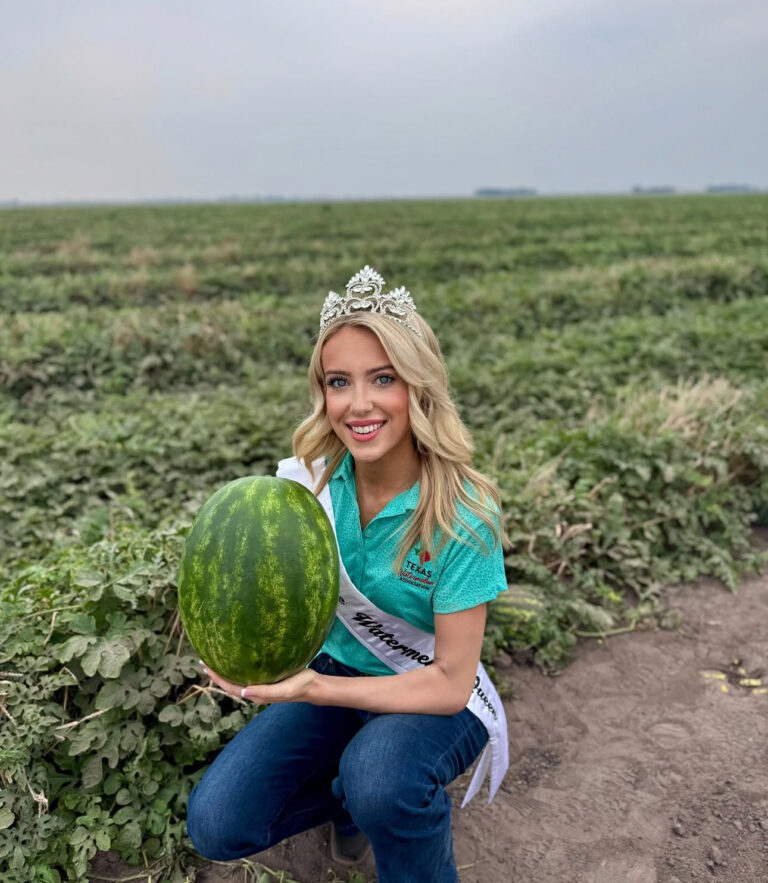
2025 Texas Watermelon Queen, Bethany Boller, who acts as a promotional ambassador to encourage the sale and consumption of Texas Grown Watermelon.
“Retailers are realizing the benefit of offering consumers options. It provides a greater growing window for different varieties and engages consumers more broadly,” said Story.
Looking ahead, the industry anticipates a prolonged harvest season, as hot temperatures are expected to persist into October. "The longer it stays hot, the more people want to buy watermelon every week," said Story.
*Top photo is a "Black Diamond" type watermelon growing in the Rio Grande Valley. All pictures courtesy of TWA.