


The second life of Chilean kiwifruit—more acres, better quality, and new markets



Writing and reporting by Macarena Bravo


In the agricultural business, anyone who’s switched crops seeking a bigger return will tell you that success ebbs and flows. In this vein, the Chilean kiwifruit industry is currently writing a new chapter in its history, marking a true rebirth that has producers going back to growing the fruit after PSA disease slashed production numbers back in 2012.
"Today we’re at almost 20,000 acres planted, with a production of 144,000 tons last year,” says Carlos Cruzat, President at the local Kiwifruit Committee. For 2030, the executive said the country expects to have over 30,000 acres dedicated to kiwifruit. "There are people who say growth could be even quicker.”
With this encouraging forecast and only two really strong kiwifruit producers in the Southern Hemisphere—Chile and New Zealand—the local industry has enough reason to rest on its laurels. However, Cruzat is cautious and warns that competition could be looming from Chile’s neighbors to the north and the east.
"Argentina has excellent weather conditions for kiwifruit cultivation, so we must be wary. And Peru could grow yellow kiwifruit with little chill-hour requirement, so it could also be a competitor in the end.”
Quality above all, a challenge for Chilean kiwifruit
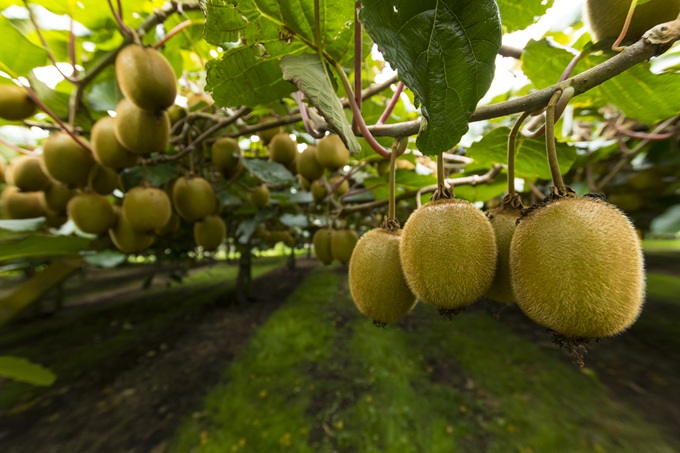
Cruzat says kiwifruit production worldwide will keep growing, and while New Zealand will continue to lead the charge, Chile’s numbers are expected to double.
Prices are also on an upward trend: “The world is paying more for kiwifruit,” says Cruzat. “There’s more of a draw to it and a desire to have it.”
Chile’s challenge today is to develop the red kiwifruit and allocate a significant acreage to it so as to improve margins. However, Cruzat was categorical and insisted that success in that venture hinges on the quality of the fruit: “The market has proven that it’s willing to pay for good quality.” This is critical, he says, as New Zealand has raised the standard for the entire industry. However, that's not a bad thing at all. “The effort they put into their product benefits us all. They’re concerned about quality, volume, production, and generating consumption.”
Today, the Chilean kiwifruit industry is standing strong. Cruzat says there’s room for market growth both domestically and internationally, with more dedicated acreage projected for the planting of high-quality green kiwi. “Chilean kiwifruit must be good to eat, sweet, with a balanced tartness, and a uniform texture. It should provide a soft chewing experience and a perfect point of ripeness that happens right in the consumer’s kitchen.”
Sebastián García, Category Manager for cherries and kiwifruit at Copefrut, has an optimistic outlook on the sector: “We have a great opportunity to keep this industry alive and producing the fruit that the markets need. Chilean kiwifruit can stand above the rest for its quality.” Cruzat's message in that regard was clear and direct: “This is the moment to make changes. We find ourselves in an incredible situation with the ability to work together and invest in a better future. Let’s take this chance and make the changes we need.”
Related stories
Chilean kiwifruit harvest delayed over brix level
New Zealand starts harvesting its record-breaking 2025 kiwifruit season
U.S. kiwifruit market projections show steady growth towards 2035






Subscribe to our newsletter