Ag-tech innovator BioPollen expands liquid pollination system across the Americas
 Add Fresh Fruit Portal to Google
Written and reported by Macarena Bravo | Lee esta noticia en Español
Climate change might be making pollination less reliable for US fruit growers, but a Chilean ag technology company says its liquid system can help fill the gap.
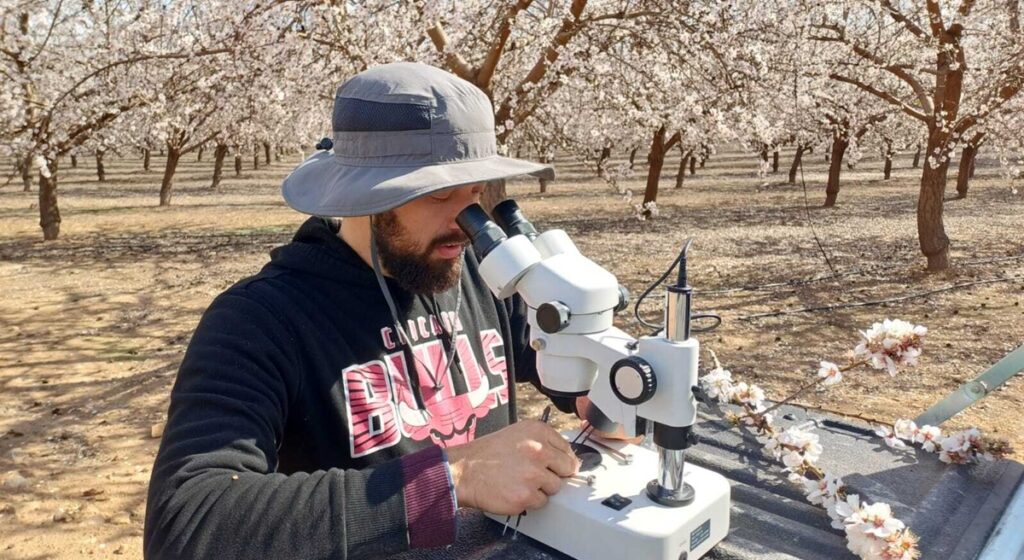
Founded in 2019, BioPollen has expanded operations into the United States, Peru, and Colombia, applying its assisted pollination system across more than 24,700 acres in the Americas, the company says. The firm claims the technology can lift fruit set by about 20 percent.
Nearly 12,400 acres received applications in the most recent season alone, with annual growth approaching 30 percent.
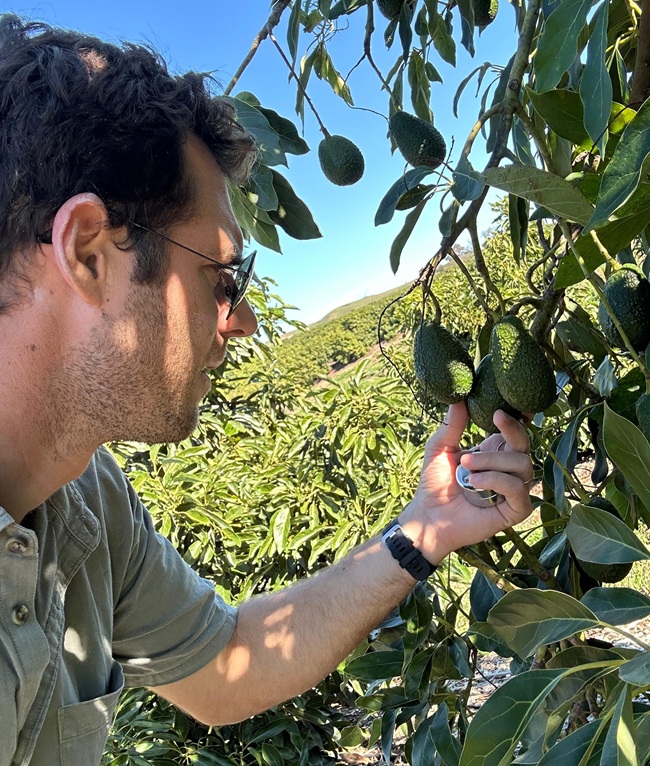
Pollination has become a structural challenge for the global fruit industry as unpredictable weather disrupts bloom timing and reduces the effectiveness of natural pollinators. BioPollen’s approach centers on extracting pollen from flowers just before opening, preserving it in liquid form, and applying it later using aerial equipment such as drones, helicopters, or planes.
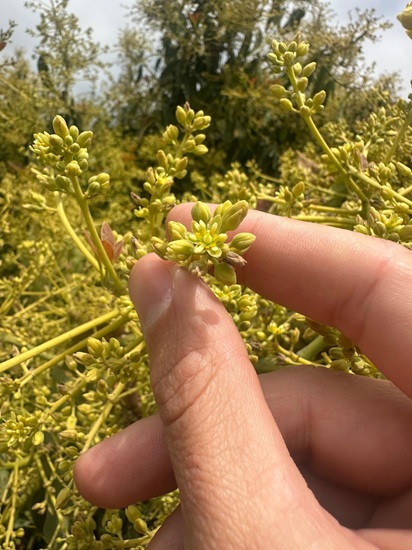
“The avocado tree produces thousands of flowers, but less than 0.1 percent end up becoming fruit. We saw that there was enormous untapped potential,” Manager Diego Domínguez tells FreshFruitPortal.com.
From avocados to almonds
BioPollen initially developed its technology for avocado trees, a crop that Domínguez said faces inherent pollination challenges because its flowers are not attractive to bees. The company reports average production increases of about 20 percent, with stronger results in seasons marked by adverse weather.
“We see ourselves as a kind of agricultural insurance. When everything is perfect, our contribution is small, but when the weather is not favorable, that's when we make a difference,” Domínguez says.
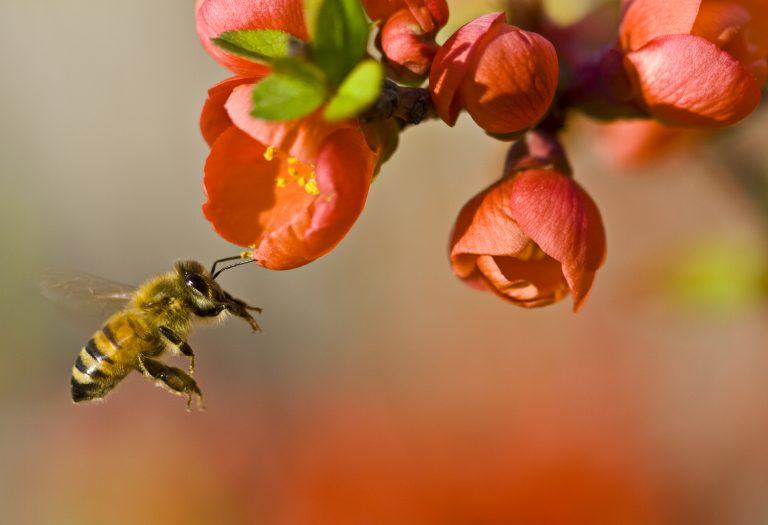
The company positions its service primarily as a complement to bees rather than a replacement.
“Our service is carried out while maintaining the farmer's cultural practices around bees, and in the case of avocados, we already apply it to entire fields without the use of bees,” he adds.
After validating the system in avocados, BioPollen expanded into almonds, cherries, hazelnuts, and pistachios. The company has also conducted trials in corn and other annual crops, which Domínguez said have shown yield increases of up to 40 percent in some cases. Ongoing validations include kiwifruit, walnuts, and blueberries.
BioPollen works with US-based universities, including Riverside and Oregon, to support scientific validation of its technology.
Scaling pollen efficiency
The company says it continues to refine pollen extraction and preservation. Domínguez said BioPollen can now extract up to four times more pollen per kilogram (2.2 lbs.) of flowers while improving pollen viability "from levels close to 50 percent to ranges of 80 to 90 percent."
Domínguez frames assisted pollination as a risk-management tool for growers facing increasing uncertainty.
“We cannot control the climate, but we can control how many viable pollen grains reach each flower. Our contribution is to provide certainty at a key stage of the production process,” he explains.
He encourages growers to assess emerging pollination tools as part of standard orchard management.
“Assisted pollination is no longer a rarity and is becoming an increasingly common practice. The results are clear to see, and the potential is enormous,” he notes.
*All photos courtesy of BioPollen.
Related stories
More pollination hours and better hive health—the science behind Beeflow technology
“Manpower” and mites: Wilmer Honey’s decades in the pollination business
Wild bees play a vital role in Georgia’s blueberry industry
BeeHero's Yuval Regev: "Even the best beekeepers can benefit from a data-driven approach"