The Peruvian blueberry boom heads for the homestretch

 Add Fresh Fruit Portal to Google
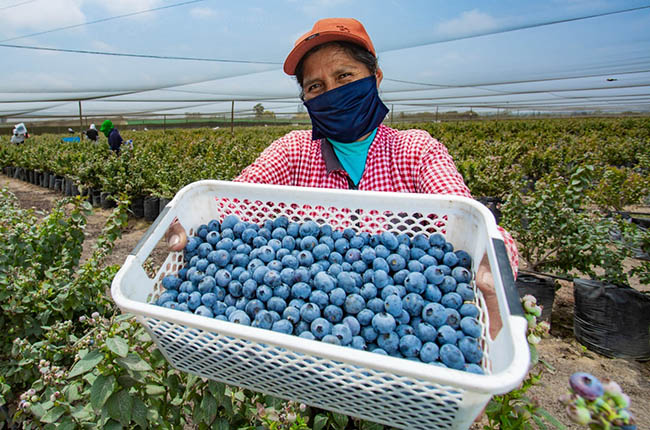
The Peruvian blueberry season is entering its final months, with shipments to the United States showing only modest growth as exporters increasingly rely on China, Europe, and emerging markets to absorb expanding volumes.
The president of the Peruvian blueberry grower and producer association Proarándanos, Miguel Bentín, says the industry now expects to finish the 2025–26 season with growth between 16 and 17 percent—slightly below early forecasts. That would bring total exports to nearly 370,000 metric tons.
“To date, we have shipped around 350,000 tons and are already entering the production decline phase, with weekly shipments of slightly over 11,000 pounds that will continue to fall rapidly until the end of the season,” Bentín tells FreshFruitPortal.com.
Between production weeks four and 17, exporters expect to ship an additional 25,000 metric tons.
US demand cools as diversification accelerates
The US, historically the main destination for Peruvian blueberries, recorded a tepid five percent growth compared with last season, according to Bentín. He attributes the slowdown to tariffs that increased costs and reduced competitiveness.
Other destinations posted stronger gains. Europe increased volumes by close to 35 percent, while China opened the season with an uptick of approximately 18 percent. Several emerging markets doubled their purchases, supporting the long-term diversification strategy of the Peruvian blueberry industry.
Genetics drives yields more than acreage
Production remains concentrated in northern Peru, with about 75 percent of volume coming from La Libertad and Lambayeque. Ica increased its share to 14 percent from 12 percent last season.
The Peruvian blueberry industry reached 64,250 certified productive acres in 2025, and Bentín says that figure could rise to roughly 74,100 acres in 2026.

However, he emphasizes that acreage alone does not explain the industry’s growth. Varietal replacement and new genetics have become central to competitiveness. While Ventura and Biloxi remain widely planted, newer varieties such as Sekoya Pop have already surpassed Biloxi in planted area.
“Although blueberries are considered a perennial crop, the dynamics of genetic improvement in the field could lead to replacements even from the second year onwards, which makes the process much faster and means that the crop's shelf-life is generally longer than the time it will be in the field,” Bentín explains.
Logistics, climate, and outlook
Bentín says new logistics options, including the Port of Chancay and greater use of terminals such as Pisco, have helped ease some seasonal congestion, though peak demand still strains the system at times.
The season avoided extreme weather events, but it underscored the need for preparedness tied to El Niño variability, he adds.
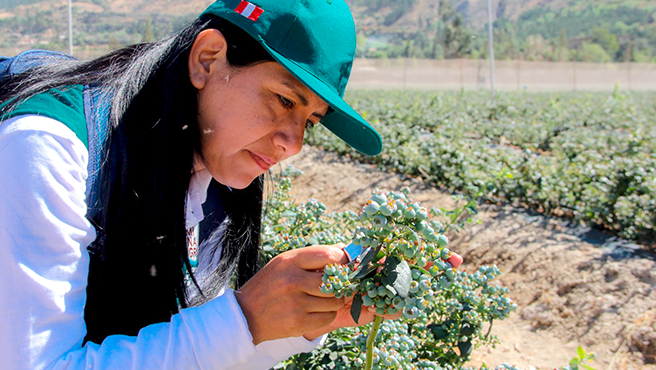
Looking ahead, Bentín stresses that Peruvian blueberries remain attractive to investors. He projects certified blueberry-planted areas to reach about 81,600 to 84,000 acres, depending on demand.
“Rapid growth is not a fear, but it is a risk that has been mapped out,” he says, noting that global demand still exceeds annual supply.
Bentín notes the industry will continue to focus on efficiency, sustainability, and consistency.
“We are on the right track. Peru has demonstrated that it has the capabilities to do so, and we believe that it will continue to improve consistently over time,” he concludes.
Related stories
Peruvian blueberry exports surge backed by new varieties
Peruvian blueberry sector updates 2025 export outlook with shorter season and volume decrease