Adaptation and quality: Lessons for the Chilean cherry industry after a challenging 2025/26 season
 Add Fresh Fruit Portal to Google
Written and reported by Macarena Bravo | Lee esta noticia en Español
The Chilean cherry industry is in the final stretch of its 2025/26 season, with shipments scheduled until March 12.
Exports reached 113.8 million boxes during this campaign, according to the Cherry Committee at industry body Frutas de Chile, slightly exceeding the initial projection of 110 million boxes.
China remains the main destination for the Latin American country’s cherries, with 98.9 million boxes received. However, its share of total exports fell from 92 percent to 87 percent, in what Frutas de Chile interprets as progress in its market diversification strategy.
Final official numbers for the current campaign are still pending and will be released once the season is fully over, the organization says.
A campaign marked by climate and commercial variations
Changes in weather patterns brought the harvest to an early start by about ten days, concentrating a high volume of fruit in the first weeks of the season. Additionally, the Lunar New Year came earlier than in previous years, shortening the marketing period for Chilean fruit.
Both factors led to highly pressured prices, which in turn drove risky commercial decisions that jeopardized one of the main tenets driving the industry’s success in China: excellent fruit quality. In trying to make the most of a tight market, some producers disregarded industry quality guidelines and recommendations, shipping fruit that didn’t meet competitive commercial standards. This negatively affected the Chilean cherry brand and overall image.
Víctor Catán, president of Chile’s National Federation of Fruit Producers, explained to FreshFruitPortal.com that the increasingly demanding Chinese market will continue to grow more complex.
"The business will probably be more limited and with smaller margins, but it will continue to be a business for those who adapt," he said.
Julio Ruiz-Tagle, Asia & Americas Manager at fruit inspection company D-Quality Survey, shared Catan’s opinion, saying the industry had entered "a new, more mature, and more demanding stage."
"China is no longer a volume market: it is a precision market. It is not just about producing more, but about doing it better, with information, coordination, and strategy," he explained.
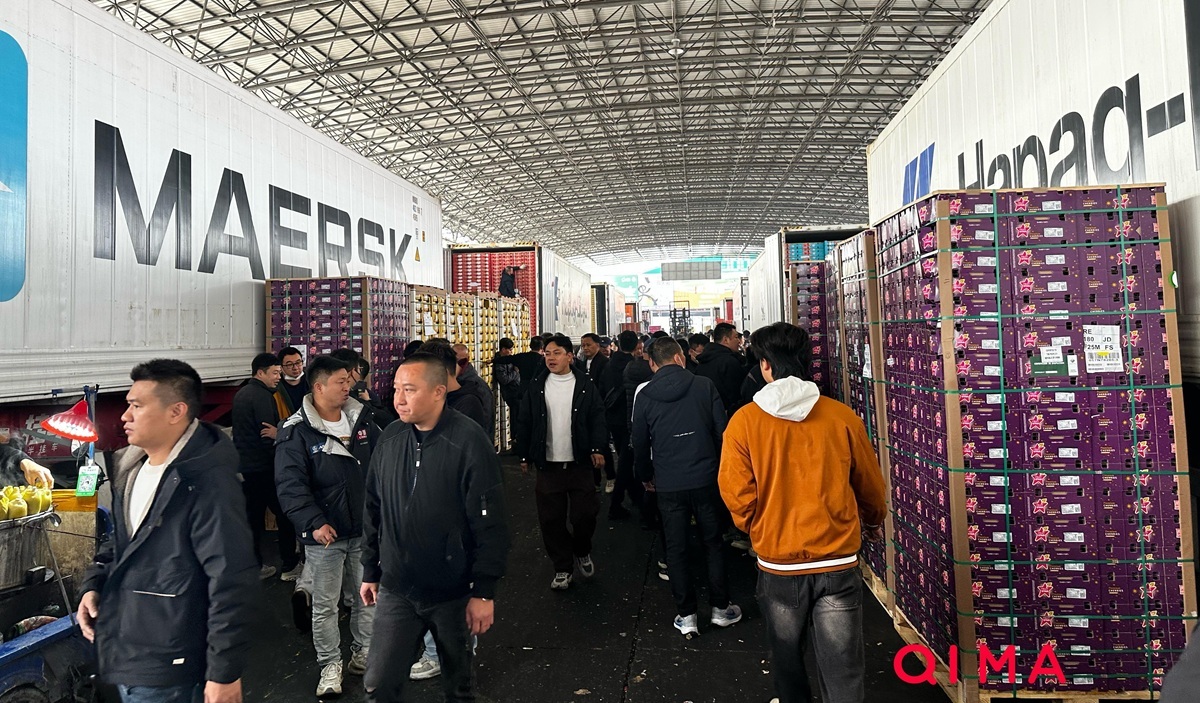
Image courtesy of Qima
According to Ruiz-Tagle, there were significant differences in fruit quality among Chilean companies exporting to China, particularly in condition, consistency, and presentation. That situation worsened rapidly when several exporters opted to store fruit longer than usual in an effort to secure better prices as the Lunar New Year approached.
Chilean cherries: Category growth in a more complex environment
Another factor that played an important role this season was a weaker Chinese economy, which reflected on consumers’ decreased purchasing power.
Although a slight price rebound was recorded just before the Lunar New Year (particularly in large sizes), it was insufficient to make up for the rest of the season.
Ruiz-Tagle explained that the effect was akin to a season without Lunar New Year, as supply concentration and shorter marketing times diluted the commercial push traditionally provided by the holiday.
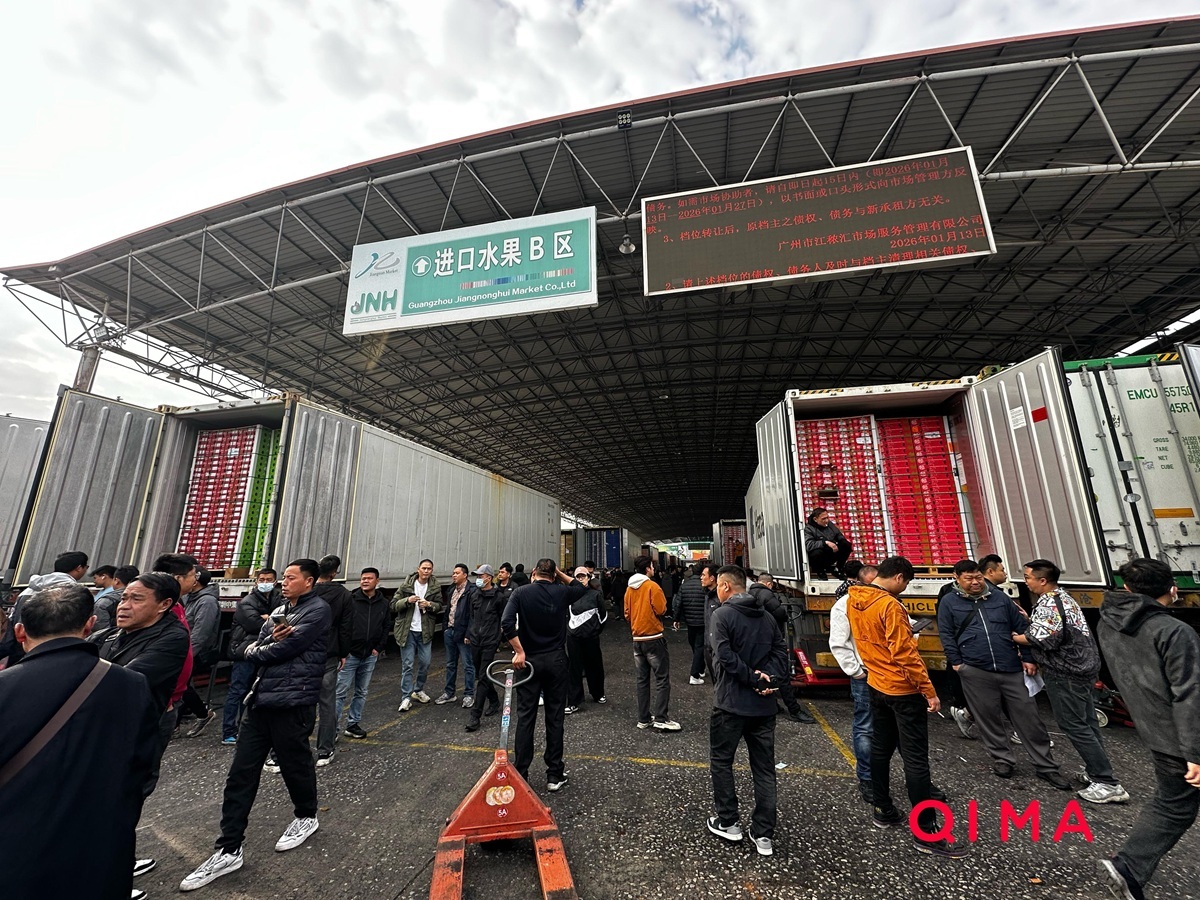
Image courtesy of Qima
The executive also added another factor to an already dramatic equation: an increase in negative comments about Chilean cherries running amok on Chinese social media. Users online questioned the use of pesticides on the fruit and its overall quality due to long transit and storage times. This type of content, Ruiz-Tagle says, had a greater impact on the audience than traditional promotional campaigns.
"The Chinese consumer is now more demanding and more conscious of environmental issues. We must confront this narrative with information, transparency, and strategy," he explained.
Despite two consecutive challenging seasons, Ruiz-Tagle emphasized that the Chilean cherry remains a valued product in China. He also highlighted the industry’s demonstrated ability to learn.
"More than a crisis, it is a moment of adjustment and evolution. The business is not over: it is changing. Those who understand this change and adapt will lead the next stage," he concluded.
Related stories
Why Chilean cherries might need more than good quality to thrive in China this season
Beyond China: Chilean cherries arrive in the US and Europe amid market expansion