








Sharp drop in blueberry prices in China due to production expansion



 Add Fresh Fruit Portal to Google

Blueberry prices in China have fallen sharply in recent weeks amid domestic product flooding the market, according to local media. The rapid expansion of local blueberries has not only put pressure on prices but also shifted trends: consumers have ceased to consider the fruit a premium product and now see it as a more accessible, affordable snack.
The news site China Daily reported that since March, blueberry prices in the Chinese market have dropped by almost half compared to levels registered during the Spring Festival celebrations.
"In many supermarkets, a 250-gram package that previously sold for around 30 yuan ($4) now costs around 20 yuan, while wholesale prices have gone from about 150 yuan per box to approximately 80 yuan," the outlet reported.
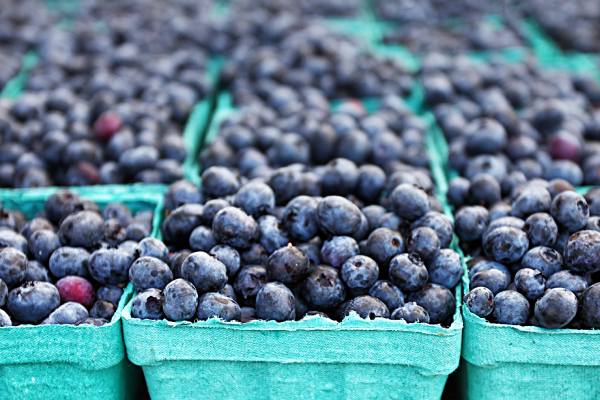
Likewise, in the main production areas, farm-gate prices have fallen to about 30 yuan per kilo, about 50 percent below a year ago.
High blueberry volumes pressure prices in China
In statements to China Daily, Gao Dengtao, an expert from the Zhengzhou Fruit Research Institute, attributed the price drop to the rapid increase in production, which went from 347,000 tons in 2020 to about 810,000 tons in 2025—more than double in five years. He also emphasized that the quality of local fruit has improved considerably and is now recognized in domestic and foreign markets.
Xinjiang Net reported that on April 13, a group of journalists visited wholesale markets, supermarkets, and street stalls across different areas of Xinjiang, where they confirmed that blueberry prices had fallen again. Depending on the brand and size of the blueberries, the retail price ranged from 50 to 140 yuan per kilo, and the price for a 125-gram box ranged from 5 to 30 yuan.
Data from the Chinese-market specialized certification service provider Qima to FreshFruitPortal.com shows that the trend has been ongoing since last season.
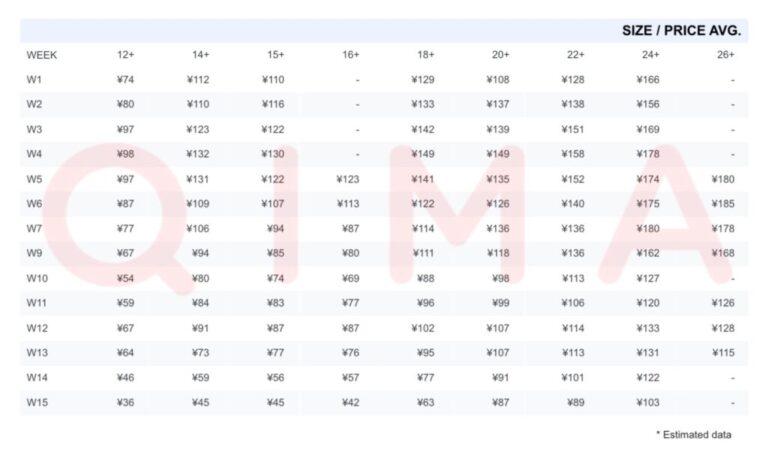
Data courtesy of Qima
"Imported fruit no longer has an automatic price advantage, with increasingly narrow commercial windows due to local fruit production, mainly from the Yunnan area," the report states.
According to Qima, prices began to drop in week 9, at the beginning of March, and the drop became more noticeable toward week 10. Prices may continue to drop, as Chinese blueberries enter peak production between the months of May and July.
In this scenario, Qima explains that some Chinese companies are seeking other markets for their fruit, such as Singapore, Vietnam, Indonesia, and Malaysia, among others, though in limited volumes. However, challenges remain, as product quality seems variable.
"Due to the large amount of volume, there is high pressure to harvest as soon as possible, which has led to a decrease in the general quality of the product," says the company’s report.
The social media reaction
The drop in prices has become a trend in the online world.
CCTV news reported that social media users have expressed astonishment at how blueberries have gone from being inaccessible to being easily available. Even the fruit’s growers and distributors themselves have transformed into content creators, promoting their product through live streams.

For example, in Chengjiang county, in Yunnan province, one of the main blueberry-producing regions, with close to 30 percent of the national production, and where in previous years blueberries were sold by the box, the fruit is now sold by weight or in large volumes on live streams.
*All images are referential.
Related stories
Agronometrics in Charts: China's blueberry exports skyrocket 602 percent, transforming global trade











Subscribe to our newsletter