




Agronometrics in Charts: Two decades of price volatility in the US economy

 Add Fresh Fruit Portal to Google
Each week, the series ‘Agronometrics In Charts’ examines a different horticultural commodity, focusing on a specific origin or topic and visualizing the trade market factors driving change. Check out our entire archive.
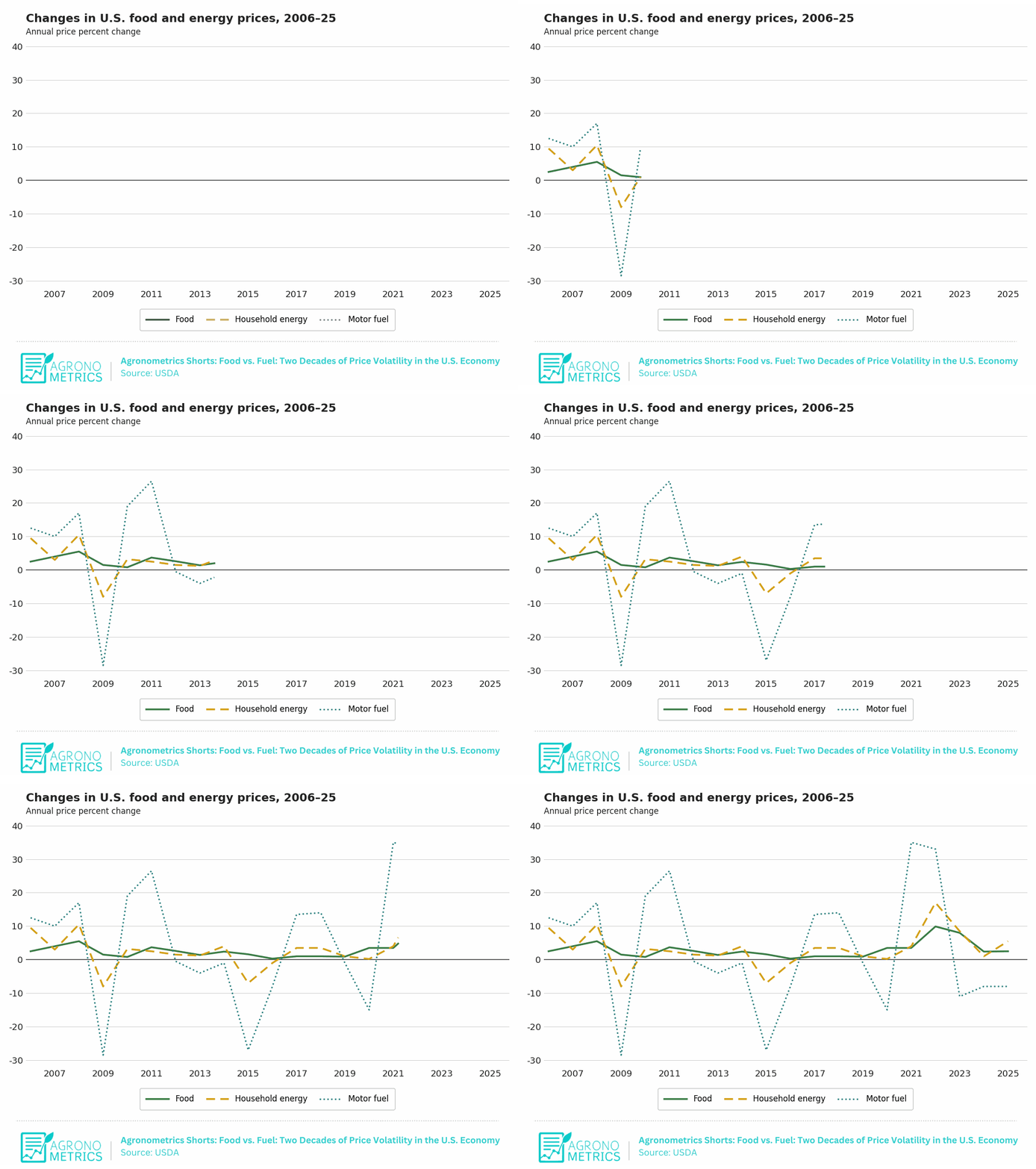
According to the US Department of Agriculture (USDA), between 2006 and 2025, American food and fuel prices experienced significant volatility, though the size of the swings varied widely.
Motor fuel prices were the most unstable, increasing by as much as 36 percent and falling by as much as 28 percent in a single year. Household energy prices were also volatile, rising by up to 18 percent and falling by up to six percent.
Food prices were comparatively more stable over the period. Between 2006 and 2025, annual food price increases remained below five percent in most years, with the sharpest increase reaching 10 percent in 2022. The largest increase came in 2022, when food prices rose 10 percent amid supply chain disruptions and higher input costs. Inflation eased afterward, with food prices rising less than three percent in both 2024 and 2025.
Food vs fuel
Over two decades, food and energy prices were shaped by a series of overlapping crises.
Oil peaked in 2008 amid strong demand, crashed in 2009 amid the financial crisis, spiked again in 2011 amid Middle East instability, and then collapsed between 2015 and 2016 amid the US shale boom.
COVID briefly sent oil prices negative in 2020. The sharpest shock came in 2022, when Russia's invasion of Ukraine simultaneously disrupted energy, wheat, and fertilizer markets, a rare synchronized hit across all categories. Unlike motor fuel and overall energy prices, annual food prices never deflated between 2006 and 2025, suggesting that periods of food inflation tended to establish a higher price level over time.
The contrast highlights how agricultural and energy markets respond differently to global shocks.
Energy prices often change rapidly due to shifts in oil supply, geopolitical conflicts, and trade disruptions, as is currently seen amid tensions over the Strait of Hormuz. Food prices typically move more gradually because of agricultural production cycles, processing, transportation, and broader supply chain factors.
Even so, higher fuel and energy costs still affect agriculture directly by increasing expenses for farm operations, fertilizer production, and food distribution.
*All photos are referential.
Related articles:
Health trends and local sourcing fuel US produce box boom
ONE applies fuel surcharge for land transportation in Latin America
Mexican mango's global triumph: How diversification fuels international growth










