25-state coalition is challenging Trump’s tariffs in court
 Add Fresh Fruit Portal to Google
Two weeks after the United States Trade Representative office (USTR) announced tariffs on imports from 60 countries, a group of 25 states is challenging the move in court.
In the lawsuit, the attorneys general argue that the latest batch of levies invoked by the Trump Administration under Section 301 of the Trade Act of 1974 is only a pretext to replace the import taxes struck down by the US Supreme Court back in February.
“After losing at the Supreme Court, the administration is once again trying to illegally raise taxes on families and businesses with a new round of tariffs,” said New York Attorney General Letitia James.
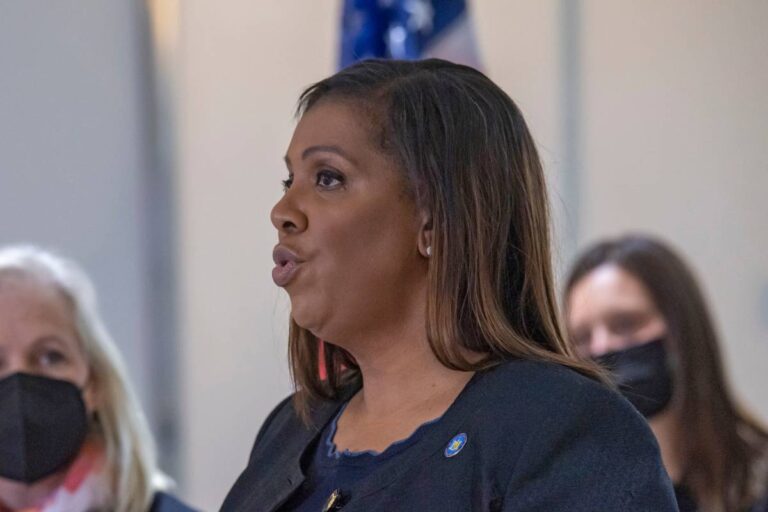
NY Attorney General, Letitia James | via Shutterstock.
“The Supreme Court has made it clear that this Administration cannot ignore the law to impose sweeping tariffs. I will not stand by as New Yorkers continue to suffer the consequences of the President’s trade war,” added NY Governor Kathy Hochul.
Standing with New York are attorneys general from Arizona, California, Colorado, Connecticut, Delaware, Hawaii, Illinois, Kentucky, Massachusetts, Maryland, Maine, Michigan, Minnesota, Nevada, New Jersey, New Mexico, North Carolina, Oregon, Pennsylvania, Rhode Island, Virginia, Vermont, Washington and Wisconsin.
In their arguments, the states claim the government didn’t meet Section 301 requirements to impose taxes by failing to specify individual cases against the affected economies and explain why imposing the levies would solve the problem.
Section 301 tariffs
The latest batch of tariffs came into effect on July 24, just as the latest set, announced in response to the US Supreme Court ruling that struck down the first round, expired. Unlike its predecessors, Section 301 levies have proven to be noticeably more resilient against legal challenges, and it’s not the first time the Trump Administration invokes them.
Back in his first period in the White House, President Trump imposed 30 percent tariffs on China using Section 301 of the Trade Act of 1974. The taxes have remained in place despite several attempts to reverse them.
The latest set of levies is the result of a USTR probe that alleged that 60 economies, including the European Union, Australia, and Japan, were harming the US economy by failing to curb imports produced with forced labor. The countries, which, according to the Associated Press, represent 99 percent of US imports, now face import taxes of 10 percent and 12.5 percent.
The 25-state lawsuit joins two other claims presented by small companies shortly after the levies were announced.
One was filed in the US Court of International Trade by Learning Resources, the educational toy company that was part of the tariff lawsuit that culminated in the Supreme Court's February ruling. The other was filed by Burlap and Barrel, a New York-based spice company, and Collective Horology, a watch retailer based in Ventura, California.
*All images are referential via Shutterstock.
Related stories
Chile asks USTR to exempt its fresh fruit imports from Section 301 tariffs
“Extremely disappointing”: The world reacts to a new swath of US tariffs
Opinion | Yet another hurdle for the South African citrus industry