“Extremely disappointing”: The world reacts to a new swath of US tariffs
 Add Fresh Fruit Portal to Google
The days when the word “tariff” didn’t mean a lot outside of an economics classroom are long gone. However, that doesn’t mean that the announcement of a new round of levies on global trade will ever go unnoticed.
On the evening of Thursday, July 23, the United States Trade Representative (USTR) announced a new set of tariffs for 60 nations as a result of a probe into alleged disloyal commercial conditions related to forced labor, which the agency considered detrimental to the American economy.
The levies came into effect just as the previously announced 10 percent import tax under Section 122 of the Trade Act of 1974 expired. That round of levies was announced by the Trump Administration back in February, just as the Supreme Court had struck down the President’s “Liberation Day” levies.
New US tariffs: Anger and confusion take global trade
As expected, reactions to the announcement poured in from all corners of the world.
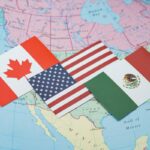
The overall sentiment was disappointment, as many of the affected parties, including the European Union, Mexico, Australia, and New Zealand, are long-standing US allies, and some of them even have signed trade agreements with the Trump Administration.
“We believe that amongst all of the countries in the world, Australia does take the issue of slavery, modern slavery, seriously, and will continue to do that,” Trade Minister Don Farrell told reporters in Adelaide, according to Al Jazeera. “Higher tariffs are completely unjustified, and we will continue to lobby the USTR to remove all tariffs on Australian goods.”
Likewise, Australia’s neighbor showed its disapproval. Through his account on X, New Zealand’s Prime Minister Christopher Luxon said the new swath of levies was “extremely disappointing.”
“The US investigation did not provide meaningful evidence to support claims in relation to forced labor. Tariffs are not the way; they drive up costs and uncertainty for businesses,” he wrote.
Back in the American continent, Peru was hit with a 12,5 percent import tax. In a statement posted to the Ministry of International Trade and Tourism’s website, the local government was adamant that the USTR announcement wasn’t a final ruling on the allegations of forced labor in the Peruvian economy.
“This resolution doesn’t conclude that our country exports goods produced under forced labor, nor does it identify Peruvian goods manufactured under those conditions, as the USTR focused its investigation on the existence and enforcement of regulations banning the import of such goods,” the statement reads.
The country said it remains open to dialogue with US authorities and will continue to work to defend its interests.
Back in the East, Japan’s Chief Cabinet Secretary, Minoru Kihara, also denied the American allegations against his country, calling the White House's announcement “regrettable.”
The European Union joined the chorus of upset voices condemning the White House trade policy. For the bloc, these new tariffs come as a hard punch after it signed a trade agreement with the US following highly disputed negotiations.
In an interview with Channel News Asia, Foreign Policy Chief Kaja Kallas reacted with irony to the new levies.
“If you compare our labor laws to the ones of the US, I mean, people have paid vacations, we have very good labor conditions for our employees, so it’s not really grounded,” she noted.
Finally, and unsurprisingly, China also condemned the USTR announcement. In a press conference, Ministry spokesman Lin Jian said his country “opposes all forms of unilateral tariffs,” adding “trade wars do not serve any parties’ interests.”
*All images are referential via Shutterstock.
Related stories
Section 301: A new era of tariffs, explained
35 percent US tariff on Brazilian table grapes has local export sector on high alert