



The Global Avocado Summit 2026 highlights the issues redefining the global avocado industry
 Add Fresh Fruit Portal to Google
After years of strong expansion in production and international trade, the global avocado industry is beginning to face a new stage. Growth is still important, but is no longer enough: competitiveness, productive efficiency, sustainability, market access, and the ability to respond to increasingly demanding consumers are gaining greater importance.
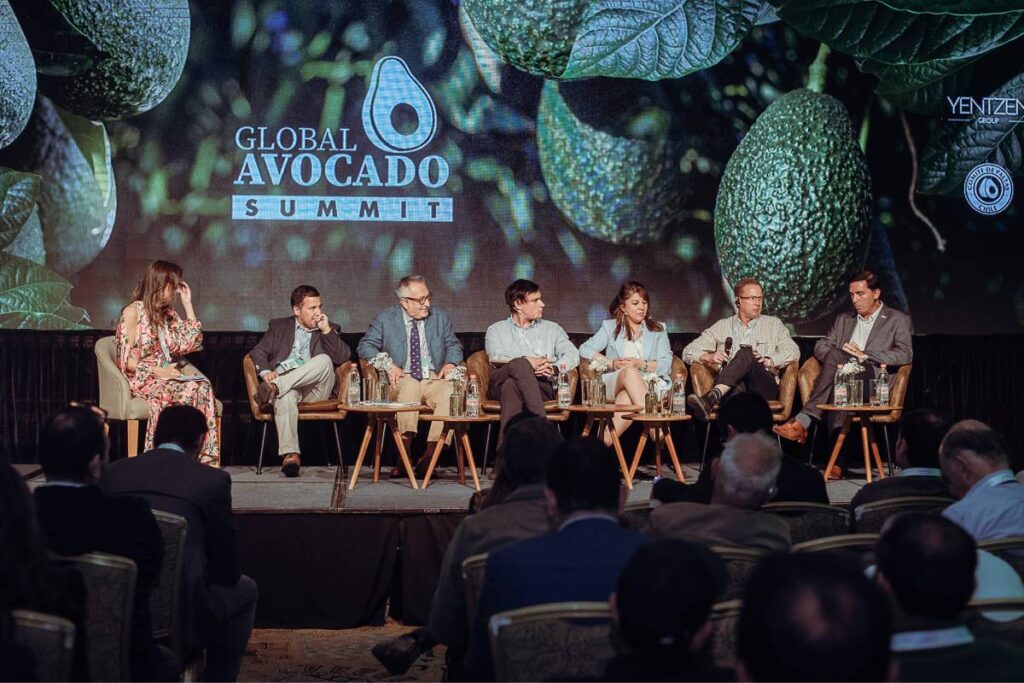
This will be the focus of the second edition of the Global Avocado Summit 2026, which will take place on November 11 at the Monticello Conference Center in Santiago, Chile. The event will bring together stakeholders across the supply chain to analyze the present and future prospects of the global avocado business. In its first edition, held in 2024, the event attracted over 650 attendees and 50 sponsoring companies.
An industry seeking to consolidate its growth
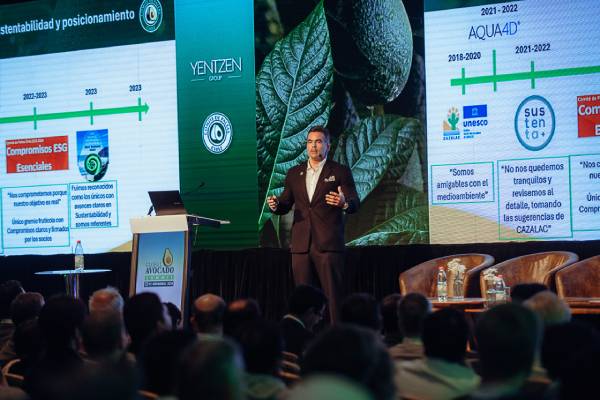
The program will begin with Francisco Contardo-Sfeir, President of industry body Paltas de Chile, who will present the State of the Global Avocado Industry, offering a comprehensive view of the sector, its main trends, innovations, and challenges.
“Despite a very challenging context for agriculture in general, we are experiencing a moment where our sector has shown significant resilience and become increasingly competitive, demonstrating high production levels thanks to the application of efficient techniques with sustainable criteria. This work has maintained the momentum and strong positioning of Chilean avocado among our local and foreign consumers. The next stage is to consolidate what we have been building for years, produce more and better, and continue opening borders; that is why this Global Avocado Summit will combine sustainability, production techniques, and commercial vision in Chile and abroad,” Contardo-Sfeir stated.
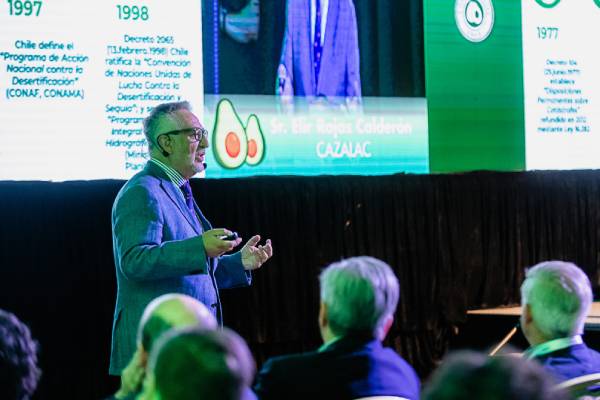
The evolution of international trade will be another focus of the day. Sebastián de la Cuadra, CEO of Avobook, will analyze the changes in global exports, the origins showing the highest growth, and the evolution of distribution toward the main destination markets. The program also includes an analysis of the European market and a presentation on biodiversity and CO2 capture by Elir Rojas Calderón, Geographer, Senior Consultant at CAZALAC, and Director of the project Biodiversity, Conservation, and CO2 in Persea americana Mill forests in Chile.
One of the key moments will be the panel Analysis of variables in avocado production and export, which will gather representatives from Chile, Peru, and Colombia to analyze the sector's prospects from different producing nations.
From Peru, José Antonio Castro Echecopar, President of ProHass, highlighted a transversal challenge for the industry: strengthening consumer trust and ensuring a good experience with the product throughout the entire supply chain.
“Peru is the second-largest producer and exporter of Hass avocados in the world, and from ProHass, as the leading institution of the Peruvian industry, we have the responsibility to communicate and share the benefits of avocado consumption with all stakeholders (...) Across the board, the international industry must focus on maximizing trust in this product, ensuring that every purchase and consumption of an avocado is a good experience for the consumer. This requires, regardless of the avocado's origin, a lot of work from proper field practices to excellent display at final points of sale,” he noted.
Markets, exports, and new opportunities
The commercial perspective will also have a prominent space at the event. From the point of view of producers and exporters, José Gabriel Correa, Investment Manager at Baika Exporters, emphasized the value of having a space that brings together different stakeholders and markets.
“For producers and exporters, this is a very valuable opportunity because it allows us to talk in one place with producers, buyers, and key players in the domestic and international markets. Here we can anticipate consumption trends, learn about the requirements of different destinations, and identify new commercial opportunities, which is essential to continue strengthening the presence of Chilean avocados in the world,” he pointed out.
Innovation will also be part of the program, with a presentation dedicated to clonal rootstocks, strategic pruning, and precision nutrition, and how these tools can contribute to improving yields, homogenizing production, and increasing orchard profitability.
The Global Avocado Summit will conclude its market overview with the panel The Avocado in Chile: Understanding the domestic market, which will analyze the specificities of local consumption and largely unexplored opportunities, including informal channels, HORECA, and other segments with the potential to strengthen the value chain. Arturo Guerrero, spokesperson for Vega Central de Chile; Matías Reeves, from Subsole Exporters; and Gabriel Alarcón, General Manager of Bagno, will participate.
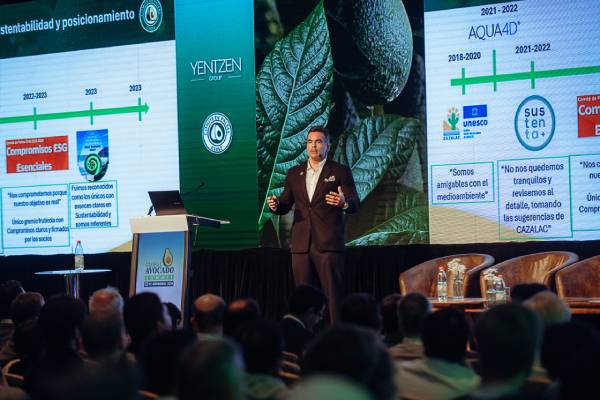
For Gustavo Yentzen, CEO of the event’s organizer, Yentzen Group, this diversity of views makes the gathering a must-attend on the industry calendar.
“The value of the Global Avocado Summit lies exactly in being able to learn, in a single day, about different visions and perspectives of the avocado industry. Bringing together producers, exporters, specialists, and representatives from different markets allows us to look at the business from different angles, understand how it is changing, and anticipate where the next opportunities are coming from,” Yentzen stated.
The Global Avocado Summit 2026 will be held on November 11 at the Monticello Conference Center, with activities starting at 7:30 a.m. and closing at 5:45 p.m.
Related stories