


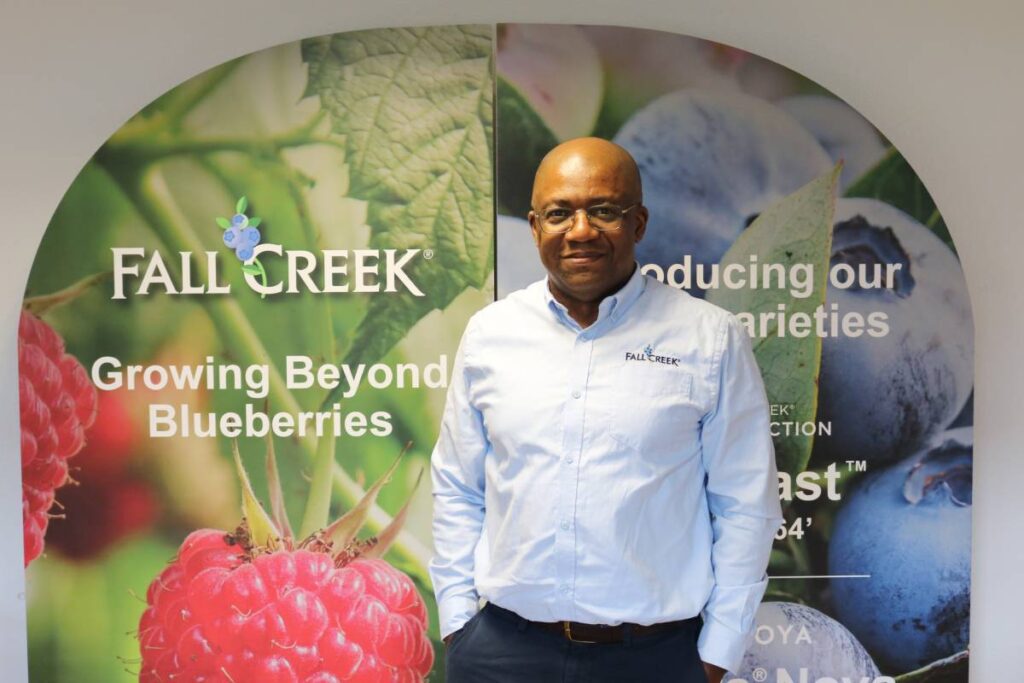
Fall Creek’s Paul Nselel: “Better berries can grow demand as well as replace older varieties”
 Add Fresh Fruit Portal to Google
Blueberry genetics and nursery company Fall Creek is expanding into raspberries and blackberries following its acquisition of Italy’s Berryplant and sister company Berrytech earlier this year.
Speaking at Fruit Attraction this month in Madrid, Chief Commercial Officer Paul Nselel explained the expansion, Fall Creek's new blueberry varieties, and whether better genetics can increase consumption while improving grower returns.

What is the thinking behind the acquisition of Berryplant and Berrytech?
Fall Creek started as a blueberry nursery company and then evolved into breeding. We have been fortunate to benefit from our customers’ trust, and a few years ago we began developing a diversification strategy.
After extensive work, we concluded that raspberries and blackberries were the adjacent crops that made sense. Berrytech and Berryplant were a good fit because of their innovation, the trust they had built with customers, and their being a family company. There was alignment around people, product quality, and service.
We had already started breeding raspberries on a small scale. The acquisition is the next step.
What does the acquisition bring to Fall Creek, and where can these varieties grow?
It starts with genetics, but plant quality is equally important. Berrytech and Berryplant bring both breeding innovation and the ability to deliver exceptional plants. In some locations, Fall Creek uses third-party nurseries, but the focus remains on genetics and plant quality.
Their genetics are grown in Morocco, Spain, Portugal, Italy, and Mexico, and to a lesser extent in Central America, including Guatemala. Eventually, we see opportunities in California’s Central Valley.
Raspberries travel less well than blueberries, so production needs to be relatively close to consumption. Morocco supplies Europe, while Mexico serves its domestic market and the United States.

What is new in Fall Creek's blueberry portfolio?
We go to market through two platforms: Sekoya and the Fall Creek Collection. Our varieties are doing very well. Sekoya Pop is one of our flagship varieties, with millions of plants established around the world.
Over the past 12 months, we have released Sekoya Nova, a high-chill variety, and Everlast in the Fall Creek Collection. Both demonstrate the innovation we are delivering to growers.
Do you think new varieties are expanding demand for blueberries or cannibalizing older varieties?
Both effects are happening. We see category expansion, but also the replacement of older varieties. We see that replacement as a sign of improving fruit quality at retail.
Internally, we talk about “blueberry roulette.” The experience consumers get when they buy fruit is the biggest driver of repeat purchases, and repeat purchases drive the category. If consumers buy blueberries and like them, they buy more.
The opportunity is to deliver quality at scale, 52 weeks a year.
The category has actually been growing on the fresh side at about seven percent a year, but there is significant opportunity if you think about the differences in consumption per capita.
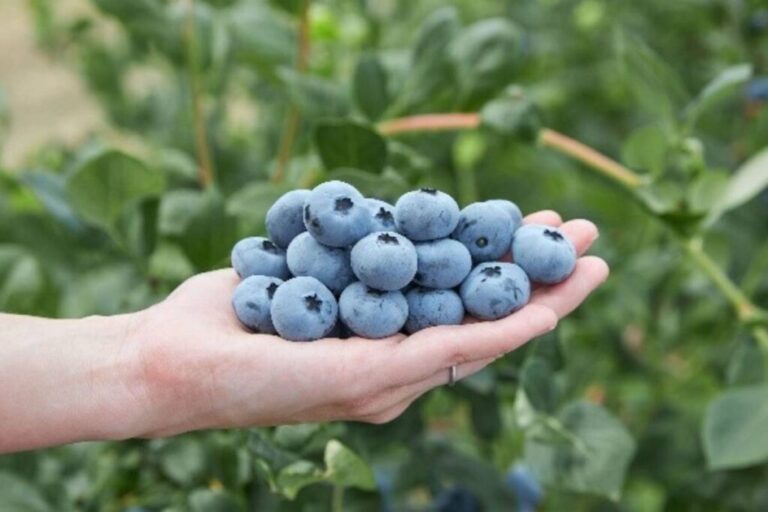
In Canada, it's somewhere between 1.2 and 1.5 kilos per capita per year. The US is between 1 kilo and 1.2 kilos per capita per year, and Europe is, depending on the country, somewhere between 600 grams and 800 grams. And in China, it’s just 200 grams. And then there is also household penetration, which is very low if you compare it to strawberry or, God forbid, bananas.
Do royalties for improved genetics translate into better grower economics?
There are three drivers of grower economics: the yield in the field, the cost of labor, and the price they are getting at retail, which is closely correlated with quality. Our breeding program focuses on all three.
We work to deliver higher yields and develop varieties that are harvestable by machine, reducing labor costs. We also focus on characteristics consumers value: sweetness, size, and crunchiness.
Jumbo blueberries command premiums in the United States, and some flavor-driven offerings also achieve retail premiums.
Across markets including Peru, Chile, and Morocco, we see growers expanding because they are making money. Profitability varies by region, but the overwhelming majority of growers we work with are profitable.

Do consumers recognize the improvement?
I don’t know how widely consumers understand individual varieties, but they know the quality they receive. Over time, their wallets will drive varietal renewal. We will see that primarily in high-chill, including Chile, the United States, EMEA, and northeastern China.
We believe that we are in the right segment. We are working on the right product and to deliver what we believe the consumer craves.
Written by Tom Azzopardi | Reported from Madrid, Spain, by Ed Vernon.
*Main image by Ed Vernon. Other images courtesy of Fall Creek | Archive.
Related stories
Fall Creek showcases innovation across genetics and berry portfolio at Fruit Attraction 2026
Fall Creek gets exclusive rights for EasyRose ‘ALEL101’ raspberry