


California walnut harvest nears finish with strong quality
 Add Fresh Fruit Portal to Google
California’s walnut trees may be nearing the finish line, but the industry’s work is far from over.
With about 90 percent of the harvest complete and production forecast to drop from last season’s bumper numbers, Golden State growers are shifting their focus from getting nuts off the trees to getting more of them into consumers’ hands.
Robert Verloop, executive director and CEO of the California Walnut Board (CWB) and California Walnut Commission (CWC), told FreshFruitPortal.com that market diversification, retail promotions and stronger demand will be critical to protecting grower returns in a season marked by tighter supplies and rising production costs.
Harvesting began in late August and early September, slightly ahead of schedule, as did much of the state’s crops. Verloop noted that recent rainfall temporarily interrupted fieldwork, but expects operations to continue into the first week of November, with completion following shortly afterward.
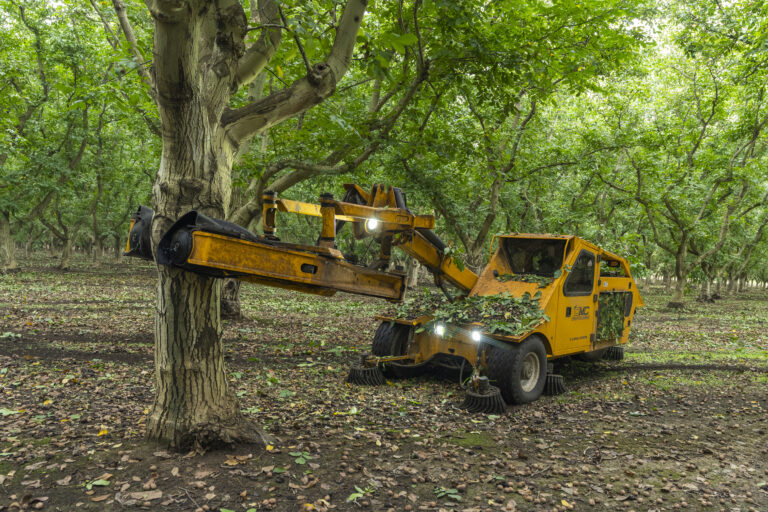
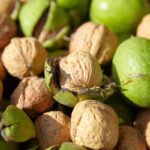
Photo by Brian Baer | CWB/CWC
The United States Department of Agriculture (USDA) forecasts a 16 percent year-on-year decline in California walnut production, with Verloop saying this year’s crop will likely be closer to 2024’s volumes. However, the issue of profitability remains.
“Production costs don't change that much. So we need to make sure that growers maximize their return per acre. There's a big focus on making sure that every sale helps growers break even and turn a profit,” he said.
The industry is also monitoring tariff conditions and disruptions linked to ongoing geopolitical turmoil in the Middle East, where Dubai and the United Arab Emirates serve as major export hubs for California walnut producers.
“Given the dynamics of the world marketplace, we're making sure that there's good, solid communication and clear facts,” the executive stressed. “Our handlers are working with their core customers, letting them know their volumes and what to expect.”
California walnut growers target strong returns
Verloop said growers continue to face high input costs, including diesel and fertilizer, while some export markets impose significant tariffs.
“There's a lot of discipline in our handlers this year to keep the price where it is as we're starting the season,” he said, adding that prices should strengthen as the season progresses.
Verloop said the commission is pursuing both short- and long-term strategies to support growers. Although California walnut acreage has stabilized, he warned that the industry must prepare for future large crops by expanding demand and diversifying its customer base.
The CWC will receive $2.6 million through the USDA’s Market Access Program (MAP) this year, matched with grower funding. It also received $14 million through the Regional Agricultural Promotion Program (RAPP), which began two years ago and allows the commission to invest the funds over six years.
Efforts span retail promotions, restaurant and chef education, and partnerships with food manufacturers developing products that incorporate walnuts.
“We're really focused heavily with these funds on educating consumers, broadening the perspective that walnuts are not just grandmother's banana nut cake ingredient item,” Verloop said. “We've got a great health story to tell and flavor and texture to match.”
Retail sales gain ground
The US remains California walnuts’ largest market, accounting for about 35 percent of the crop shipped, Verloop said. He said walnut retail sales have grown despite relatively flat performance across the broader nut category.
The commission tracks retail scan data from Circana to measure sales at individual supermarket chains and across regional and national markets. Those figures allow it to assess the impact of promotions and consumer education initiatives.
For the first two quarters of the year, Verloop said, the commission’s programs contributed to a 12 percent increase in consumer demand for walnuts, measured through retail sales and product movement.
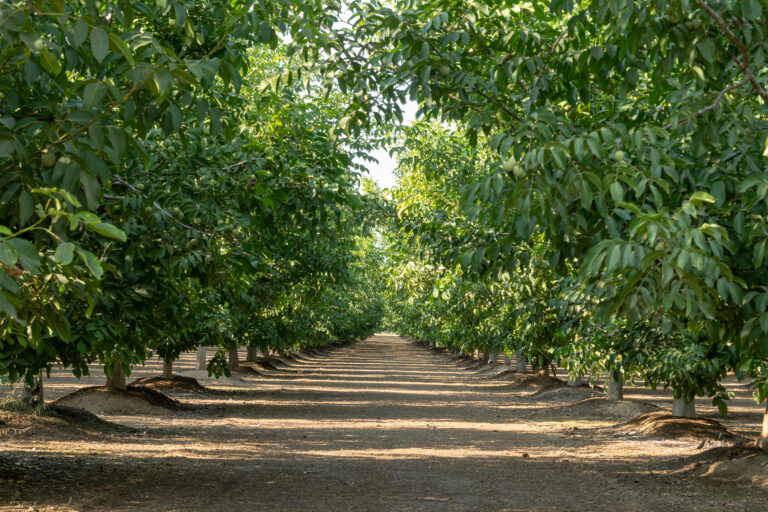
Photo by Brian Baer | CWB/CWC
The CWC expects US retail walnut sales to exceed 60 million pounds this year, up from about 52 million pounds.
A key part of the strategy is to expand walnuts’ presence in supermarket produce departments rather than relying primarily on seasonal baking promotions around Thanksgiving, Christmas, and New Year’s.
The commission’s Feel Good campaign aims to attract younger consumers interested in experimenting with food and discovering new uses for walnuts. Its tagline, “Walnuts are produce too,” reinforces the product’s place beyond traditional uses.
“We see that shift working really well. Sixty-five percent of retail sales in the US now have a component that includes the retail produce department,” Verloop said.
Internationally, the CWC is also expanding its reach.
“We've added another nine markets for the RAPP program in North Africa and Southeast Asia, focusing on diversifying our marketing footprint so that we have more market access and market development,” he said.
Research underpins health-focused marketing
The CWC integrates health and nutrition messaging into social media, influencer partnerships, retail promotions, and foodservice education. It also works with researchers and universities to publicize findings.
According to Verloop, the commission has supported more than 225 scientific publications over the past 20 years. He said its research funding model keeps investigative teams independent, helping maintain credibility among nutritionists, dietitians, and academic researchers.
The commission also focuses on educating health professionals through nutrition and diet-related conferences, where it participates as a speaker and exhibitor. Verloop pointed to growing recognition of the Mediterranean diet, in which walnuts contribute alpha-linolenic acid (ALA), a plant-based omega-3 fatty acid.
“And as the Make America Healthy Again movement continues to grow in Washington, their focus is on real food, and walnuts certainly qualify for that. They're now part of the dietary guidelines visual, and they're also highlighted in the dietary guidelines themselves as a real food that makes a tremendous nutritional contribution,” he noted.
Smaller nuts expected, but quality remains strong
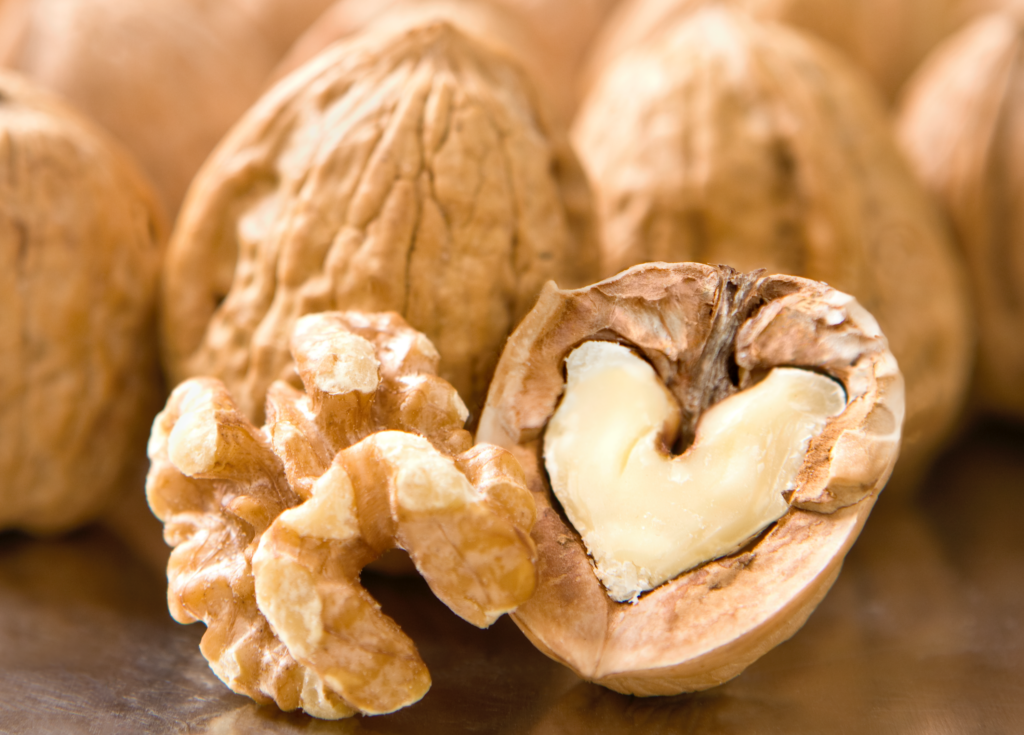
Despite lower production, Verloop said buyers can expect strong overall quality from this year’s California walnut crop. However, he noted that individual nuts and pieces may be somewhat smaller than usual because of spring growing conditions.
Walnuts require winter chilling, and the state experienced fewer cold-chill hours than needed for a stronger spring development cycle.
That contributed to three distinct pollination periods over four to six weeks, leaving some later-developing nuts smaller than expected.
Verloop said processors can use advanced sorting equipment, including electronic and artificial intelligence-enabled systems, to address size variations and direct walnuts to the right markets and uses.
“The beauty is that while the yield is smaller, the quality is exceptional,” he concluded.
*Photos courtesy of CWB/CWC.
Related stories
California Walnuts’ plan to move out of the kitchen
California Walnut Commission praises USDA's finalized $30 million walnut purchase
California Walnut Board taps new research lead to steer quality, production priorities