








Simple sachets prolong fruit shelf life, make new markets viable




Using the same active ingredient as pome fruit industry staple SmartFresh, Chicago-based Hazel Technologies is rolling out a product that adds value to new commodities including melons, stonefruit and tropicals. 

Hazel co-founder Pat Flynn tells Fresh Fruit Portal the company's new sachets make a proven technology easier to apply while removing some of the "logistical handcuffs" involved with traditional applications of the ingredient 1-MCP.
"It’s been very effective and it's almost transformed the apple industry, leading to huge increases in shelf life and increased quality," he says of 1-MCP, a structure related to ethylene that slows ripening in fruit.
"In the apple and pear industry this product is not applied as a sachet; it’s actually applied as a bucket of powder.
"You have to take it into the CA (controlled atmosphere) room with the apples or pears and you pour water into the bucket, and have to seal the CA room for several hours with no worker traffic.
He adds the use of water with the old technology can also sometimes be an issue for food safety reasons, with some packhouses not allowing it due to the potential for carrying pathogens.
In contrast Hazel Technologies' sachets, developed with the support of United States Department of Agriculture (USDA) funding, are "just an add-on to the packing line" that Flynn says can save thousands of dollars on any load.
The product names vary depending on the commodity, including 'Hazel Melon', 'Hazel Avocado', 'Hazel Nectarine' and so on.
"The fundamental difference from a grower perspective is that we’re taking this proven technology in the tree fruit market and we’re modifying it so that it can also work in the melon space, and we also do a lot of work with stonefruit and tropicals," he says.
"We've been able to do is slow release the active ingredient out of the packets, and that allows us to do it at a much smaller active concentration.
"As opposed to having a one-shot treatment where you have to seal the warehouse for with an overpowering dosage of the active ingredient, we take a much more subtle dosage and we consistently apply it for several weeks on end because it’s slowly releasing in the packet."
He says this protection lasts all the way to export arrival.
"If you’re talking about eventually sending it to retail, it’s going to be protecting product all the way to back-of-store in some applications," he says.
"This technology is brand new on the market. It's just being implemented for the first time in multiple categories this summer," he says, clarifying its use started a bit earlier on small volumes of tropical fruit out of Florida. The tropical category for Hazel Technologies includes papayas, dragonfruit, carambola (starfruit), passionfruit, greenskin avocados and mangoes
Last week DFI Marketing - one of the top melon grower-marketers in the U.S. - announced it would be using 'Hazel Melon' in all of its melon export containers to Asia this season, in a partnership that also involves ANA International which is DFI's largest export partner in South Korea.
"After testing the Hazel℠ Melon packets in our containers, we saw up to a 49 percent increase in marketable product after 30 days, a potential savings of as much as $10,000 per load,” DFI Marketing VP of sales and marketing Ross Van Vlack said in a release.
"The most unique part of the technology is that it’s amazingly simple – you place Hazel℠ Melon in the carton and that’s it. No equipment, no water, no packing house changes. We haven’t seen something that works this well in our many years in the melon industry."

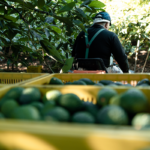
DFI's melons when treated with 'Hazel Melon'

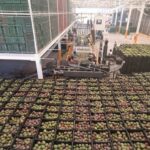
Melons from the same DFI test without the Hazel sachets.
Flynn says historically the destination markets available for some exporters have been limited by perishability, even when demand has been quite high.
"When we talk about export, a lot of shippers and growers actually don’t sell to some markets because they’re not confident they can deliver quality product," he says.
"So the incremental revenue there is not just a number of taking a couple of cases that went bad and you can sell those, but taking the whole load that you couldn’t ship and now being able to sell those."
He adds another problem that people seldom speak about is the fact "shipping routes are actually getting longer and longer".
"The reason for that is as the ships seek to be more efficient on fuel what actually happens is they send the ship more slowly," he says.
"It's kind of ironic. You think of all these new markets opening up and all the new shipping route so the shipping times could actually become worse. So that even increases the need for tools like these to be utilized."







Subscribe to our newsletter