








Hawai’i lime growers are closer than ever to ship Persian lime to the US
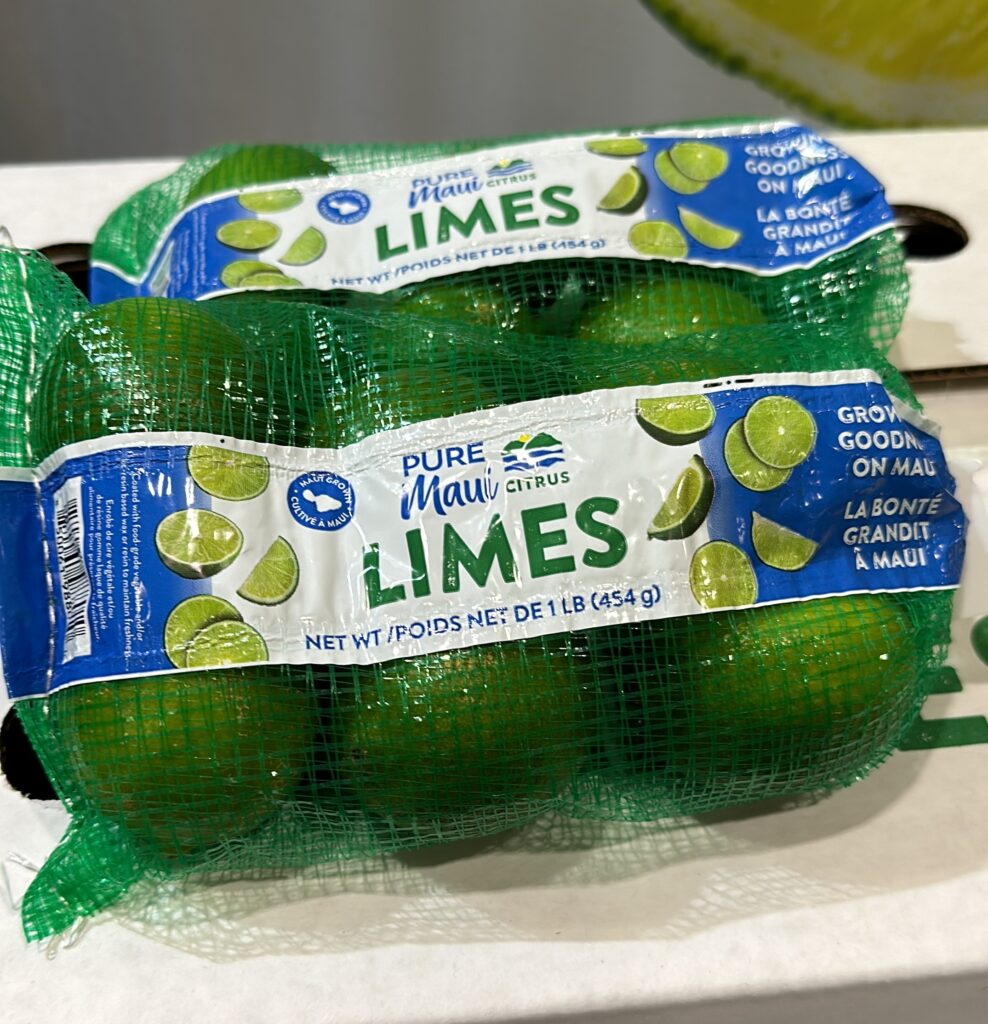


New data from the USDA Agricultural Research Service (ARS) on Hawai’i limes of the Persian variety and Lisbon lemons show that both varieties, when healthy, are resistant to tephritid fruit flies.

Working behind the scenes alongside the agency is a major Maui-based food producer, Mahi Pono. The company is betting on Hawai’i’s potential to capture a big chunk of US lime market share, a task more easily done with more lenient phytosanitary regulations.
Not like other states
In 2024, Mahi Pono planted 8,000 acres of Persian limes, which is enough to supply 20 percent of the US lime market, says the company’s President, Paul Cracknell.
Unfortunately, Hawai’i is not like other US states, and just like any other foreign exporting country, it is subject to phytosanitary requirements upon entry to the continent.
“For Hawai’i to ship citrus to the mainland, the fruit has to either be irradiated or go through vapor heat treatment, and both of those have pretty serious downsides,” Cracknell explained.
This is a considerable hurdle that may hinder the fruit’s success, as both treatments affect the fruit's consumer appeal and sales potential due to their impact on the fruit's shelf life and aesthetics.
Advocating for phytosanitary shift
To change that, Mahi Pono has worked directly with the federal agency’s researchers and is wielding a key study finding to prove the state’s lemons and limes’ conditional fruit fly non-host status: that pests are only present in punctured limes. This means the fruit, when undamaged, does not host fruit flies.
The goal is to use the resulting data to advocate for less strict phytosanitary regulations and facilitate the entry of Hawaiian citrus into the mainland.
Cracknell says he strongly believes processes such as the systems approach protocol would be more than enough to mitigate potential pests.
“The likelihood of an intact piece of fruit having an insect problem after all the several different control methods, such as the systems approach, is infinitesimally small,” says the executive.
He adds that his company has been going through the USDA APHIS application process to export lime into the US for three years, and approval is nearing completion.
“I'm hopeful that within the next three to six months we'll have a decision on limes,” he says. As for lemons, Cracknell says the research is done, but they still need to prepare and file the application with the USDA to gain mainland access: “So lemons will stay inside the state of Hawai'i for now.”
Easy passage for all Hawaiian lemons and limes
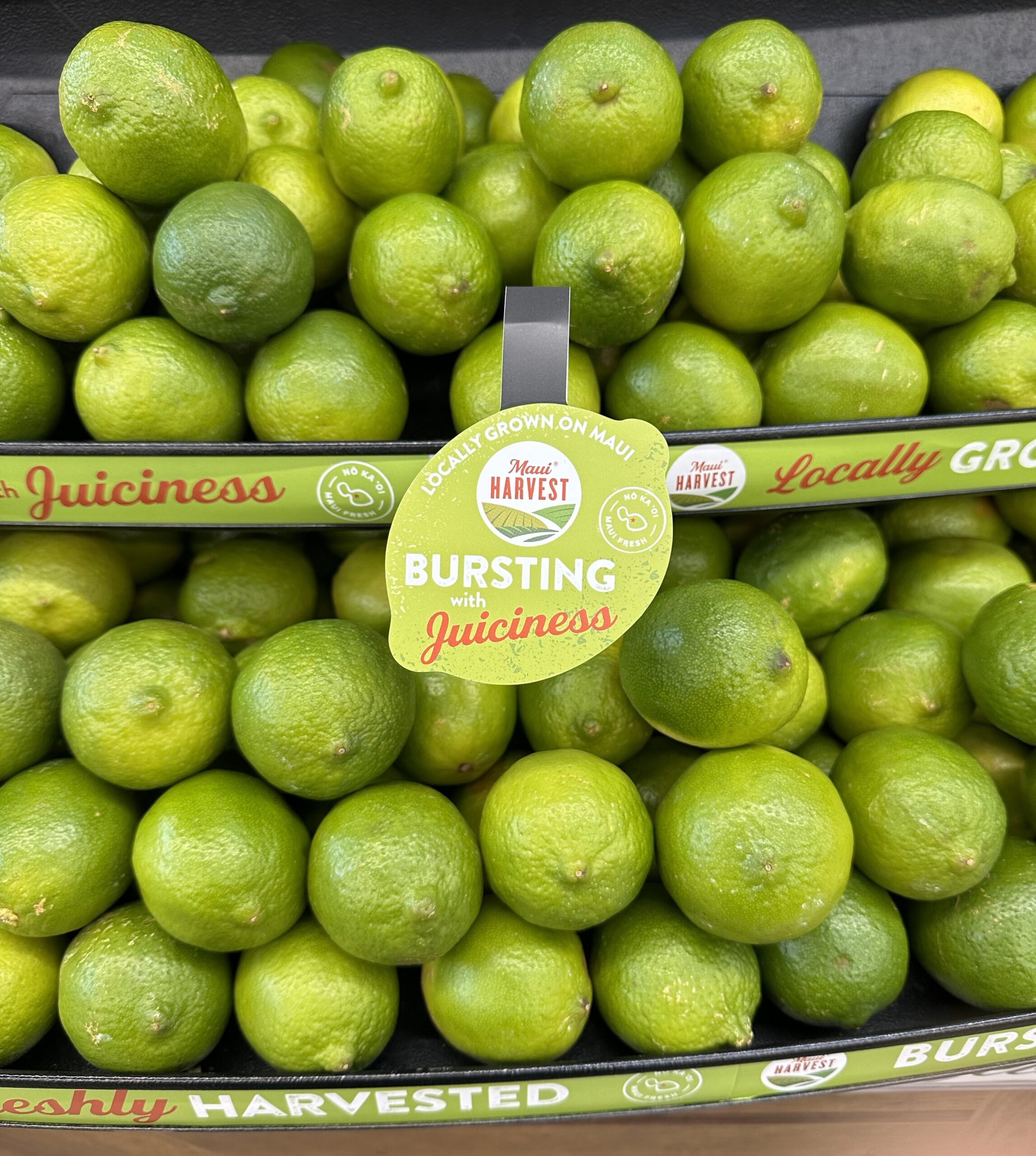
Cracknell emphasizes that, in the event Mahi Pono succeeds in gaining access to the American market, they won’t be the only ones benefiting from it. This will open doors to other growers in Hawai'i, which will diversify the US lime market, of which Mexico currently has a 97 percent market share.
He says retailers and food service companies will also benefit from having a reliable alternative in the market.
“We're seeing tremendous feedback from food service and retail on our acreage, and the size and the quality of our program,” he explains. “So, I know that as soon as we get that mainland access, we’ll get a lot of positive feedback and desire to engage.”
There’s also the fact that Persian limes grown in Hawai’i are, according to Cracknell, different from those grown in Mexico, making them essentially a different product. Furthermore, for the executive, Hawai’i-grown Persian limes are among the best in the world.
“Most of Mexico's limes are dry-land farmed, and they rely on rain to water the trees. We are a fully irrigated farm and have both rainwater collection and wells, and can put water on the trees whenever we want.”
The difference in how they’re grown results in what Cracknell describes as a beautiful, bright lime-y green color, unmatched juiciness, and higher Brix levels. “It's a little bit of a sweeter line—fantastic for a margarita,” he says.
Related stories






Subscribe to our newsletter