








US-China port tensions: 3 key factors behind the latest chapter in a long-lasting trade war
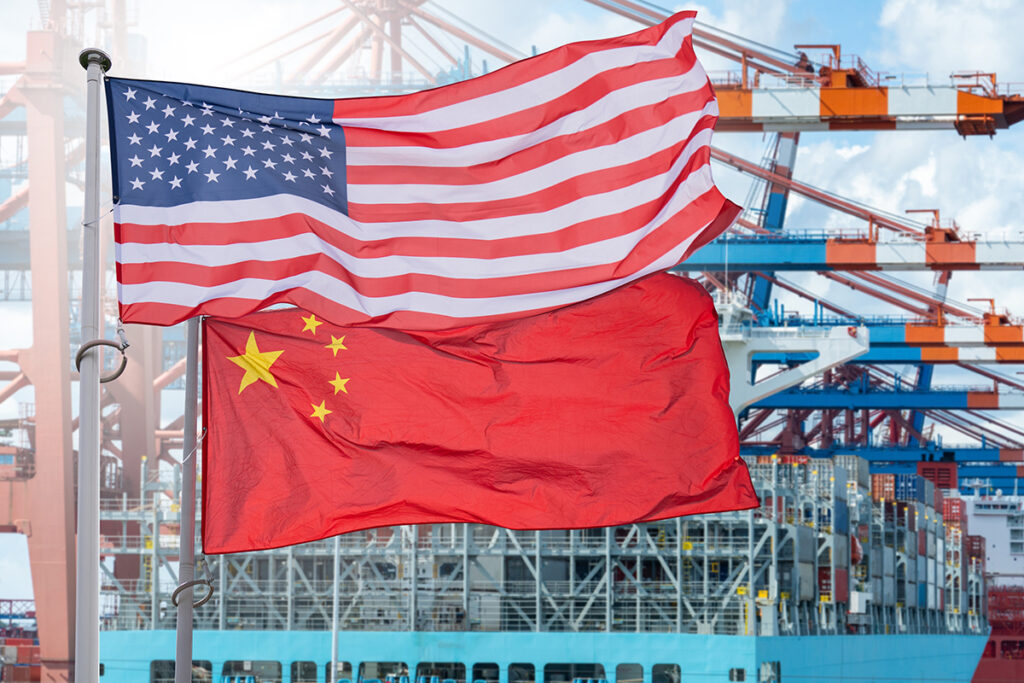


The year is rapidly coming to a close, but the global trade landscape remains almost as uncertain as it was back in January. Several countries have struck deals with the United States, but there’s one significant actor with whom negotiations don’t seem to be making progress.

The US-China trade turmoil dates back decades and is the subject of analysis in myriad economic books. The latest chapter of this drama is unfolding in the countries’ maritime points of entry, where both superpowers have imposed reciprocal entry fees.
The current situation goes beyond a simple tit-for-tat, so context clues are essential to fully understand the latest developments in the East and the West.
Key #1: China’s shipbuilding industry dominates the global stage. The US wants to change that.
There’s no question about it—China is the number one ship builder and seller in the world.
According to BRS Shipbrokers, the Asian giant has exponentially grown its market share in recent years, with year-over-year growth of 37 percent in 2023 and 50 percent in 2024. Back in April, the firm reported the country’s shipbuilding industry had grown close to ten percent. The figure has likely increased in the last six months, resulting in market share reductions of four and five percent for once-fierce competitors Japan and Korea.
In short, out of all the new large vessels hitting the water in 2024, 60 percent were Chinese.
The US, on the other hand, is not doing so well. According to a New York Times report, the American industry was responsible for the construction of only one large vessel this year, versus China’s 717.
US port entry fees on Chinese vessels, announced by the Trump Administration at the beginning of the year, are a clear effort to revitalize the American shipbuilding industry. The initiative affects all Chinese companies and non-Chinese companies sailing Chinese-made ships, aiming to disincentivize the purchase of vessels by the Asian giant.
The effect of this provision on US-China relations is clear, but whether it will inject new life into the American shipbuilding industry is uncertain. Experts say benefits such as low cost and quick turn time might outweigh the added cost.
Key #2: A Biden-era report further fueled US-China tensions
The US, ranking 19th in global commercial shipbuilding, has been watching the explosive growth of the Chinese shipbuilding industry for years.
The Biden Administration launched an investigation into China’s dominance in the sector, which resulted in a January 2025 report by the US Trade Representative (USTR).
The document stated that China’s targeted dominance in the maritime, logistics, and shipbuilding sectors “is unreasonable and burdens or restricts US commerce, and is therefore ‘actionable’ under Section 301.”
“Beijing’s targeted dominance of these sectors undermines fair, market-oriented competition, increases economic security risks, and is the greatest barrier to revitalization of US industries, as well as the communities that rely on them,” stated Ambassador Katherine Tai in a press release launching the report. “These findings under Section 301 set the stage for urgent action to invest in America and strengthen our supply chains.”
Designed to address what the US considers “unjustifiable, unreasonable, or discriminatory foreign government acts” affecting the country’s commerce, Section 301 of the Trade Act of 1974 is now being used by the Trump Administration to impose port levies on Chinese vessels.
Unsurprisingly, China was not happy about the USTR report and its resulting sanctions, which took effect on October 14.
Beijing’s response was not only a classic tit-for-tat, imposing levies on US vessels passing through Chinese ports, but also delivered a significant blow to the American tech industry and retaliation against those who assisted the US in its investigation.
Key #3: Rare earth minerals control and sanctions on American-sympathizing companies
Reactions to US port entry fees came immediately, further fueling the US-China trade war. The AFP reported that the country’s minister of Commerce, Wang Wentao, called US tactics "typical unilateralist and protectionist actions."
“This seriously violates the relevant principles of international trade and the China-US Maritime Shipping Agreement, and causes serious damage to maritime trade,” said the Chinese Ministry of Transportation.
Other than words of condemnation, China’s response is a three-pronged affair.
For starters, the country announced its own port entry levies on ships owned or operated by US entities, as well as non-American entities where US companies, individuals, or organizations hold equity of 25 percent or more. The provision also applies to ships flying the US flag or built in the United States.
Second, the Chinese Ministry of Transportation launched its own investigation into how the US Section 301 report has impacted its shipping and shipbuilding industry. Depending on its findings, the probe could eventually lead to more commercial provisions against the US, further escalating the US-China trade war.
Third, China sanctioned five US units of South Korean ship giant Hanwha. The government is accusing the company of having "assisted and supported the relevant investigation activities of the US government, endangering China's sovereignty, security and development interests," said the Chinese Ministry of Commerce in a statement, according to AFP.
The provision essentially bans these subsidiaries from doing business or even cooperating with Chinese companies or individuals.
Lastly, and most importantly, last week the Asian giant gave the global supply chain a significant blow by announcing more restrictive controls over the export of rare earth minerals. The country mines and processes the vast majority of these minerals, which are essential for manufacturing computer chips used in cars, tech devices, artificial intelligence systems, and even fighter jets.
In exerting this advantage, China is affecting the entire world economy. However, the timing and the fact that one of the Trump Administration’s main goals is to move US tech companies’ manufacturing stateside are telling.
As the US-China trade war continues to escalate, the world is attentively watching how the entire supply chain will be affected. Both superpowers are deeply embedded in the global economy, giving each move and countermove a seismic potential.
Related stories
Cosco Shipping says US actions on China's logistics and shipbuilding are discriminatory
China suspends Section 301 tariff exclusion for U.S. agricultural products

Subscribe to our newsletter