






Sinclair's label knowledge hub seeks to close the compost awareness gap
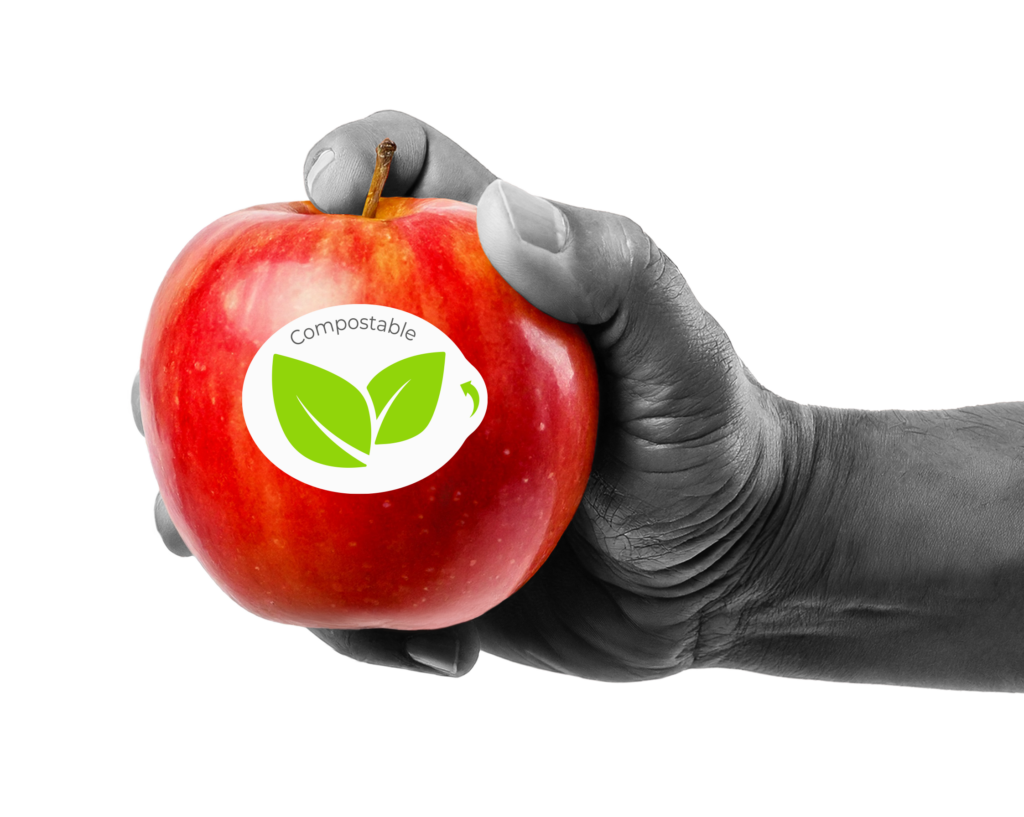

Last year, the produce labeling solutions specialist Sinclair launched one of the most globally used compostable fruit stickers in the industry.

The T55 label is certified for both home and industrial composting, and over 400 companies worldwide use it. What makes it so special is that it remains stuck to fresh produce through thick and thin, making its performance as good as—or, according to the company, sometimes better than—conventional synthetic plastic film labels.
Following this breakthrough, Sinclair's Marketing Director, Duncan Jones, stated that the company is now focusing on its next step: spreading the word about composting.
Meet Sinclair's knowledge hub
Jones said this is all in an effort to provide potential stakeholders and consumers with the knowledge to make informed decisions and choose more sustainable products.
"66 percent of global consumers say they’re willing to pay more for sustainable packaging," he explained. "But many still don’t fully understand essential terms such as compostable and biodegradable, or what to do at the packaging's end of life."
And the first in what Jones said is a long list of efforts to close that knowledge gap is Sinclair's new educational hub, which is full of free, fact-driven resources about compostables.
Specifically, Jones said, the platform aims to both demystify compostable labels and their role in the produce chain and serve as a go-to resource for those who would like to learn about the industry and make more sustainable choices.

The hub offers in-depth insights into industry topics, such as compostable certifications—categories based on how and under what conditions labels will break down, depending on the regulatory requirements of local or export markets.
These certifications also indicate that the product has been tested in a laboratory to ensure it decomposes safely and effectively, as advertised.
"For some, the minimum requirement is an industrial composting standard, while other markets require a home composting standard," he explained.
For example, Sinclair's compostable labels could be certified under AS 5810, the Australian standard, indicating that the label is designed to break down in home composting conditions. Or it could be certified under EN 13432, which means it will only compost under industrial conditions and is recognized across the entire European Union and the European Economic Area. It's important to use the right category based on the market and product.
Compost packaging gains traction
However, despite these existing knowledge gaps, Jones said, the compost label sector has continued to expand.
This growth is partly driven by lower production costs and the fact that these labels generate less waste than traditional packaging.
The industry has also shifted toward sustainability, prompted by new global regulations aimed at reducing packaging waste. The EU, for example, has proposed a new Packaging and Packaging Waste Regulation to make all packaging in the continent recyclable, reusable, or compostable by 2030.
"This affects not only labeling in the EU but any market exporting fresh produce to the EU," Jones said. "The Extended Producer Responsibility (EPR) legislation is also impacting packaging choices, so this is a consideration also."
He emphasized, however, that we can't forget that consumer sentiment is the key driver for brands and retailers. This means that as long as buyers prefer sustainable products, the compostable labeling industry will continue to grow.
*All photos courtesy of Sinclair
Related stories:
Sinclair simplifies compostable produce stickers as global momentum rises







Subscribe to our newsletter