

From heat dome to bountiful harvest: Washington's frozen raspberry crop sees major 2025 recovery

There’s a Spanish saying claiming no evil lasts 100 years, and it has fortunately proven to be true for Washington frozen raspberries.

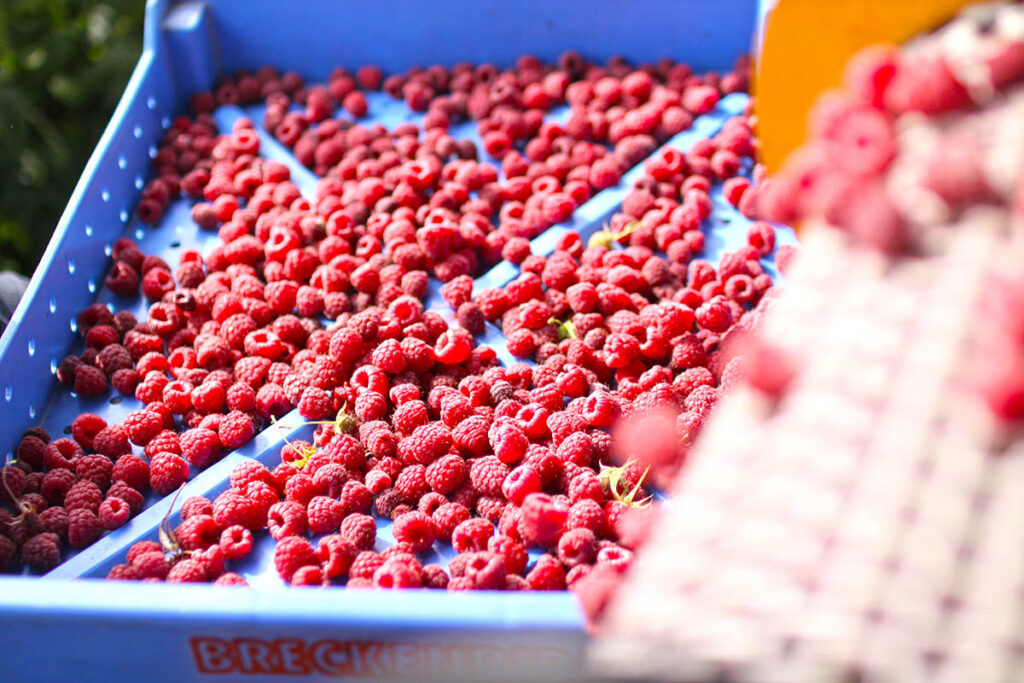
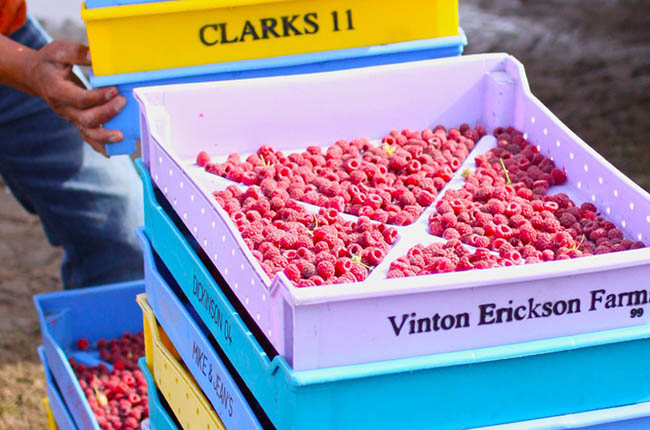
After years of below-average production, state growers reported a bountiful 2025 crop of over 68 million pounds. According to Gavin Willis, Executive Director of the Washington Red Raspberry Commission (WRRC), this is the state’s highest volume since 2018.
Frozen raspberries are bouncing back
Excessively high temperatures led to what Willis calls “a heat dome” during the 2021 and 2022 harvests, which hit the industry hard in both service and plant development. The result was a massive 30 percent dip in production in 2021 compared to 2020, followed by another 23 percent drop in 2022.
The damage was done, and the path back to peak performance was ahead. Patience and plant rotation were key to Washington’s frozen raspberry comeback. The executive explains that today, most of the plantings impacted during the 2021 heat dome are being cycled out of the fields, and those that still remain seem, for the most part, to have healed.
“We took a while to recover from that, but we recovered,” he says.
The executive says the year brought good weather through the pollination window and the six to eight-week harvest period. The absence of any persistent cloud cover kept good moisture levels in the field, curbing excess mold and resulting in what Willis calls an excellent yield for the frozen raspberry category.
The perfect balance of sunshine and rain
However, good weather didn’t only bring the Washington frozen raspberry bounce back the industry had been hoping for over the past three years. Willis says that the 2025 weather also resulted in a great year for fruit quality.
“We had some well-timed rains which kept soil moisture up enough,” he explained. “The ideal situation is that we get decent rain one day and then some the next to dry out the plants while keeping the soil moist.”
The executive director also points out that maintaining soil humidity at the higher end of the spectrum helps keep dust levels down, which in turn prevents quality issues during harvesting.
But not all is sunshine. The agricultural industry as a whole is facing a challenging time, citing rising labor costs and increasing prices for critical items such as packaging and fertilizer as some of the biggest hurdles.
In Washington, labor costs have been a particularly thorny issue, as the revocation of the state’s overtime exemption for agricultural workers took full effect in 2024. That, Willis explains, means farmers are now paying their workers 1.5 times the regular wage for any hours over their weekly 40.
“That's created a really significant increase in cost,” says Willis. “The main issue is that then you have to compete with growers, typically in other countries, who don't have those same cost burdens placed upon them. That makes it difficult to be competitive in a global market.”
An uneven playing field
Washington produces 90 percent of the United States’ frozen raspberries, with 99.8 percent of their crop going to this category. As Willis mentioned, labor costs are a significant headwind for the state’s producers, but even more problematic is the competition the industry faces from Mexico.
The US neighbor to the south is the biggest exporter of fresh raspberries into the country, with a largely unchallenged market share of 72 percent. In the frozen category, Mexico ranks second, behind Chile, with sales of almost $23 million in 2024. But the Aztec country is only diverting five percent of its production to the frozen raspberry category, so the opportunity for growth is ripe for the taking.
Willis explains that Washington frozen raspberries cannot compete with Mexico because, for them, there’s no price floor.
For the past five to seven years, he says, byproducts from the Mexican fresh market (fruit that didn’t make grade or diversions from higher-than-demand production) are being repackaged and folded into the US frozen market. This is significantly affecting the prices Washington growers can aspire to.
“It's impossible to compete, and for buyers it's really hard to turn down something that's basically being offered to you at less than what it costs to produce it,” Willis says. “A lot of these producers or growers are selling this product when they’ve already made their profits in the fresh market, [so] they don't need to make a profit on it.”
Willis is quick to point out that Mexican raspberries in the frozen market are not the same as those grown in Washington, as the cultivars for each category are different.
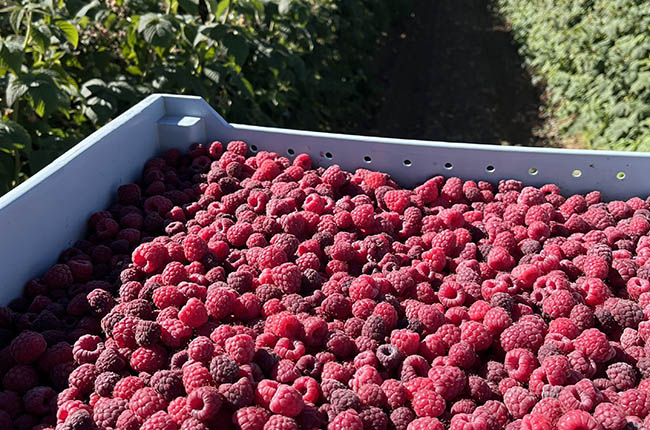
“Those varieties are developed for shelf stability. So you're going to have varying qualities in sugar and Brix content, color, flavor, that type of thing,” he says. “We pretty firmly believe that side-by-side, at the same price, our product stands up against theirs.”
The WRRC is asking the US government to intercede, but it is unclear whether Washington frozen raspberry growers will get some reprieve from this intense competition.
*All images courtesy of the Washington Red Raspberry Commission
Related stories
The Mexican raspberry industry strives for market expansion and lawful production
The key factors driving Mexico's horticultural dominance in the US market










Subscribe to our newsletter