
Komet’s new low-pressure sprinkler delivers up to 12 percent improved yields

Austrian firm Komet is targeting one of irrigation’s most critical challenges: outer-span performance. The company is introducing its Komet Precision Wave (KPW), a new generation of pivot sprinklers that responds to grower feedback on water uniformity, energy use, and crop protection at the edge of the field, CEO Andree Groos tells FreshFruitPortal.com.

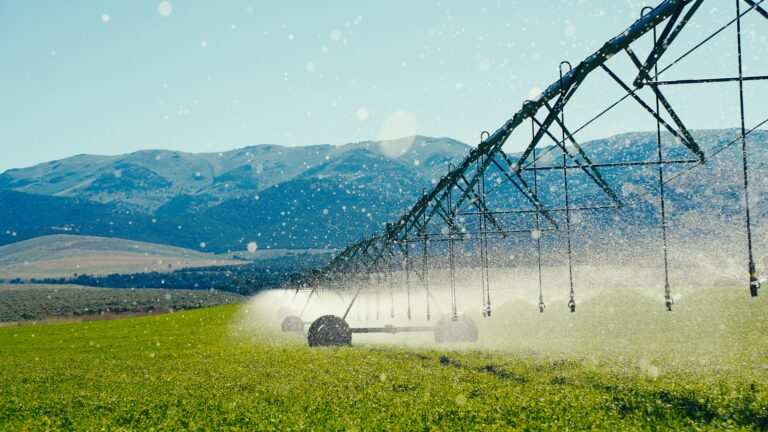
The outer span represents the largest irrigated area of a pivot, and plays a key role in overall performance, Groos explains. Inconsistent or uneven application at the end of the pivot can undermine yields and soil health, particularly for high-value crops such as fruits and vegetables increasingly grown under these systems.
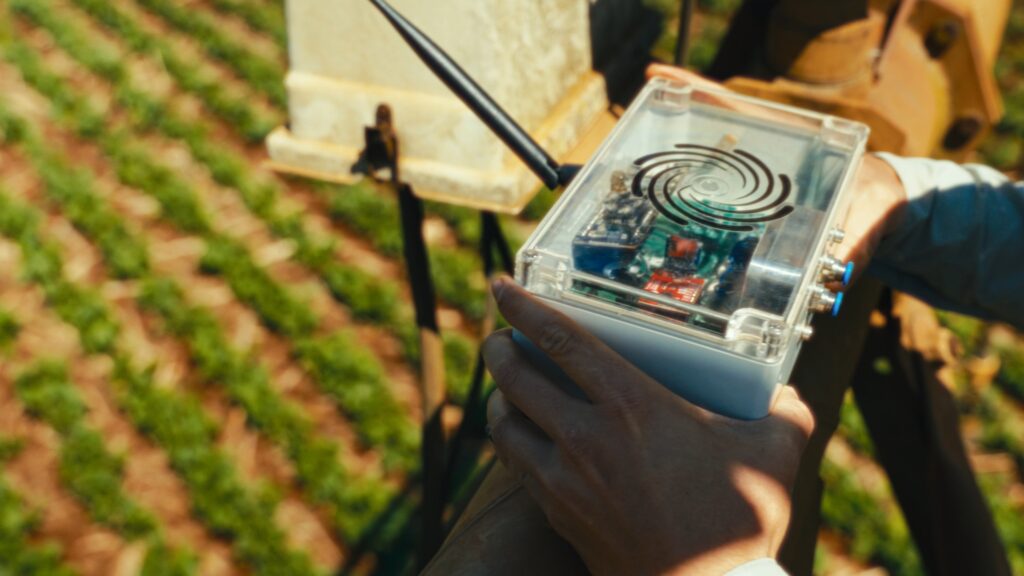
The development comes paired with a six-figure investment in a new Application Engineering & Digital Systems department, and a dedicated Experience Hub in Brazil, aimed at delivering real-time insights and predictive tools for farmers worldwide.
“Irrigation is not only relevant where or when it’s dry,” says Groos. “Climate is changing, and irrigation can not only help improve your yields, but also secure your harvest”.
Rethinking the end gun
Komet’s roots trace back to sprinkler and gun irrigation, and for decades, the company relied on end guns to cover the pivot’s outer edge. But Groos says farmers increasingly questioned whether this traditional method was the best option for modern crops and soil conditions.
“If the outer part of the pivot is so valuable, are there smarter or better solutions than just a gun?” he says of the reasoning behind KPW.
Concerns included droplet size, soil impact, and pressure variability, especially in regions where energy supply limits pumping capacity.
“In some regions of the world, you don't even have enough energy for an additional booster pump,” Groos adds.
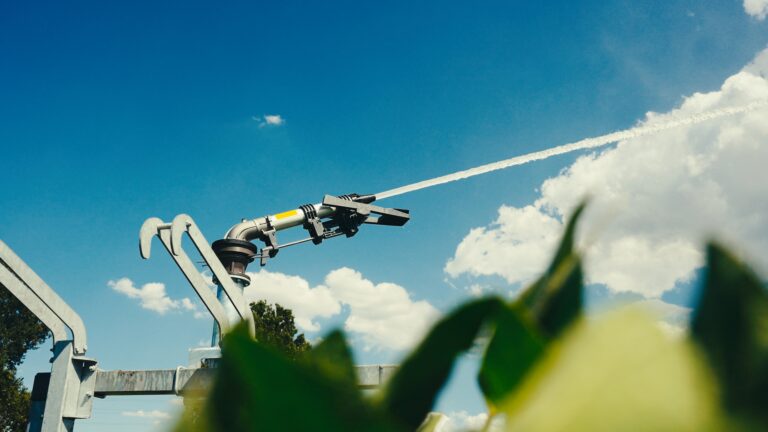
The KPW delivers rain-like droplets at the pivot’s edge while operating independently of pressure fluctuations.
“The movement of the deflector is totally independent from the pressure, which is applied so that the drop size is always the same,” Groos says. The system runs at low pressure, around 10 to 15 PSI, allowing it to integrate into existing pivots without requiring booster pumps.
“You can just integrate into existing systems,” he stresses.

Komet tested the KPW across diverse climates, soils, and crops, including fruit, vegetables, and even flowers. Trials took place in Brazil, the United States, South Africa, Italy, and the Netherlands, using early prototypes evaluated directly by growers.
“You really need just clear and blunt feedback,” Groos says of the development.
Data, uniformity, and the pressure to save water
While Groos cautions that results vary by operation, he says growers reported measurable improvements at the pivot’s edge.
“I visited farmers myself at the end of the field test who told me that they had 10 to 12 percent better yields in the outer part where they use the KPW,” he says.
Komet’s new Brazil facility, led by irrigation expert Gustavo Hossri, will allow the company to test equipment under controlled conditions, including simulated wind, supported by the new Komet Experience Hub in Paulínia, São Paulo state.
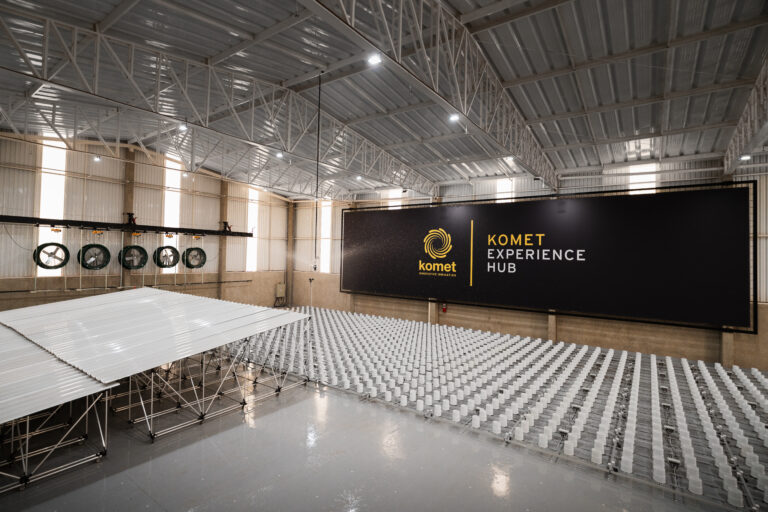
The lab will focus on isolating variables such as water pressure to better understand water distribution.
“Uniformity, you can always calculate, but to really see where you lose, or where you apply too much, where you apply less, you need to make it visible,” he adds.
Groos said low-pressure operation remains central to Komet’s strategy as water scarcity, energy constraints, and regulation intensify globally.
“Low pressure means less energy, and that becomes more and more relevant,” he says, citing regions such as South Africa and parts of the US where energy availability already shapes irrigation decisions.

Looking ahead, Groos expects regulators to focus more closely on energy use, distribution, and uniformity. To prepare, Komet plans to further develop monitoring tools that give growers clearer insight into water application.
“So that will all link into regulation, water scarcity, and energy supply,” Groos says.
A major launch event for the Experience Hub is scheduled for April 2026, with growers, researchers, government officials, and industry partners expected to attend.
*All photos courtesy of Komet.
Related stories
Automated irrigation has saved watermelon growers over 160 million gallons in Suwannee Valley









Subscribe to our newsletter