
StePac’s new modified atmosphere packaging tackles dragon fruit shipping challenges
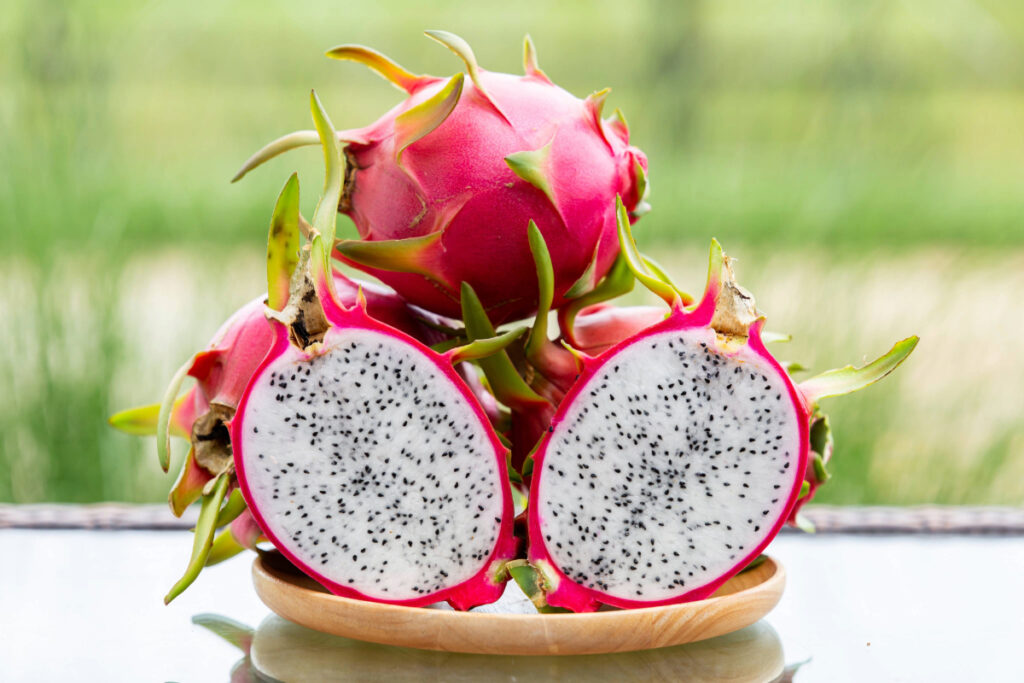

The United States is a major importer of dragon fruit, with most coming from Vietnam, Thailand, and Ecuador.

However, due to the long distance between origin and destination, dragon fruit faces a weeks-long trek that threatens its quality. This adds insult to injury, as the industry is already grappling with falling prices from a glut of pitahaya in the US and Mexico.
StePac PCC, a leader in Modified Atmosphere Packaging (MAP) for fresh produce, is offering a solution to tackle this challenge.
To stay ahead in the now-crowded domestic pitahaya market, growers and shippers must outsmart the clock or risk delivering lackluster fruit.
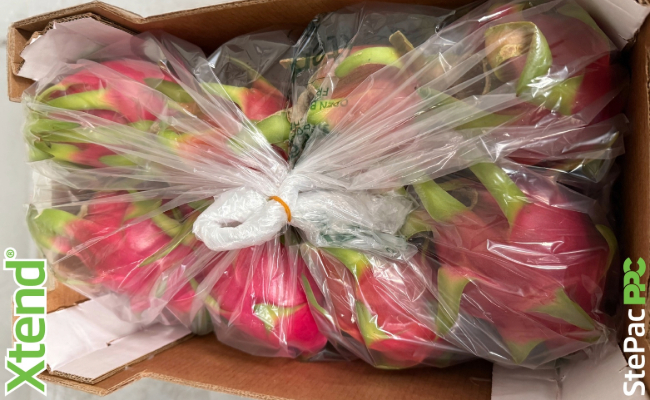
StePac PCC's packaging is designed specifically for dragon fruit. The company’s new product is a tailored version of the proprietary Xtend® MA/MH packaging and aims to preserve the shelf life of pitahayas en route from Ecuador to the US and Europe.
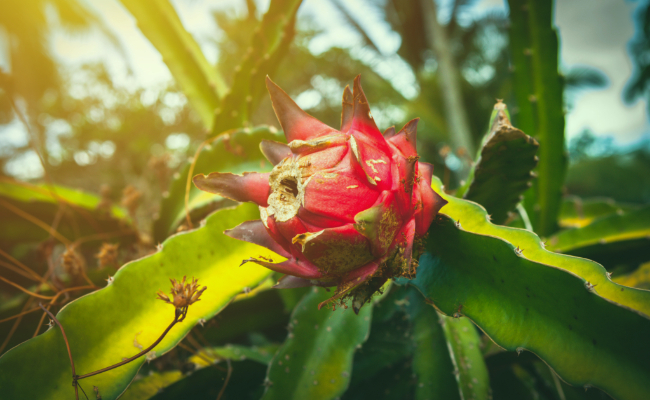
StePac’s pitahaya-specialized packaging
The packaging's main component is polymer films. Gary Ward, StePac PPC’s Chief Technology Officer and Business Development Manager, says the company engineers and molds these materials into different formats, including pallet shrouds, bin liners, and, in this case, a film to protect pitahayas.
Ward says the film was carefully crafted for pitahayas, which are prone to dehydration and wilting due to their high respiration rate.
The packaging was designed to slow this process down by balancing oxygen and carbon dioxide concentrations. The film also controls moisture to maintain the fruit's firmness and protruding bracts, and preserves its vibrant, glossy appearance throughout the trip.
“Traditionally, pitahaya has been shipped loose or in basic packaging formats that provide little to no control over the internal atmosphere or humidity, offering limited protection during long sea voyages,” Ward explains. “Right now, the packaging allows the fruit to withstand sea shipments of three weeks or more.”
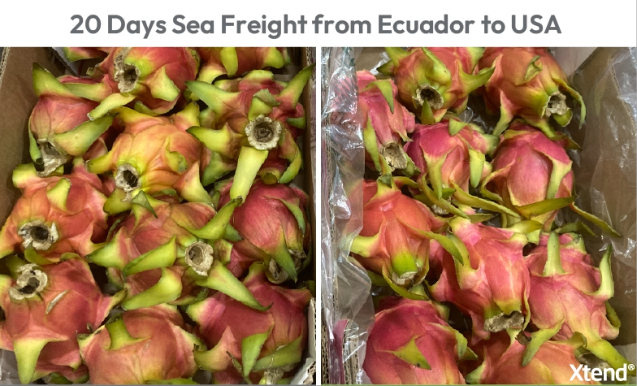
Shelf-life extension varies depending on conditions, he added, but he assures that it significantly exceeds what is achievable with traditional packaging.
The decision to bet on dragon fruit was simple. According to Ward, the fruit is a fast-growing, high-value product with strong global demand facing significant postharvest challenges during long-distance shipment.
“Development priorities are driven by customer needs and supply chain challenges. Growers were struggling to reach distant markets in acceptable condition,” he said, which made pitahaya a natural candidate for a tailored modified packaging.
Behind-the-scenes development
Ward explains that the team studied pitahaya’s respiratory behavior, moisture sensitivity, and postharvest challenges for three years.
StePac PPC then adjusted film permeability to create the optimal internal atmosphere under real supply chain conditions and collaborated with growers and shippers to test the product.
“The process included repeated trials, frequent field visits, and optimization of postharvest handling protocols, as well as refinement of the packaging design to ensure consistent performance,” he explains.
Regarding pricing, he notes that exporters report benefits such as reduced waste, improved quality, and access to new markets, which generally outweigh the additional packaging costs by yielding higher returns.
The future of StePac’s packaging
The company is currently working to scale its proprietary packaging to other fruits, since each deal comes with its own set of challenges.
“Different fruits and vegetables have very different respiration rates, sensitivities to low oxygen, and critical to elevated carbon dioxide concentrations, as well as different moisture requirements,” Ward says.
The executive says that, as the company diversifies, it’s noticing more potential applications for the development of solutions that meet unique challenges. He explains StePac PPC is also focusing on developing leaner and more sustainable modified atmosphere packaging solutions, including fully recyclable packaging formats and films suitable for automated packing, which help address labor shortages.
Related stories:
Peruvian pitahaya exports increased nearly 600% in a year
Tierra Suelta sees steady firepower for Ecuador’s peak dragon fruit season
“We are surviving,” says Ecuadorian grower amid dragon fruit oversupply


Subscribe to our newsletter