


Washington State University compound shows promise against fire blight and Listeria
 Add Fresh Fruit Portal to Google
Apple growers may soon have an unlikely—and tiny—ally in their fight against disease: a compound derived from ancient microorganisms that thrive in extreme environments. Researchers at Washington State University (WSU) have moved the antimicrobial into field trials, marking a key step toward a potential new tool for disease control and food safety.
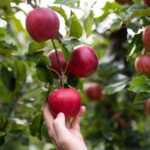
The solution, backed by funding from the Washington Tree Fruit Research Commission, is already being applied to apple trees in commercial settings.
Leading researcher Cynthia Haseltine told FreshFruitPortal.com the trials will generate data across two growing seasons, with results expected within 12 to 18 months.
The ongoing project focuses on validating the compound’s effectiveness and determining how it can be scaled for commercial use. Work includes evaluating stability under orchard conditions such as temperature, UV exposure, and storage requirements, as well as developing a formulation suitable for commercial grower application.
From extreme microbes to orchard defense
Haseltine’s work builds on decades of research into archaea, microorganisms known for producing highly stable compounds. She said this stability prompted researchers to explore whether such products could address rising antibiotic resistance in agriculture.
The compound is not a living organism but a synthetic derivative engineered for broader production. Researchers aim to develop it into a format familiar to growers, similar to existing sprayable treatments such as streptomycin, which is commonly used for fire blight control.
“The nature of this compound indicates that it's going to take many mutations for a microbe to become resistant to it,” Haseltine said. “It's not going to be as rapid. It has the potential to last much longer in field use than a standard antibiotic will.”
She emphasized that the product would likely complement, rather than replace, existing disease management programs.
Tackling a $4B problem
While fire blight remains a primary focus, the research has expanded to target Listeria, a pathogen with significant financial and public health implications.
“Listeria is a four billion dollar a year problem in the United States alone, and that's only attributed to about 1,500 cases of the disease,” Karin Biggs, a technology licensing associate at WSU, explained to FreshFruitPortal.com. “It's estimated by the US Department of Agriculture to cost about $2.5 million per case.”
The research team’s new compound could potentially be applied post-harvest, such as in packing environments, where contamination risks persist. Haseltine pointed to the 2014 caramel apple outbreak as an example of how Listeria can impact both public health and industry reputation.
“It's not only just a human health issue, but it's also a reputational issue for the farmers, for the growers, because if there's a recall, they lose their entire crop,” she said.
The outbreak she referenced resulted in 35 Listeria cases and seven fatal victims.
Commercial path still in the works
Despite promising progress, researchers say marketing timelines remain uncertain. The project is still in early stages, with key hurdles including regulatory approval, validation, and securing the right commercial partner.
Industry collaboration will be critical to bridge the gap between academic research and practical application, Haseltine and Biggs agreed.
Funding from the Washington Tree Fruit Research Commission aims to support that transition by generating the data needed to demonstrate efficacy and safety.
*All pictures are referential.
Related stories:
Apple crop shrinks, berries slow to start in Q2