


Ecuadorian banana exports climb nearly 10 percent in Q1 2026
 Add Fresh Fruit Portal to Google
Ecuadorian banana exports continued to grow in the first quarter of 2026, reaching 111.57 million boxes from January to March, a nearly 10 percent increase over the same period last year.
According to figures from Ecuador’s Association of Marketing and Export of Bananas (ACORBANEC), performance was driven by both higher production and stronger demand in key markets, particularly the European Union, Russia, the United States, and the Middle East.

Europe and Russia lead demand for Ecuadorian bananas
The European Union consolidated its position as the leading market for Ecuadorian bananas, accounting for over 34 percent of total exports. The country bloc was followed by Russia (22 percent), the Middle East (12 percent), and the US (12 percent).
In growth terms, shipments to the EU stood out with a 19 percent increase, fueled by markets such as Spain, Italy, France, and the Netherlands. Russia also posted a solid performance with an 18 percent expansion, while the US grew by 10 percent.
Higher production lifts supply
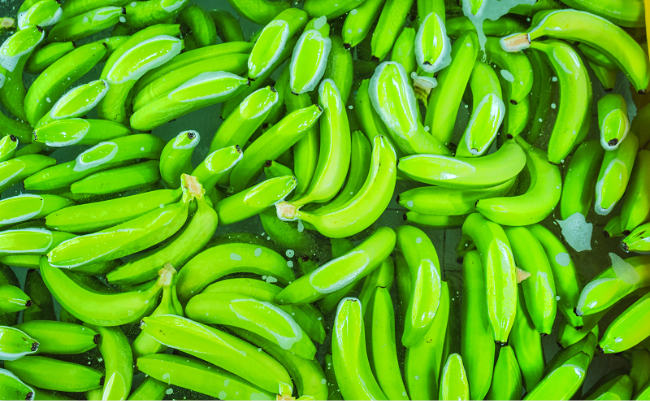
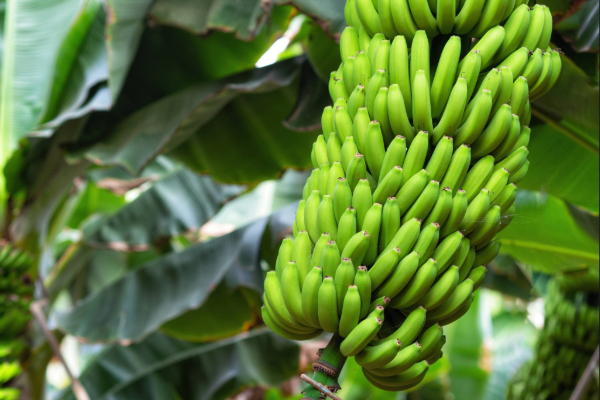
Strong export performance was matched by favorable production conditions. Between late 2025 and early 2026, banana bunch bagging rose 2.5 percent year-on-year, supported by normal physiological development of plantations and improved yields.
Newly productive acres and replanted crops also helped boost the availability of exportable fruit, despite adverse weather conditions, including heavy rains and flooding in key producing provinces such as Los Ríos, Guayas, and El Oro.
Middle East volatility and domestic logistical challenges
Exports to the Middle East grew four percent during the period, with significant increases in Türkiye (40 percent) and Saudi Arabia (17 percent). However, the region faced high volatility in the first quarter due to geopolitical tensions.
Regional conflict and logistical constraints, including the closure of the Strait of Hormuz, forced exporters to redirect shipments, thereby increasing logistical costs. Freight rates rose by $300 to $600 per container, reducing the sector's competitiveness.
Domestically, the industry faced its own logistical challenges. States of emergency and curfews in producing areas in March 2026 reduced container availability by about 15 percent per week, disrupting export flows and increasing pressure on spot prices.
Related stories:
Brazil registers newly discovered spontaneously emerging banana cultivar
Bananas are Europe's #1 fruit, outranking apples and oranges