Native chimney bees could hold the key to more effective blueberry pollination
 Add Fresh Fruit Portal to Google
First cultivated in the early 1900s, blueberries have risen from just another item in the fruit aisle to superfood status, with multiple studies backing their antioxidant and vitamin content. However, consumers tend to overlook the extensive work that goes into their production.
Aside from industry-wide hurdles such as adverse climate, labor, and pests, blueberry cultivation often faces a roadblock in pollination. The crop requires a massive number of insect visits during flowering to produce large, high-value berries.
This is why researchers with the United States Department of Agriculture's Agricultural Research Service (ARS) are investigating the use of native chimney bees to address pollinator shortages.
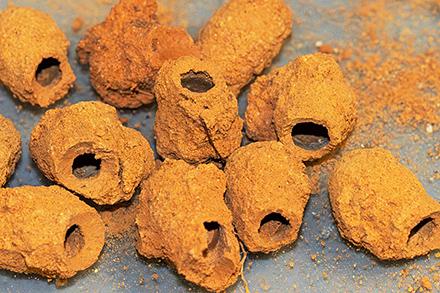
Image by Blair Sampson, ARS.
According to ARS, honeybees often struggle to pollinate blueberries effectively because of their relatively short tongues and preference for other flowering plants.
“Honeybees are considered a universal crop pollinator worldwide, but their populations are in trouble,” said Blair Sampson, entomologist with the ARS’ Southern Horticultural Research Laboratory in Poplarville, Mississippi.
Unlike some wild pollinators, chimney bees, also known as miner bees, can be managed and relocated, allowing growers and beekeepers to move colonies into production areas during bloom periods.
A native approach with all-around benefits
According to ARS, chimney bees are relatively easy to relocate, although collecting cocoons requires skilled excavation from clay-rich soils, roadside outcrops, or the root zones of fallen trees. Growers can source nesting material locally from clay-rich mud, reducing infrastructure and equipment costs.
Researchers ship the bees while dormant and then gradually warm them to trigger emergence. Access to water and nesting material helps establish relocated populations.
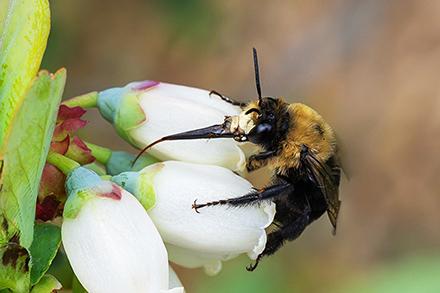
Image by Blair Sampson, ARS.
“These bees do not produce enough honey for us, just enough for themselves; hence, chimney bees’ principal role would be as fruit pollinators,” Sampson explained. “However, they are flower generalists with a strong homing instinct, and hence will nest in the same location for many years. They also nest in dense aggregations and remain gentle around people near their nest sites.”
Adult chimney bees resemble small bumblebee workers but display different nesting behavior. They build horizontal tunnels in clay banks and use excavated clay to create distinctive downward-facing tube structures, or "chimneys," at nest entrances. This behavior gives them their name.
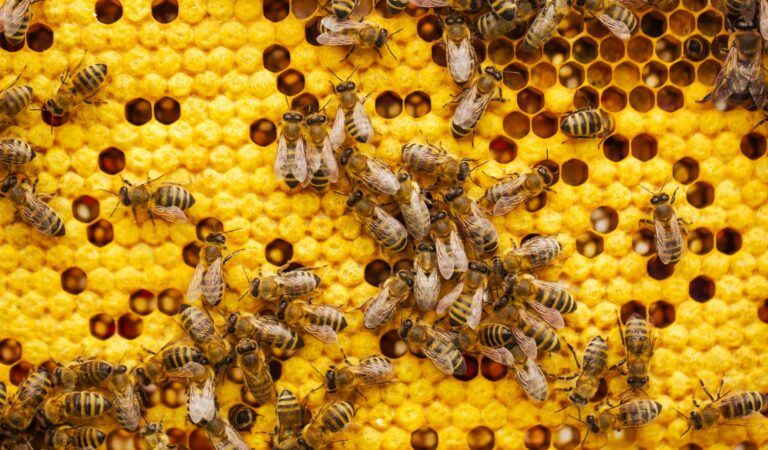
Referential image.
Sampson said construction activity and weather events often expose fresh clay, making nest sites easier to locate. Researchers collect earthen cocoons from these sites and relocate them to research plots or commercial fruit production areas for pollination trials.
“Since pollinator habitat is continually declining due to increasing urbanization and crop cultivation, managing wild native bees, such as chimney bees, can help conserve vital natural resources and help farmers increase their yields,” Sampson said. “And, for fruit, nuts, and vegetable crops, native bees will be an essential component for optimizing crop production per acre of land, which is vital for maintaining a stable global food supply.
*Main image is referential.
Related articles
Wild bees play a vital role in Georgia’s blueberry industry