A date in the desert: How agricultural tradition becomes economic growth in Tunisia
 Add Fresh Fruit Portal to Google
This story was originally published by the Food and Agriculture Organization of the United Nations on June 25, 2026.
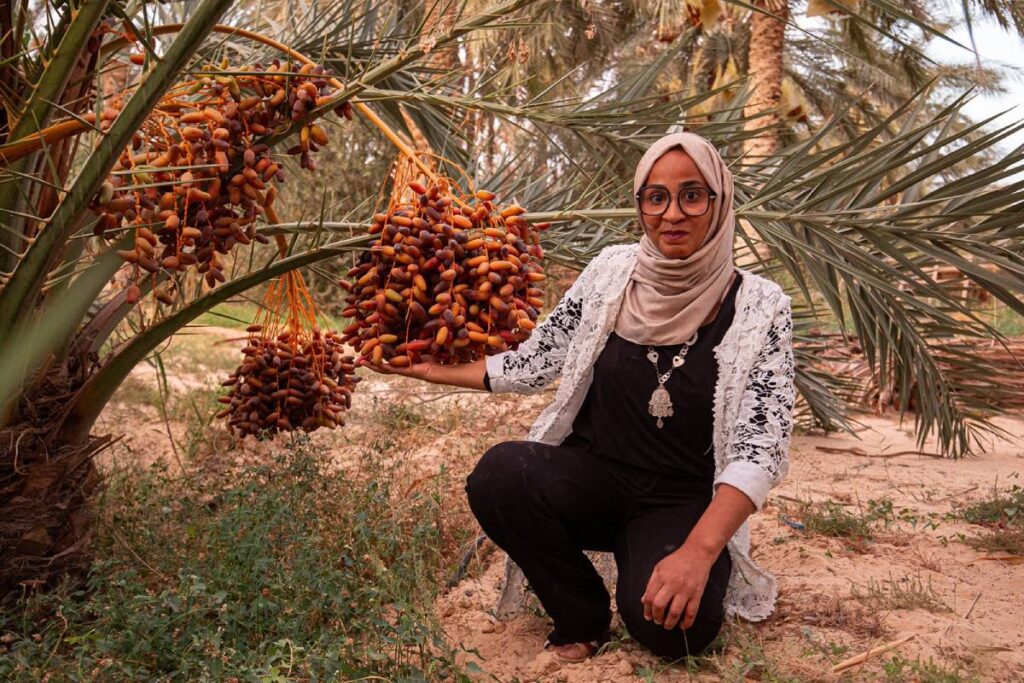
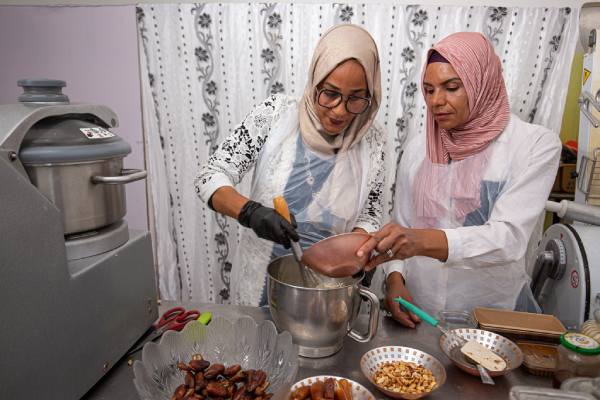
Kaouther Aounallah hands a pack of pastries to a regular client, smiling with satisfaction. With each product, she shares a piece of the soul of the Kebili oasis in southern Tunisia and shows how women entrepreneurs can turn local resources such as dates into sustainable businesses that support their communities. At the heart of it lies the delicate, honey-like taste of dates, a flavor she has known since she was a child.
“I grew up in an agricultural environment where dates were central to our daily lives,” she said. “They nourished us, protected us and kept us healthy.”
Today, she transforms that sweet legacy of dates into a source of independence and purpose. In 2022, after studying agricultural sciences in Kef in northwestern Tunisia, she made a bold decision to return to her hometown of Kebili and build her own business. The result is Sweet Jana, an artisanal bakery specializing in turning this traditional local ingredient into a range of date-based products that support the local economy.
© FAO / Khairi Ben Hassine
Drawing on the natural sweetness of dates, Kaouther promotes a new approach to snacking: one that is nutritious, appealing, and aligned with healthy lifestyles.
“We offer a variety of products to meet different needs, from athletes looking for a natural energy boost to parents seeking healthier snacks for their children,” she explained. “Our recipes draw on local traditions, with a touch of innovation to meet today’s needs.”
A date with destiny
Although Kaouther’s bakery is well-established and growing, the path to success as a woman entrepreneur in Tunisia has been far from easy.
Limited access to finance, practical information, and markets continues to create obstacles along the way, especially in the agricultural sector. In a rural context where opportunities are scarce and unemployment remains high, especially among university graduates, many look abroad in search of a future.
“There were times when I felt alone in facing these difficulties,” she said. “But I kept going because I knew my project had meaning. Today, every challenge I have overcome makes me stronger and drives me to go even further.”
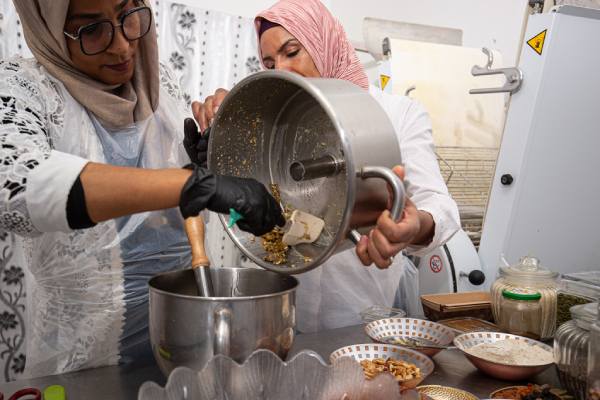
Kaouther is one of the beneficiaries of the Agri-Accelerator, a program designed by the Food and Agriculture Organization of the United Nations (FAO) to provide tailored coaching, guidance, and support to youth-led agribusinesses in eleven countries across Europe, North and West Africa, and Southeast Asia. With technical and financial support from this FAO program, Kaouther has strengthened both her own skills and those of her team, improved the profitability of her business, and increased its social and environmentally friendly impact.
© FAO / Khairi Ben Hassine
Beyond supporting individual entrepreneurs, the Agri-Accelerator also strengthens the wider support ecosystem by training coaches and institutions that accompany young agribusinesses. Kaouther worked closely with a coach specialized in responsible investment, helping her steer her business towards stronger, more sustainable performance.
“The coaching changed the way I approach my work. What once felt complicated became clearer,” she said. “With the right support, you gain confidence, and you are never alone. There is always someone to guide and encourage you.”
The power of women in ag
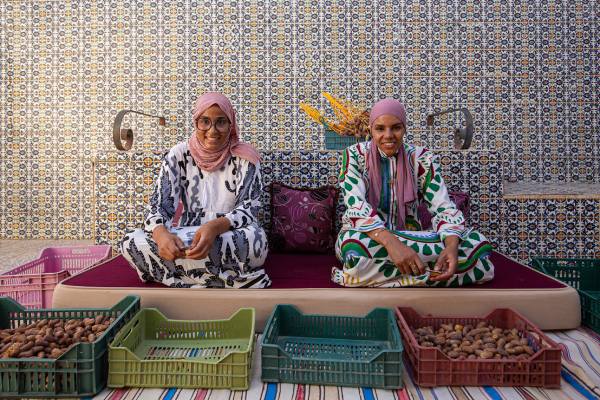
Fully aware of the challenges faced by women in her country, Kaouther has made empowerment central to her business. She employs eight women in her date business from her family and neighborhood, creating opportunities in rural areas where they are few and far between.
“I wanted to show that our project could have a real impact on the local economy,” she said. “Helping women, especially in rural areas, access employment and become more independent is one of my greatest ambitions.”
Her approach also places strong emphasis on environmental responsibility, reflected in the way her business operates.
Sweet Jana uses eco‑friendly packaging and works to reduce waste at every step, helping to limit its environmental footprint in a context where such practices remain limited among small producers. Even the date pits are reused: returned to farmers who then transform them into animal feed, creating a circular system that reduces waste while supporting local agricultural practices.
© FAO / Khairi Ben Hassine
Like Kaouther, young agricultural entrepreneurs across the world are turning local resources into opportunities, building businesses that create jobs and strengthen their communities. With the support of the Agri-Accelerator, they are growing stronger, responsible enterprises and contributing to more inclusive, resilient and sustainable agrifood systems.
This story is part of a series celebrating women farmers worldwide, from producers, fishers, and pastoralists to traders, agricultural scientists, and rural entrepreneurs. The International Year of the Woman Farmer 2026 recognizes their essential contributions to food security, economic prosperity, and improved nutrition and livelihoods, despite heavier workloads, precarious working conditions, and unequal access to resources. It calls for collective action and investment to empower women, in all their diversity, and to build a fairer, more inclusive, and sustainable agrifood system for all.
*All images by © FAO / Khairi Ben Hassine.
Related stories
FAO Outlook 2026-2035: Three global trends poised to reshape agricultural trade
Chilean project harvests fog for water supply in drought-stricken region
Five ways a FAO treaty is helping biodiversity thrive in fields around the world