Chile’s cherry season: More to know at receiving, more time to act
 Add Fresh Fruit Portal to Google
By Hectre
As a load of cherries arrives at a Chilean packhouse, its next steps are already taking shape: a place in storage, a slot in the packing schedule, a potential match for a customer order. An early view of its size and color profile gives teams more room to adjust those plans before the fruit reaches the line.
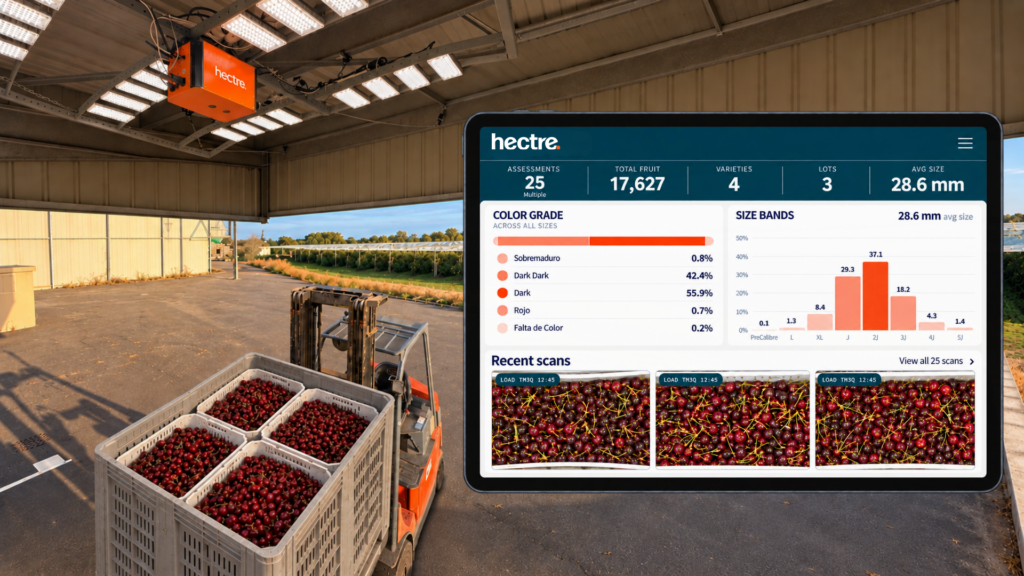
The opportunity is to make that early view broader, assessing more cherries while keeping receiving moving. Hectre’s Arc Gate does this through automated sampling: a fixed machine-vision camera captures fruit as loads pass beneath it, and artificial intelligence (AI) turns those images into size and color profiles in seconds, without a dedicated sampling task.
Across its fruit-quality solutions, Hectre reports sample sizes averaging 250 times those of traditional post-harvest sampling. That greater scale gives experienced packhouse teams more information to draw on at the point when storage, packing and commercial decisions are being made.
Hectre's Arc Gate: Built into receiving
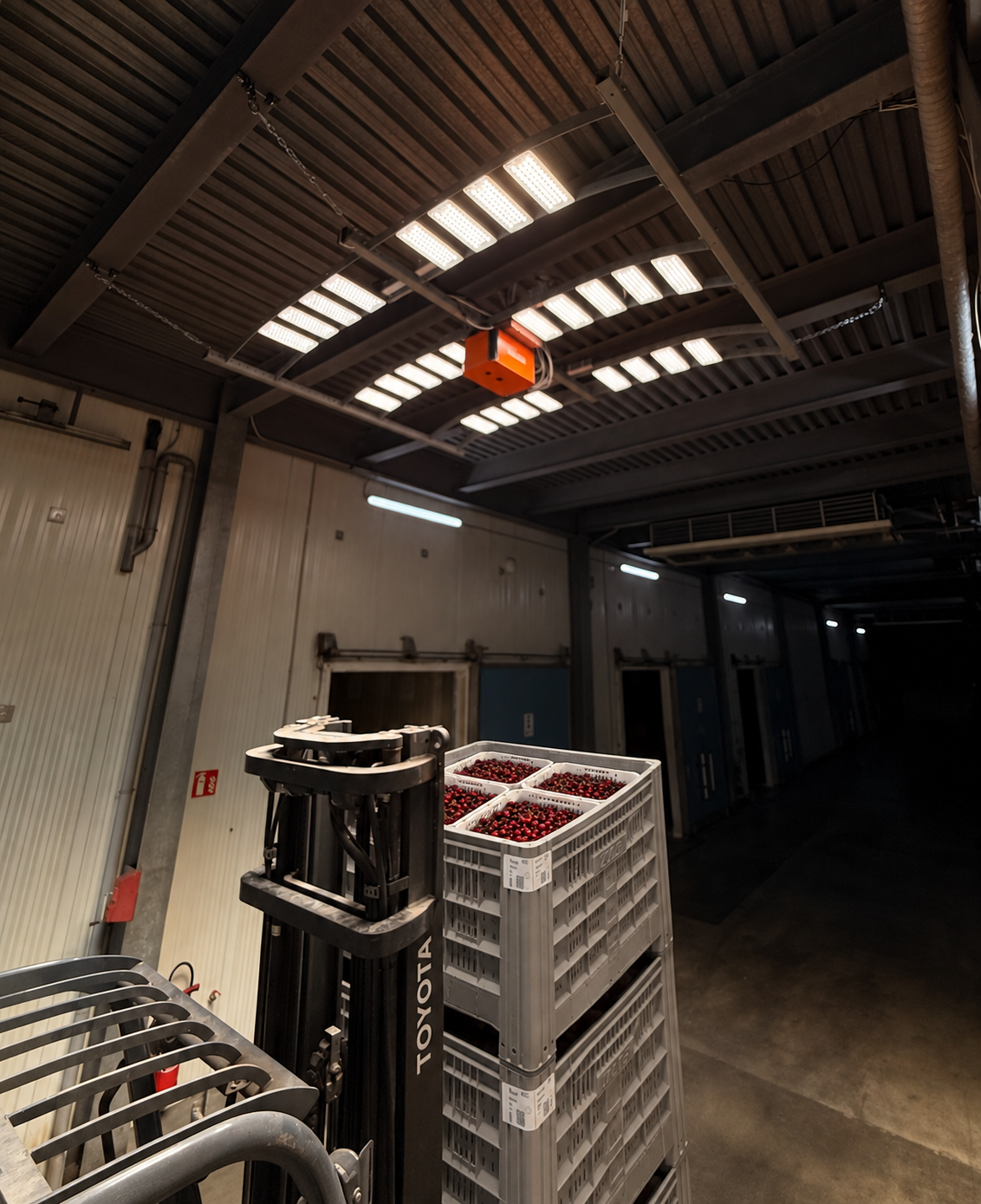 Installed above the existing receiving path, Arc Gate works automatically as trucks or forklifts move beneath it. There is no device to operate or dedicated sampling task to complete. Teams gain a clearer picture of incoming fruit through the movement already taking place in the packhouse.
That means more information to commit fruit to orders, adjust packing priorities, and coordinate storage while plans can still be changed.
Science behind the information
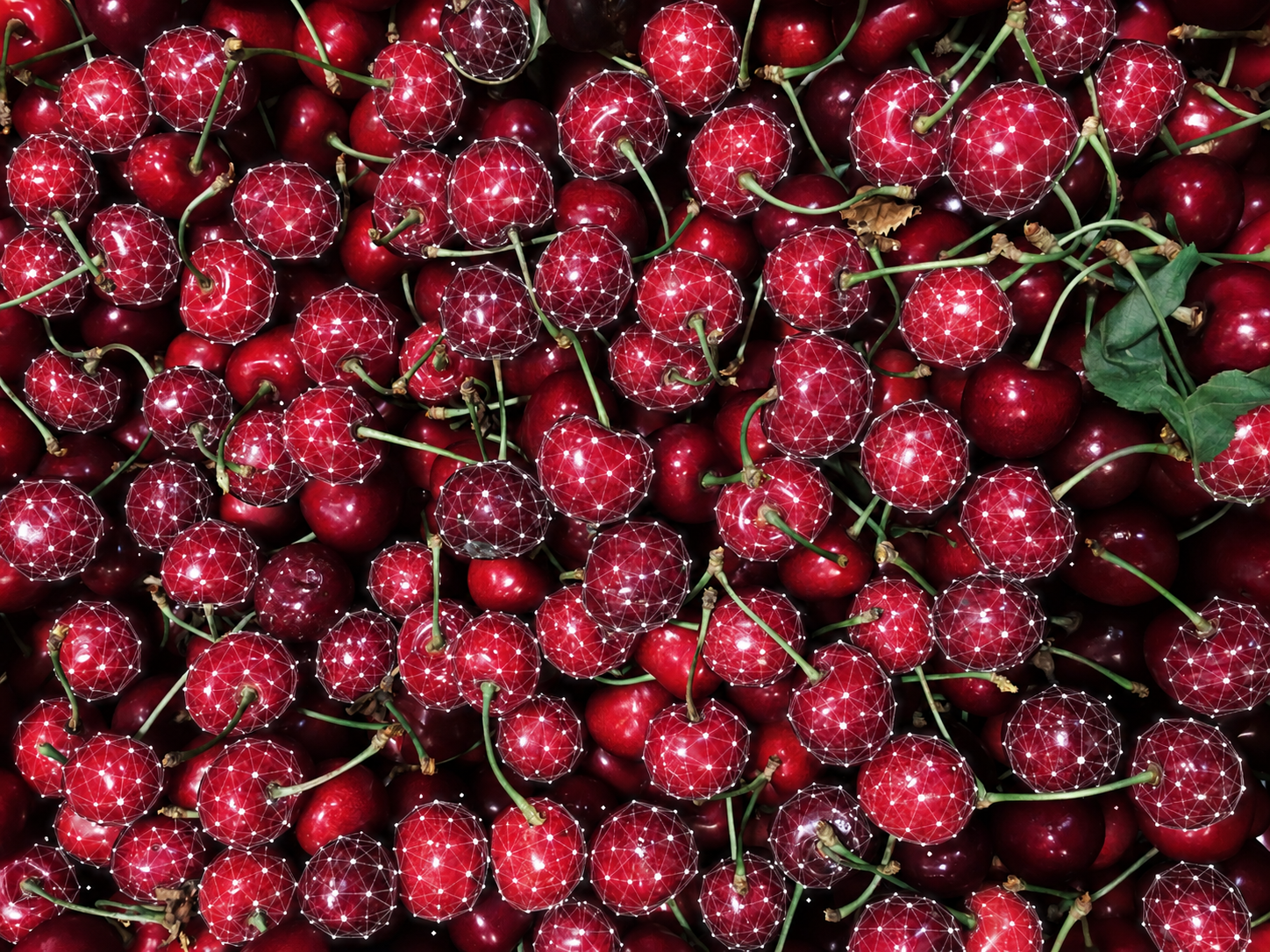
Arc Gate combines high-resolution imaging, fruit-level analysis, and calibration against the customer’s grading standard.
The technology examines each individual cherry and determines its dimensions. For color, an AI image-quality check assesses whether environmental conditions support a reliable result at a pixel level. Observations that do not meet this qualification are excluded from the color assessment of the crate.
Validation against the customer’s grader connects the receiving profile with the commercial benchmark used downstream, giving teams a practical basis for acting on the information earlier.
From receiving data to shared decisions
Hectre’s Load and Bin Assessments bring fruit distributions and source images into one place. Teams can review loads, inspect individual bins, and see the images behind each assessment.
Storage, production, quality, and commercial teams can work from the same view of incoming fruit. Assessment data and images also support clearer conversations with growers about what was observed at receiving.
Coming soon: an earlier view of external defects
Automated external defect detection is in development and coming soon to Arc Gate. It is being developed to add another layer of information alongside size and color, helping teams identify loads that may need closer inspection and account for potential quality concerns earlier in storage and packing plans.
For Chile’s cherry packhouses, the opportunity is to assess more fruit without adding sampling work, and turn that earlier knowledge into timely decisions throughout the season.
See Arc Gate in action ahead of the cherry season. Hectre offers demonstrations covering the receiving setup, grading calibration, and how teams can use the results.
For more information, please contact:
Rafael Elorriaga
WhatsApp / Mobile: +56 9 6310 2743
rafael@hectre.com
Learn more about at Hectre.com
Related stories
Global agtech leader Hectre to welcome fruit industry executives from 10 countries in Chile tour