Global cherry crop rebounds as US production falls 22 percent
 Add Fresh Fruit Portal to Google
It’s a tale of two cherry seasons: while frost and rain are shrinking the United States crop, favorable weather, recovering orchards, and expanding acreage are helping push global production to a record 5.44 million tons.
In a September report, the US Department of Agriculture’s Foreign Agricultural Service (USDA FAS) forecasts global yields up 17 percent from the 2025/26 season, with major gains in Türkiye and Chile and continued growth in China. The US cherry crop, conversely, is forecast at 317,000 metric tons, a 22 percent year-on-year decline.
Frost damage in Washington and the broader Pacific Northwest reduced sweet cherry supplies, while late freezes in Michigan and Utah cut tart cherry production.
US cherry production falls under the weather
Fresh US cherry exports are forecast at 62,000 metric tons, down 24 percent. The drop follows a split export season where shipments increased 44 percent year on year in April and May, before falling 32 percent in June and July.

The California crop benefited from a strong start following an early warm spring, but harvest ended abruptly after rainfall during the harvest period hurt fruit quality dramatically. Unseasonably lower temperatures also impacted the Evergreen State.
“Freeze damage in top-producer Washington led to a significant decline in production from last year's bumper crop,” the report says.

Sweet cherry production is forecast at 277,000 metric tons, down 18 percent. Tart cherry production is forecast at 40,000 metric tons, down 38 percent.
Despite the lower export volume, the US is expected to maintain its established market position. Canada accounts for 33 percent of US cherry exports, followed by Taiwan at 15 percent, South Korea at 14 percent, China and Hong Kong at 10 percent, and Mexico at nine percent.
"In general, the United States is the sole supplier
of imported cherries to these countries during its season and only competes with domestic production in Canada and China. Therefore, the projected lower exports in 2026/27 are unlikely to erode US market share in top markets," the assessment notes.
Global production drivers
Chile and Türkiye are spearheading the global supply growth, the USDA notes. The Andean country is forecast to produce 727,000 metric tons of cherries in the 2026/27 campaign, up 15 percent from the previous season. Shipments are projected at 650,000 metric tons, up 80,000 metric tons.
The USDA attributes the production increase to expanding planted acreage and favorable weather, with Chile retaining its position as the world's leading cherry exporter.
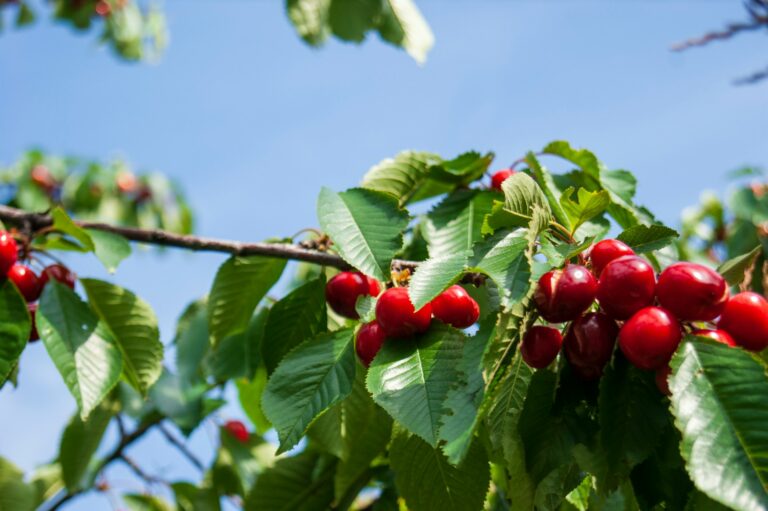
Photo by Gala Iv via Unsplash.
Türkiye is expected to post the largest production rebound among major growers. Production is forecast at one million metric tons, up nearly 250 percent from the previous season's freeze-damaged crop and reaching a record level.
While higher production will increase exportable supplies, the USDA expects exports to remain below the country's 2023/24 peak of 84,000 metric tons. On the exports front, high domestic prices and competition in Europe are expected to limit international shipments.
China pushes import demand higher
With a forecast consumption of almost 2 million metric tons, China is expected to increase imports by at least 12 percent to 560,000 metric tons, driven by strong demand for Southern Hemisphere cherries.
The Asian giant remains the world’s largest producer and is set to yield a little over one million tons in the 2026/27 season.
*Main image by Redwan Chowdhury via Unsplash | All images are referential | Graphs by USDA FAS
Related stories
US cherry projections down for 2026
US cherry industry mourns passing of veteran leader B.J. Thurlby, former WSFC president