South African cherry production continues to rise as domestic market gains ground
 Add Fresh Fruit Portal to Google
The drop in export prices has reaffirmed a shift in the South African fresh cherry industry, which has kept more and more of its volume in the domestic market over the past five years.
According to the latest report by industry body Hortgro, total production in the country reached 3,306 million metric tons in 2024/25. The 17 percent year-on-year increase consolidates a trend the South African cherry sector has shown since 2020, when it posted 78 percent growth. Expanding volumes are also a sign of recovery after an underwhelming 2022/23 campaign, when the local industry posted a year-on-year decline of nearly 30 percent after a bumper crop.
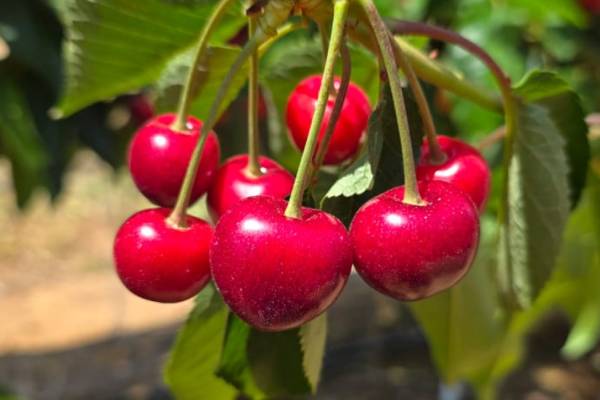
Image by Shutterstock
However, the real change is in the fruit's distribution, with over 60 percent of it absorbed by local consumers and only 35 percent destined for international markets. According to Hortgro data, the shift has taken place over the last three seasons, with export volumes remaining steady despite the total crop expanding year after year. In 2024/25, South Africa shipped 1,254 metric tons, while 2,064 metric tons remained in the country.
The shift aligns with a decline in export prices, which dropped 27 percent in the 2024/25 season: from nearly $9,000 (R150,000) per metric ton in 2023/24 to $6,600 (R110,000) only a year later.
The drop reflects a normalization of prices after a particularly strong market in 2023, but the industry has been able to keep its valuation steady thanks to domestic demand. Over the last three years, the industry has been valued at around $18.6 million (R310 million), meaning the South African market is presenting a profitable opportunity for local growers.
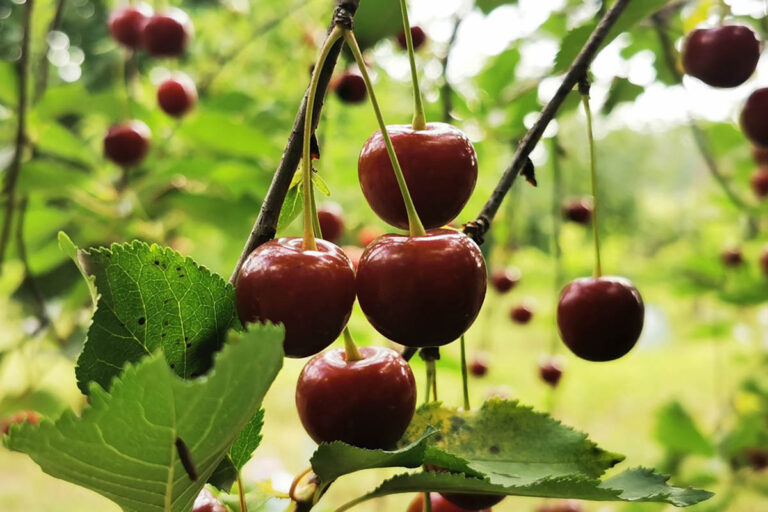
Image by Shutterstock
South African cherries: a snapshot
The South African cherry industry’s three biggest stars are Royal Hazel, Royal Tioga, and Lapins, which account for 13 percent, 11 percent, and 9 percent of the total planted area in the country, respectively.
Despite its number one spot, Royal Hazel saw a 10 percent year–on-year decline in 2024/25, with a little over 280 acres planted. Meanwhile, Royal Tioga and Lapins have remained steady, with 215 acres and 185 acres planted, respectively. And if the past is any sign of the former’s future, Royal Tioga might be coming for Royal Hazel’s throne, as the cultivar has seen a whopping 357 percent expansion in planted area since 2020.
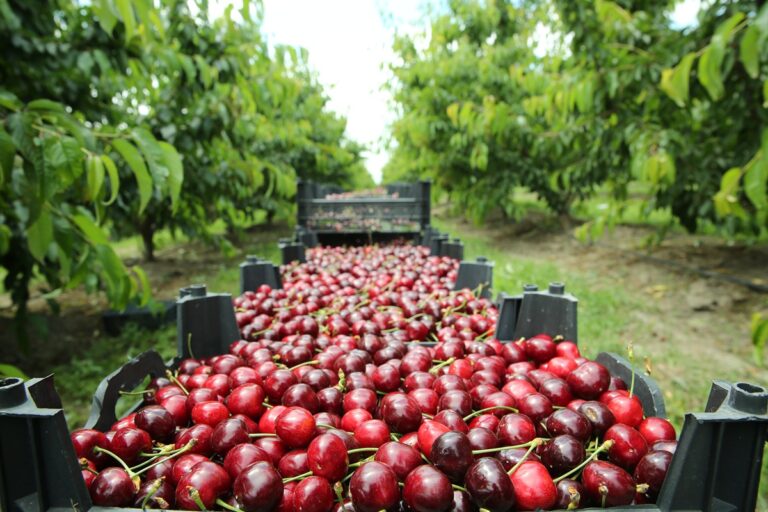
Image by Shutterstock
Even though the export market share is declining, volumes have remained steady, and one destination is taking more than half of the South African fruit’s volume: the UK, which absorbs 60 percent of volumes.
Europe lags behind, accounting for 18 percent of sector exports, followed by the Middle East (12 percent) and Asia (nine percent). The US and Canada represent less than one percent of South African fresh cherry exports.
*All images are referential.
Related stories
South African cherries break into the Chinese market for the first time
The South African cherry industry expands and aims to double production in five years