


UF study identifies citrus tree immune response as a driver of greening damage
 Add Fresh Fruit Portal to Google
Citrus trees may be fighting the wrong battle against greening, with their own defense systems potentially causing as much damage as the disease itself.
New research from the University of Florida (UF) suggests that chronic immune responses triggered by the bacterium behind Huanglongbing (HLB) contribute to the destruction of the tree's sugar-transport system, opening new avenues for research into disease tolerance.
Published in Cell Host & Microbe in July, the study found that the tree's defense mechanisms can trigger damaging processes that disrupt the plant's ability to transport sugars, a process key to healthy development.

Nian Wang
Led by Nian Wang of UF's Department of Microbiology and Cell Science, the research provides genetic and physiological evidence supporting the theory that citrus greening involves an immune-mediated disease process.
Identifying damaging immune pathways caused by greening
HLB is caused by Candidatus Liberibacter asiaticus (CLas), a bacterium that colonizes the phloem, the tissue that transports sugars from leaves throughout the tree. Because the bacterium has not been successfully grown independently in laboratory conditions, understanding how it causes disease has presented challenges for researchers.
Researchers used two plant systems: tomato infected with a related Liberibacter species to examine immune signaling, and citrus infected with CLas to assess the findings in the crop itself.
The study identified EDS1, a gene involved in activating plant immune defenses, as a central component of the disease process. Citrus plants carrying mutations in the eds1a gene, or in both eds1a and eds1b, showed increased resistance or tolerance to HLB.
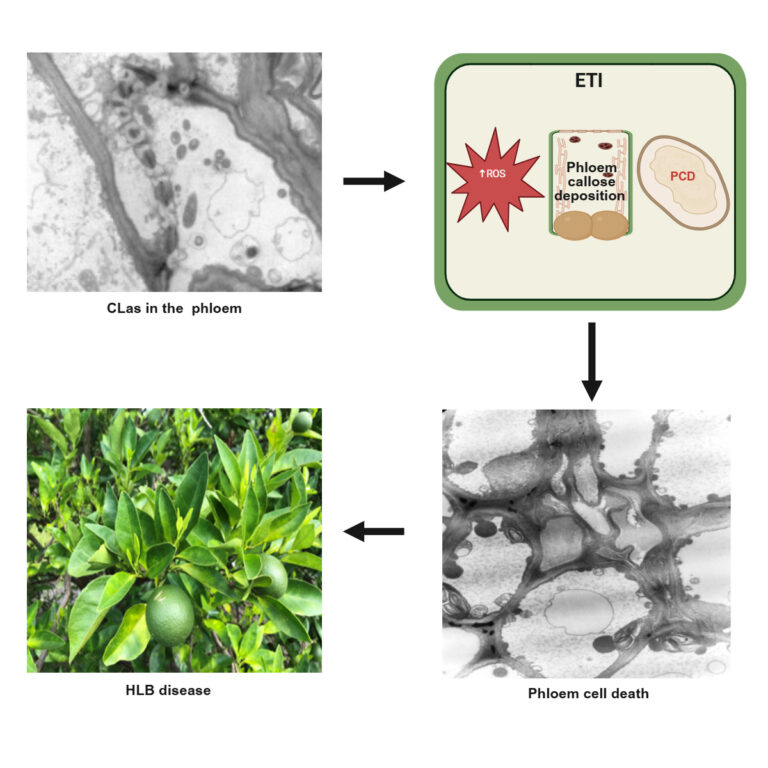
Researchers also found that reducing reactive oxygen species (ROS) accumulation in chloroplasts, the cellular structures responsible for photosynthesis, helped reduce disease symptoms. They achieved this by increasing expression of a protein called flavodoxin.
Another important finding involved callose, a substance plants deposit around phloem pores as part of their defense response. Excessive accumulation can restrict sugar transport, and reducing callose deposition in response to CLas lowered disease severity.
Together, the results suggest that prolonged immune activity can damage the phloem, contributing to cell death and the symptoms associated with citrus greening.
“The citrus greening pathogen causes disease damage through chronic immune responses, mimicking autoimmune disease in a certain way. We need to change the status quo by either accelerating the immune response or tuning down the immune response to mitigate HLB disease damage,” Wang said.
Wang's team plans to investigate using CRISPR genome editing to modify NLR genes involved in immune signaling. Researchers also intend to conduct field trials to evaluate genetically modified citrus lines that overexpress the FLD gene, which supports flavodoxin production.
*All images by UF/IFAS.
Related stories
Citrus greening disease hits its lowest spread rate in the last nine years in Brazil