





U.S.: GM Arctic Apples ready for first test marketing in early 2017
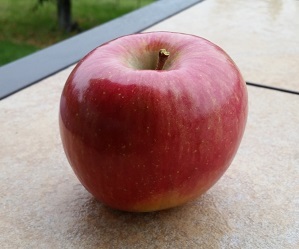

Okanagan Specialty Fruits (OSF) is growing nursery plant material as quickly as possible to get its genetically-modified, non-browning apples to market. Founder Neal Carter tells www.freshfruitportal.com about plans for test marketing of Arctic Golden apples in January and February of next year, as well as where the recently approved Arctic Fuji fits into the equation.

After a deregulation process that took five years in the U.S. for the Arctic Granny and Arctic Golden, Carter is relieved the Arctic Fuji was approved in just eight months.
"It’s awesome to think we’re going to be able to do additional Arctic apples and do them this quickly from a regulatory point of view - it's faster, it cuts down on costs, it’s how we like it," he says.
"There are not a lot of [Arctic Fuji] trees in our two field trials in Washington State and New York state, but we've got experience growing it in two different areas with two different kinds of disease and pest pressure, and it basically grows exactly like the control, its parent Fuji.
"So we feel very comfortable that it’s as good as its parent or better, but the fact it doesn’t go brown is a key benefit that we’ve identified and want to bring to market."
The trait comes from a silencing of the enzyme polyphenol oxidase (PPO) that causes the browning reaction. OSF is mostly dedicated to using the technique in apples but is also working with pears and cherries.
Carter adds the 'event', as it's known in genetic engineering, is being used by Intrexon (NYSE: XON) which purchased OSF last year.
"Some of the knowledge we’ve gained we’ve shared with our parent company and they’re working on vegetable crops and things like that," Carter says.
"Whether it's Okanagan Specialty Fruits or Intrexon, I think you’re going to see that knowledge of PPO come forward in other produce."
Apples, cherries and some vegetables could be crops that benefit from the technology in the future, but for now Carter is focused on the already approved apples.
"Fujis are a dessert apple and are often cut and presented on a plate for people to eat, and browning is certainly issue," he says.
"It’s also a very firm apple and nice to slice, so for the fresh cut apple slice business, but it has that genetic issue around browning. We wouldn’t have put it in our portfolio if we didn’t think it had a place.
"Even prior to deregulation we’ve had a lot of industry people very happy we are working on Fuji if it’s not Golden and Granny they’re looking for."
Deregulation is one thing, production is another, and for Carter the biggest challenge right now is simply having enough trees to produce the fruit.
"We’re not so much looking for licensing deals, but we are talking to people about being contract growers to help us ramp up production faster," he says.
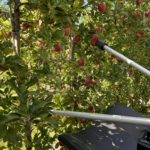
"Right now we have about 70 acres planted - that's in one ranch in Washington State, and we have plans to continue planting in this coming spring and in subsequent years to bolster production," he says.
"After deregulation in the spring of 2015 that was when we were really able to get going with the nursery production of Arctic apple trees; we had some but we were limited in how many trees we were allowed to have under a permit."
After ramping up nursery production, Carter expects to have more than 300,000 trees next spring and then 500,000 trees the following year.
"At this point it’s a little bit more golden than granny – the target is really a 60-40 granny, golden, and then now that we’re deregulated we’ll start putting Fujis in the ground next year.
"We’re going to start growing some green trees in the greenhouses to get the Fujis going as fast as we can, and then we’ll see how the ratio unfolds at that point.
"We also have Galas to add to the mix in a year or two – it’s possible a year from now or a year from the fourth quarter."
OSF also has a couple of nurseries in Canada, where Carter expects to have the first trees and plantings available in the spring of 2018.
Test marketing
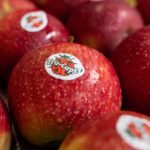
Carter says OSF now has prototype packaging available for test marketing in January and February, 2017, and is confident the product will "sell itself".
"We have in addition to that nutrition labels and the QR code that will take people to a link in our website that talks about Arctic Apples and how they’re made using genetic engineering.
"On our packaging also we speak to the fact it’s preservative free; the fact that Arctic apples will go to market without a preservative treatment like an antioxidant being used with less chemicals being used to treat the apple, more of that apple flavor instead of the antioxidant calcium ascorbate flavor.
"We think that’s a key driver of why people will buy Arctic apples - they're going to taste a lot better without the chemical treatment."
He says PPO not only causes browning but also brown pigment in the apples which can have an "odd flavoring".
"So just in general we’re finding people are really liking Arctic Apples – they eat well, they have an appeal to the consumer, so we’re focused completely on trying to get these into the market as fast as they can.
"That orchard and the one we’re planting next spring and all the subsequent orchards are really for growing products that are referred to as minimally processed fresh, whether that’s apple slices, cubes, crinkled or shreds.
"At some point when there’s enough volume we’ll get into the whole apple business as well, but that’s likely three or five years down the road. Our biggest impediment today is not having sufficient volume to have a national program, and that’s what we want, so we need to walk before we run."







Subscribe to our newsletter