








Researchers want to make acerola cherries Florida’s new fruit sensation
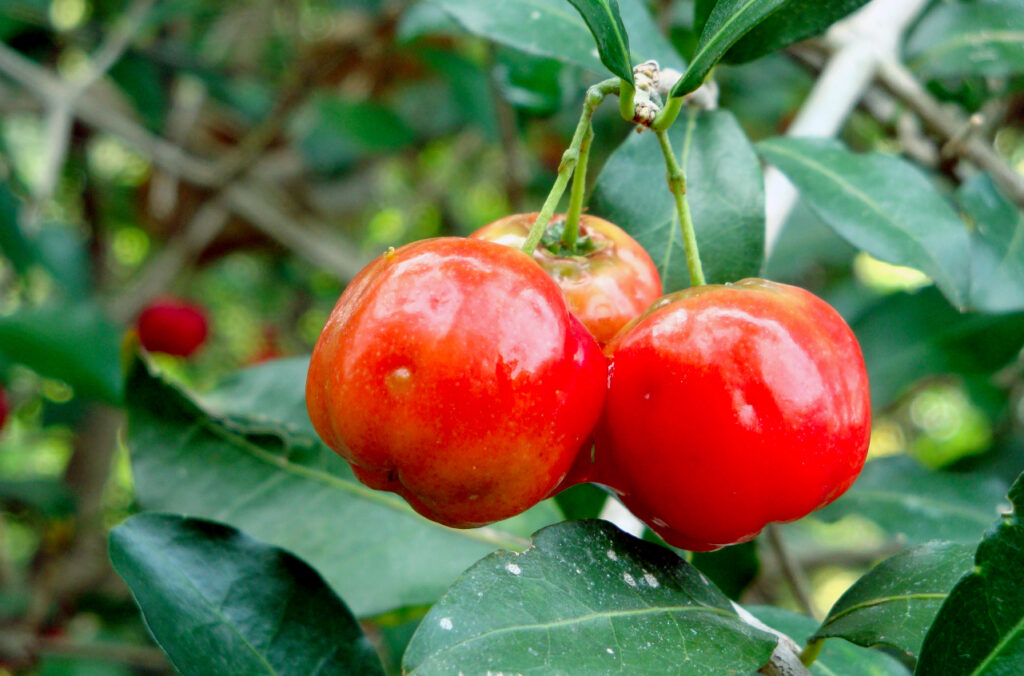



Acerola cherries—also known as Barbados cherries, semerucos, manzanitas, or cerecitas—are well-known in the American market. Consumers across the country can easily find offerings such as acerola juice and powders at retailers like Trader Joe’s or Target. There’s even an acerola cultivar called Florida Sweet, but the fruit’s popularity among Sunshine State growers doesn’t begin to compare with other local crops, like oranges.


However, that might change in the future. A team of researchers at the University of Florida Institute of Food and Agricultural Sciences is trying to decipher what is preventing growers from producing acerolas, and where in the state they can successfully cultivate the fruit for commercial purposes.
Felipe Ferrão, the research lead, has two hypotheses to explain the phenomenon: little consumer knowledge of acerola’s health benefits and lack of data supporting the commercial viability of the berry’s production.
Make Acerolas popular again
Before studying commercial viability, researchers say it’s important to determine which acerola varieties work well in Florida’s weather and which regions are best to grow them commercially.
The plant has already been proven to thrive in Florida, as more than 50 acres of acerolas were growing in the state back in the ’60s, Ferrão says. Unfortunately, those are gone now.
“The plant brought into the state was very susceptible to some pests,” he explains. “But now that we are exploring a more diverse population of acerolas, we eventually believe we can find resistance to pests.”
Thanks to its favorable growing weather conditions, most of the 90 acerola varieties in the world thrive in Brazil, making the country the world's leading producer, consumer, and exporter of the fruit. There, the plant has proven to be extremely low-maintenance, growing with hardly any human input.
“Most people in Brazil’s countryside have an acerola tree in their backyard,” Ferrão says. “If you ask them, most never put fertilizer on it or water it consistently, and they get cherries throughout the year,” Ferrão explains. “I truly believe that we're going to find enough diversity for the conditions that we have here.”
Acerola cherries might be the next super food
According to the USDA, one cup of acerola cherry juice has over 3,000 milligrams of vitamin C. This is over 2,900 more than the average cup of orange juice, and many times over the recommended amount of the nutrient for adults in the United States.
Ferrão says he would love to see Florida consumers think about acerolas as an essential fruit for their diet.
“Every time that I talk to someone who knows the fruit, I ask them to list their top five juices, and acerola is always part of the list,” Ferrão says. “I hope that the same feeling that we have in tropical countries can also translate to American consumers.”
Related stories
Chilean blueberry research seeks to boost health benefits and improve quality
In a first for fresh produce, Zespri scores EU-approved health claim for green kiwifruit
Red-fleshed apples benefit cardiovascular health, research shows







Subscribe to our newsletter