After years of great investment, Tru-Cape growers celebrate record Pink Lady packouts
 Add Fresh Fruit Portal to Google
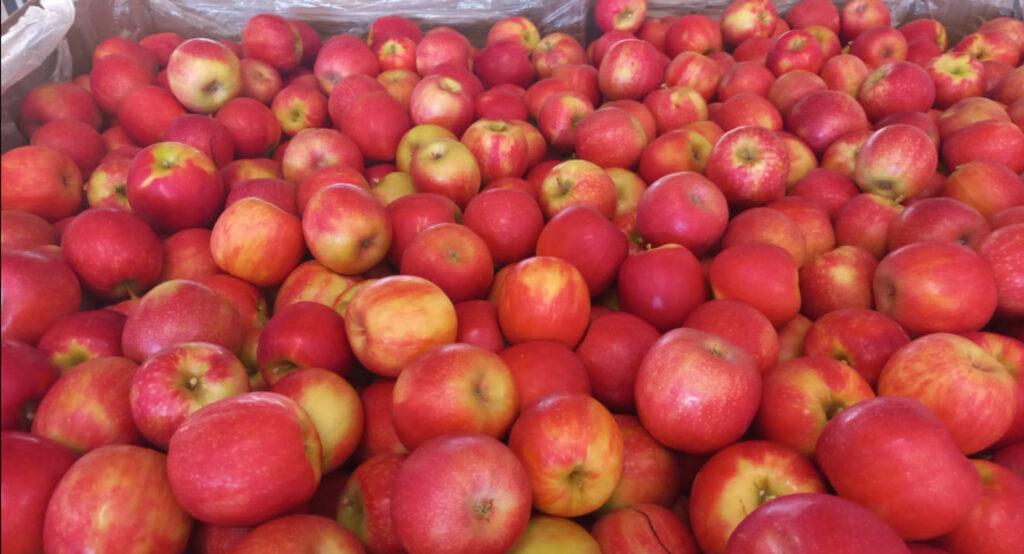
South Africa’s Tru-Cape Fruit Marketing reported record-high Pink Lady apple packouts this season. The company attributes the gains to years of coordinated grower investment, as well as long-term efforts to improve color, yield, and consistency through precision orchard practices and the adoption of technology.
At Ceres Fruit Growers, Pink Lady packouts reached nearly 75 percent—the highest in the company’s history—while Two-a-Day, another Tru-Cape packhouse, recorded an 8 percent increase year-over-year.
“We made it our goal to get closer to 80 percent Pink Lady per hectare, and we’ve come a long way. These results show that the strategy is working,” says Calla du Toit, Tru-Cape’s Procurement Manager.
Orchard strategies to ensure the perfect Pink Lady environment
Growers across multiple regions implemented tailored approaches to address local climate challenges and boost packout rates.
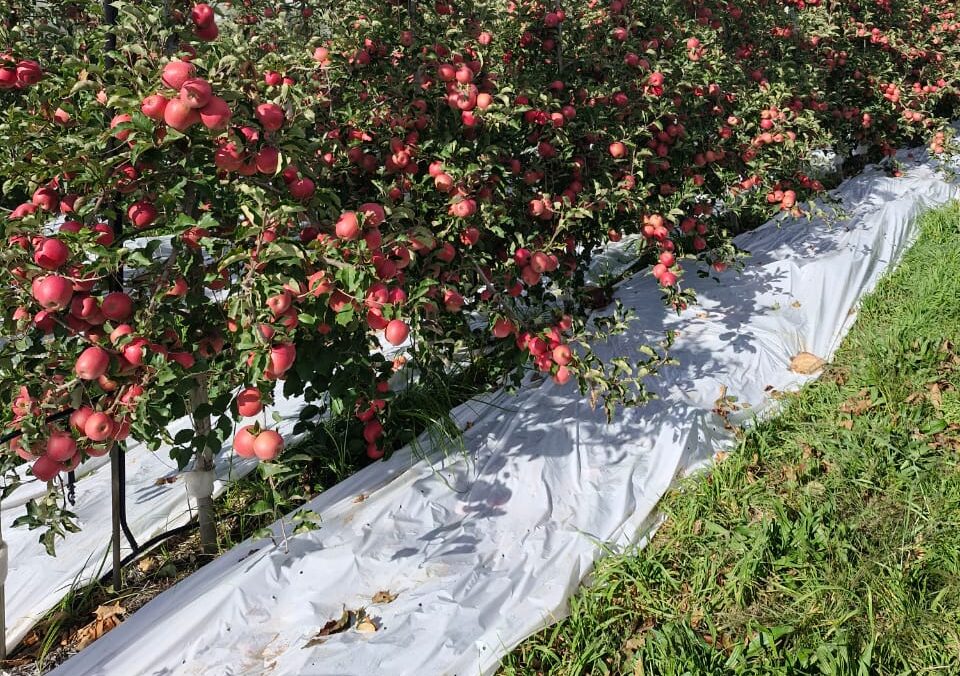
On the farm Oewerzicht near Greyton, Kootjie Viljoen uses a combination of summer pruning, leaf removal, and reflective mulch developed with Polywrap to improve light penetration.
“The mulch, which we developed in collaboration with Polywrap, reflects sunlight back into the canopy, giving the fruit more light from all angles. This results in a higher percentage of well-coloured apples. These efforts have increased our Pink Lady yield by around 20 percent,” Viljoen says.
In cooler areas such as the Witzenberg Valley, growers use overhead irrigation systems to influence diurnal temperatures and enhance red color during ripening.
“When the temperature drops below a certain threshold, irrigation kicks in automatically—similar to frost protection, but triggered at a higher temperature. This lowers the orchard’s ambient temperature further, increasing the difference between day and night temperatures, which improves color development,” says du Toit.
Growers have also widely adopted nets to reduce sunburn and promote more uniform coloring. At Laastedrif, Rossouw Cillié is combining climate advantage with updated orchard design and rootstock selection.
“We’ve re-evaluated planting systems, trellises, and rootstocks,” says Cillié. “We’re planting long-feathered trees that are open and well-ventilated, using rootstocks that balance vigor and soil compatibility. Our goal is to create the ideal microclimate for Pink Lady to thrive.”
Tru-Cape emphasizes that technology and knowledge sharing—particularly among younger growers—have played a significant role in boosting Pink Lady quality and consistency.
“The younger generation is deeply focused on innovation,” says du Toit. “But most importantly, they’re sharing knowledge and continuously pushing one another to improve.”
Examples include GPS-guided fertilizer application, smart irrigation systems, and data-driven weather tools. These technologies are helping growers fine-tune inputs and optimize conditions to improve both yield and marketability.
Growing demand for Pink Lady
Tru-Cape reports a 30 percent year-over-year increase in European demand for Pink Lady apples. The company says feedback from retailers has been positive, particularly regarding product quality, consistent sizing, and flexibility in logistics.
“The South African Pink Lady industry is also making strong gains in Russia, the Middle East, and India,” du Toit says.
This season, more than 100,000 cartons were exported to Russia—a record for the brand in that market. Tru-Cape’s proximity to Europe also allows for shorter delivery times and value-added services such as flow wrapping and date coding.
“With strong market conditions, Pink Lady is one of the most consistent and reliable apple brands out there,” Cillié states. “Consumers know exactly what they’re getting, and that’s a major competitive advantage.”
Focus on quality and long-term brand value
While demand is growing, Tru-Cape says its approach to expansion remains cautious and focused on value preservation. In South Africa, the Pink Lady trademark is available for use by any grower of approved cultivars, but Tru-Cape emphasized the need for high standards across the board.
“We believe in managing growth carefully to protect the value of the Pink Lady brand,” du Toit explains. “It’s about staying competitive, consistent, and customer-focused.”
Looking ahead, Tru-Cape says it plans to continue trialing color-enhanced strains, adopting precision tools, and refining orchard systems.
“We’re not standing still,” adds du Toit. “We aim to stay world-class in both production and delivery. Pink Lady is not just a great apple—it’s a brand our growers are proud to grow, and one that consumers around the world trust.”