







A sting in the tail for European Foulbrood: AI tool aims to sharpen bee disease diagnostics



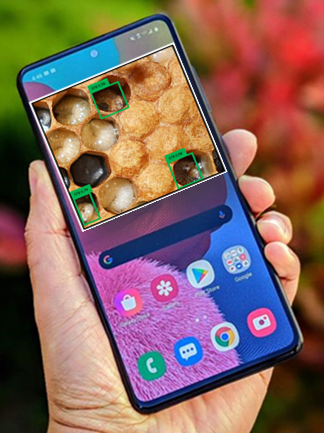
An artificial intelligence-powered mobile application under development by the United States Department of Agriculture (USDA) could help reduce one of commercial pollination’s biggest hidden risks: diseased honeybee colonies entering orchards undetected ahead of peak bloom for key crops.


In an August 2025 study, USDA Agricultural Research Service (ARS) scientists at the Carl Hayden Bee Research Center in Tucson, Arizona, demonstrated that image-based AI models can distinguish between bacterial and viral honeybee brood diseases with up to 88 percent accuracy.
The tool aims to reduce misdiagnosis, unnecessary antibiotic use, and the movement of weakened colonies into commercial pollination settings. Key crops such as avocados, almonds, apples, strawberries, blueberries, and others will benefit from the innovation.
Duan C. Copeland, a postdoctoral researcher at ARS, explains to FreshFruiPortal.com that beekeepers and apiary inspectors often struggle to differentiate bacterial and viral infections using visual inspection alone. This can increase the risks of colonies receiving the wrong treatment before entering pollination service.
“In our first test, we could successfully distinguish European Foulbrood (or EFB, a bacterial disease) from viruses with accuracies ranging from around 72 percent to 88 percent, depending on the model,” Copeland explains.
“And if this technology could be deployed later in the field, it could help make faster, more accurate decisions about which colonies need treatment before potentially moving the hives into those pollination contracts that they have,” he adds.
A sharper lens on colony health
ARS lead researcher Kirk E. Anderson explains that the project addresses a recurring challenge for produce growers who depend on strong colonies during short, high-demand bloom periods.
“We started researching how we could tell the difference between two of the most difficult diseases to distinguish, which were the EFB and viral infection,” he explains. “Inspectors call the viral infection ‘EFB-like’. This is basically a beekeeper moniker for ‘Well, it looks like EFB, but the antibiotics aren't doing anything to get rid of it,’” Anderson explains.
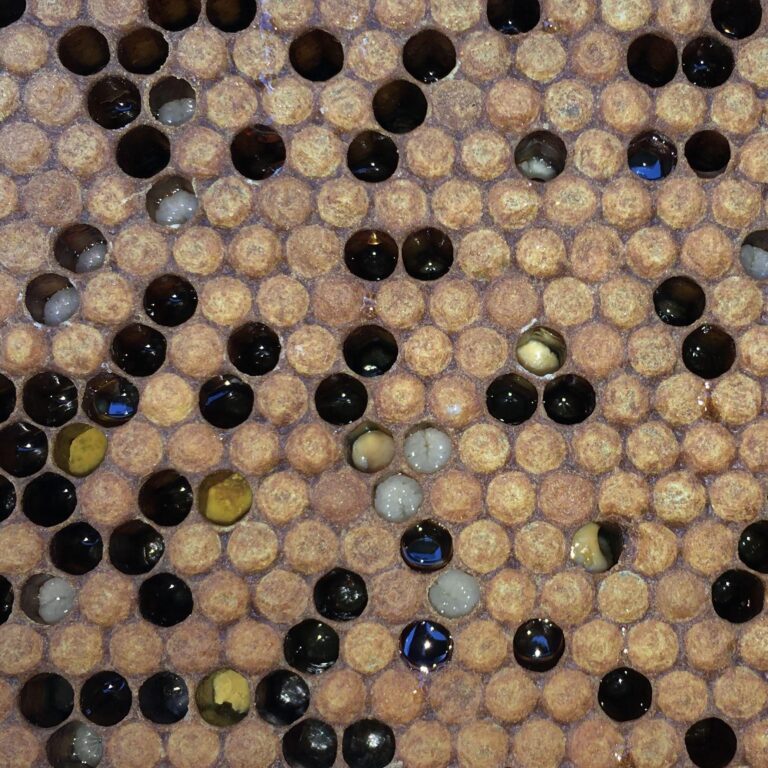
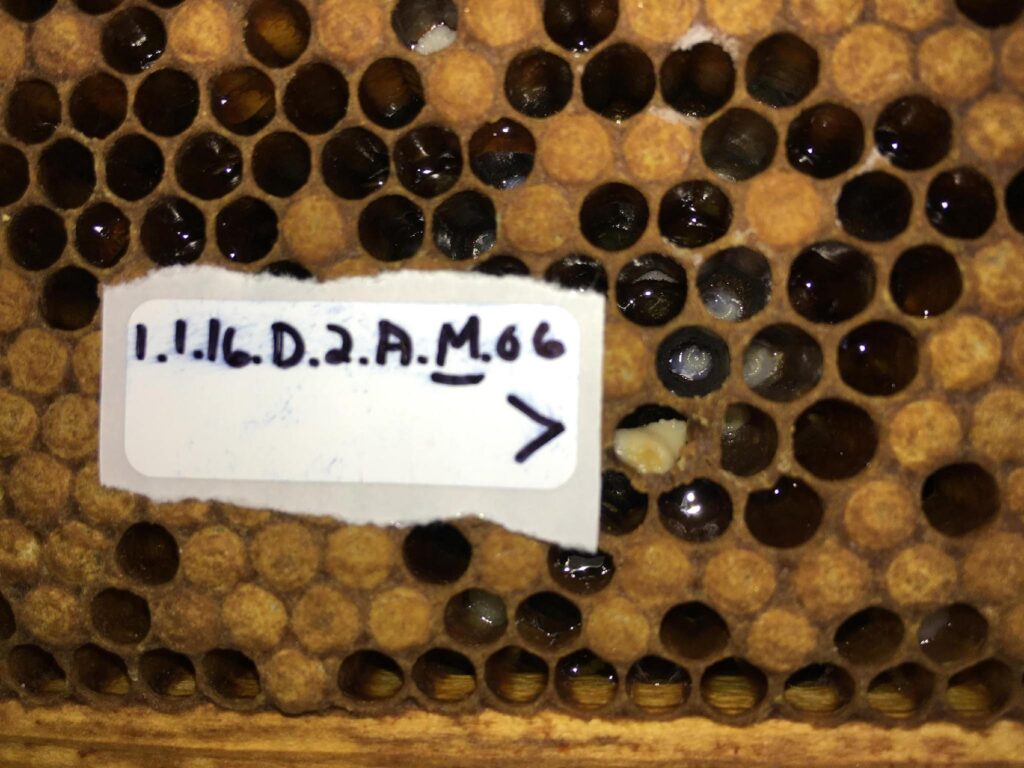
EFB sample.
With Copeland joining the team and the help of laboratory supervisor Brendan Mott, the group collectively came up with different takes on how to approach the challenge.
“And this is where we ended up,” Anderson adds.
While the mobile application is still under development, Anderson notes the initiative has received support from the National Institute of Food and Agriculture grants, and that while a timeline for public release is still in the works, the long-term goal is broad access.
“My idea would be to make it freely available to growers and beekeepers worldwide,” Anderson adds.
Viral vs. bacterial disease: A key differentiation
Viral brood diseases are sometimes mistaken for EFB, which does not respond to antibiotics. The distinction, Copeland says, is crucial.
“When a disease is caused by viral infection, and it's misidentified as a bacterial disease, and treated with antibiotics, that doesn’t actually address the problem,” Copeland stresses. “Through some of our research and others, we know that antibiotics disrupt the native gut microbiome, which bees depend on for their health and immune function.”
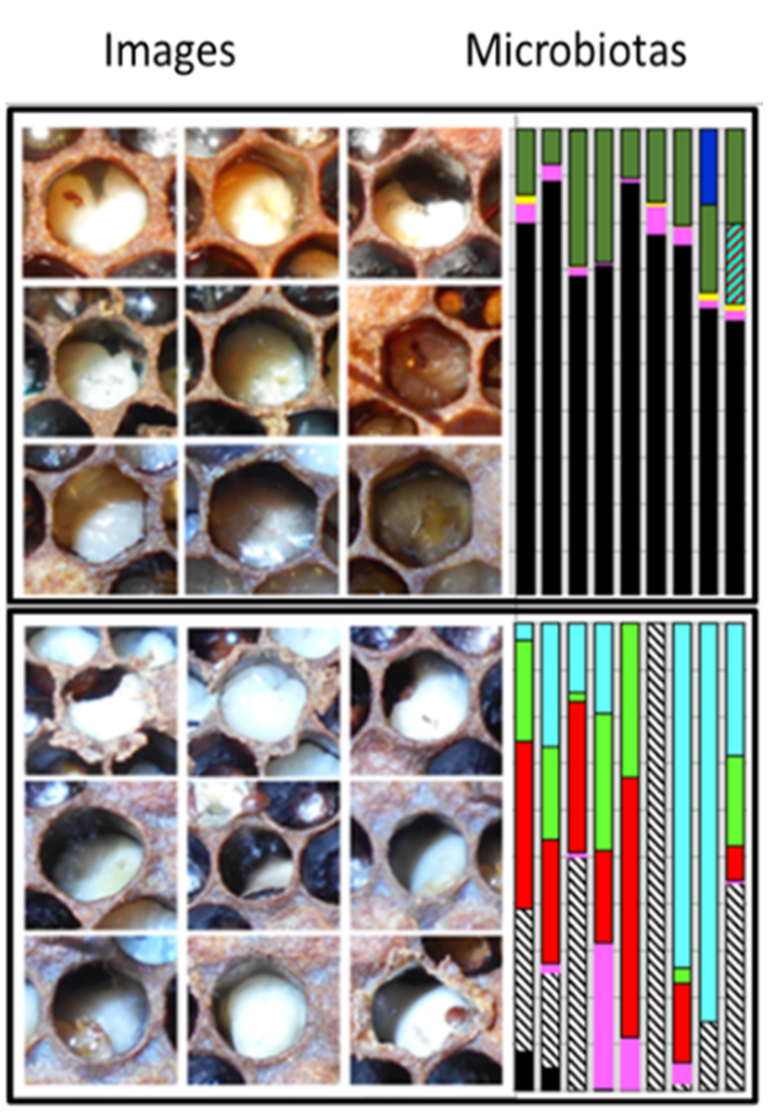
(Left) Images of cropped diseased larvae of EFB (top) and virus (bottom).
Copeland adds that unnecessary antibiotic use can accelerate resistance in bacteria present in and around the hive.
“Those resistance genes can persist and transfer to other bacteria in the environment,” he says.
Improving the early detection of EFB could help limit antibiotic exposure and avoid future performance issues. Copeland notes that honeybee gut microbiomes may take more than a month to recover after treatment, with effects on foraging, nursing, and overall colony function.
“Colonies with healthy microbial communities might translate to stronger colonies going into these high-demand pollination events,” he says.
Snap a photo, guide a decision
The team envisions a smartphone-based application that could be used during routine hive inspections.
“They would just whip out their smartphone, take a photograph of the symptomatic brood, and then they would be able to upload it to the application, and the app would provide an assessment of the likely pathogen,” Copeland explains.
The researcher emphasizes that the tool would complement, not replace, laboratory diagnostics, helping to prioritize which colonies or samples require confirmation and guide immediate management decisions in the field.
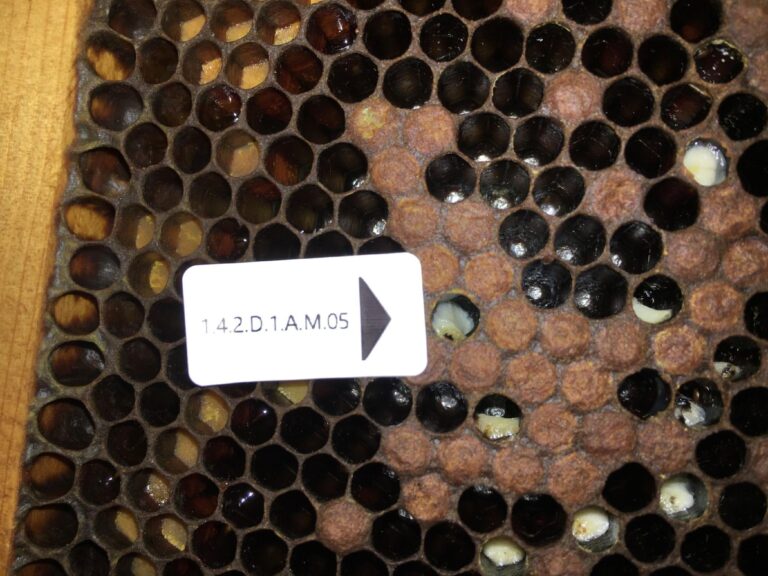
Acute Bee Paralysis Virus sample.
The study also highlights regional challenges. When models were tested on viruses from agricultural landscapes not represented in the original training data, accuracy fell to between 28 percent and 68 percent, depending on the model.
“We're currently working with eight USDA various inspectors. I think our count is 18 states right now and growing,” Copeland says, adding that expanded sampling is critical to capturing regional variation in disease presentation.
Future versions of the technology are expected to move beyond a simple bacterial-versus-viral distinction and identify specific pathogens, including fungal diseases and individual viruses.
The researchers say widespread adoption could also support disease surveillance efforts and reduce the risk of transmitting infections through commercial pollination.
*All photos courtesy of Duan C. Copeland.
Related stories
Ag-tech innovator BioPollen expands liquid pollination system across the Americas
More pollination hours and better hive health—the science behind Beeflow technology
“Manpower” and mites: Wilmer Honey’s decades in the pollination business
Wild bees play a vital role in Georgia’s blueberry industry
BeeHero's Yuval Regev: "Even the best beekeepers can benefit from a data-driven approach"





Subscribe to our newsletter