The best innovations in eco-friendly materials for fresh produce
 Add Fresh Fruit Portal to Google
Consumers' preference for sustainable practices is driving retailers and producers to seek reliable, eco-friendly packaging alternatives for fresh produce.
Whether you ship or sell fruits and vegetables, choosing the right packaging is critical, and keeping up with the latest trends will ensure you're providing consumers with the best, most attractive choice.
The right packaging can greatly impact the shelf life of fresh produce and significantly extend it if it can resist air and moisture.
The ideal eco-friendly packaging for such items is one with food-safe material and temperature and moisture-blocking elements. Some commonly used options are mylar bags wholesale, polythene films, and PVC vacuum jars.
However, most of these options don’t meet the standards of eco-friendly packaging.
Market trends for eco-friendly materials
For a long time, the industry has been searching for the best alternative for eco-friendly and sustainable packaging, resulting in projections for the global sustainable packaging market to increase from $270 billion in 2024 to $490 billion in 2034.
New, greener, and plant-based materials, such as eco-friendly kraft boxes for sustainable packaging are commonly used to reduce carbon footprint. The use of post-consumer recycled plastic, new ways to use cardboard, and trays made from plant fiber are also seen as an ideal alternative to conventional packaging.
Also, minimalist packaging is becoming the key strategic move for the innovative choice to reduce packaging waste and environmental impact.
Major innovations in eco-friendly materials for fresh produce
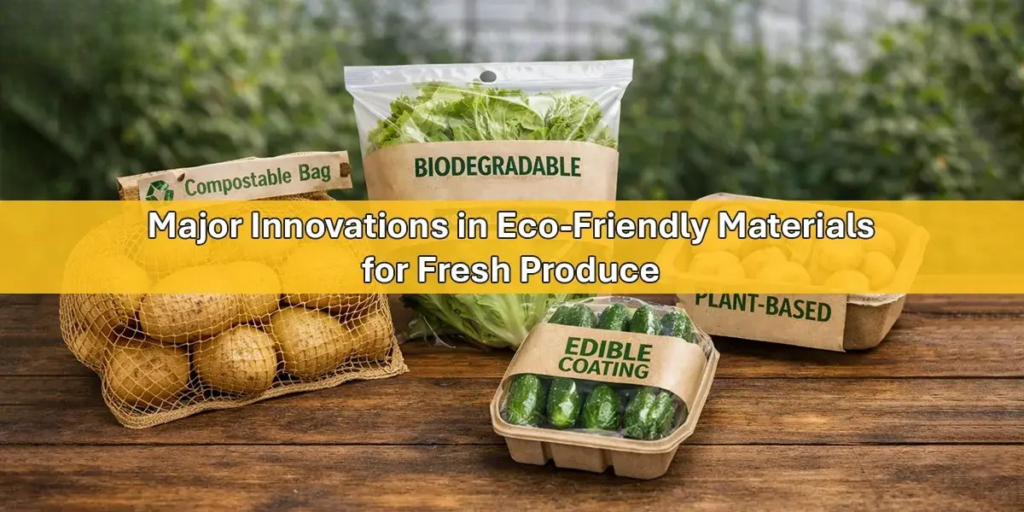
With the rise of eco-friendly packaging trends, the requirements for unique and innovative options are also increasing. Not all packaging is 100 percent sustainable, yet the ones leaving the least carbon footprint are winning the game. Most options are exploring plant-based materials, as they are renewable with minimal environmental impact.
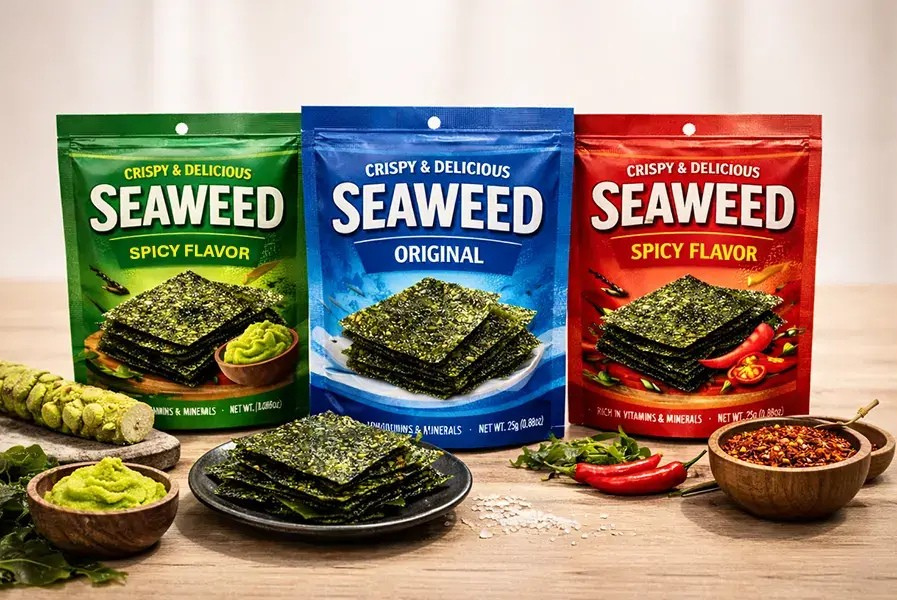
One of the best alternatives to plastic is seaweed packaging, which is created from the starch extracted from the marine plant. With similar durability and transparency features to plastic, they create ideal bags for packing fresh fruits and vegetables.
Bags made from seaweed are not only renewable but also 100 percent naturally biodegradable. They also support various printing techniques, so you can print your brand elements on them and boost your marketing game. Other than fresh produce, these bags are ideal for packing food items, apparel, and more.
Biodegradable and compostable plastic packaging is getting more attention due to its plastic-like benefits with a minimal carbon footprint.
PLA (polylactic acid) is a plant-based material made with the starch of different plants. It’s not only recyclable but also biodegradable and compostable. This material also offers water and airproofing capabilities, enhancing the shelf-life of fresh produce.
You can print bags made from PLA with water or soy-based inks, which contain minimal toxins compared to traditional inks.
Another method for creating packaging from plant waste is to use sugarcane bagasse, as its sturdy fibers are ideal for creating robust trays for packing fresh produce.
These trays are an ideal alternative to disposable styrofoam, with exceptional durability and customization flexibility, allowing for different sizes and portions. By covering these trays with PLA films, you can create a full-fledged protective packaging for your produce without much hassle.
Minimalism is the key when it comes to efficiency and sustainability, making mono-material packaging a great way to reduce waste. You can go for thin sheets of polyethylene or polypropylene to wrap fresh fruits, vegetables, and meat.
Even the thinnest form of these materials can resist dirt, moisture, and air, keeping your food items pristine. Such packaging materials are ideal for keeping fruits, vegetables, and meat in refrigerators.
Additionally, mono-materials are easiest to recycle. You don’t need repeated processing to separate components, followed by the recycling of a limited portion. Labeling these materials with paper-based stickers also reduces emissions.
The demand of eco-friendlly packaging options is increasing in the food industry, and when it comes to fresh produce, the market offers various efficient innovations. Picking the right one that not only meets your needs but also keeps your items fresh for long, is essential for both your business and the final consumer.
For more information, contact: