Global shipping crisis: Middle East conflict triggers rerouting, massive surcharges
 Add Fresh Fruit Portal to Google
This is a developing story | LATEST UPDATE: Monday, March 3, 2026, at 12:33 PM EST.
After the eruption of an armed conflict between American and Israeli forces and Iran over the weekend, several shipping companies are warning against major disruptions in services passing through the area.
In an email sent to their customer base, industry giants Maersk and Hapag-Lloyd announced the rerouting of two of their services around the Cape of Good Hope. Part of the Gemini collaboration between the companies, the Trans-Suez services MECL and ME11/IMX will cease to transit through the Bab-El-Mandeb Strait to enter the Red Sea.
“The safety of our crews, vessels, and customers’ cargo remains our key priority,” reads the notice. “We will continue to monitor the situation closely and take all needed actions.”
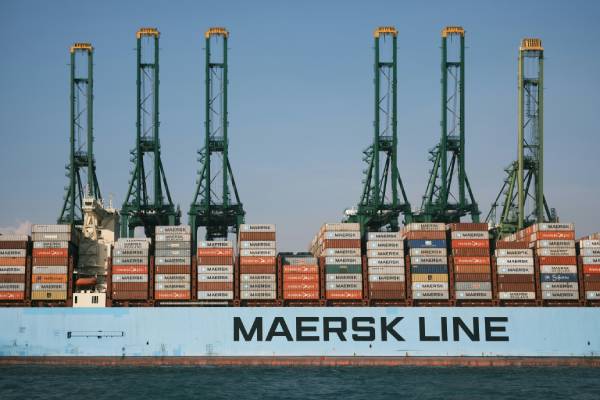
The email explained that the Trans-Suez route is still a priority for the companies, calling it “the fastest, most sustainable and most efficient way” to serve their base. Maersk and Hapag-Lloyd had started to resume transit through the Suez Canal at the end of 2025 after Houthi attacks in 2023 had halted transit in the Red Sea in response to the Israeli attacks on Gaza. The partners announced heightened security for Gemini services navigating the Suez Canal back in February.
According to reporting by The Journal of Commerce, these adjustments should preliminarily affect shipping services throughout the first half of March. However, risk-prevention and security measures might be extended further depending on how the military situation in the Middle East unfolds.
Maersk also announced that, until further notice, it’s suspending all vessel crossings in the Strait of Hormuz, as well as the shipping of reefer, dangerous/special cargo in and out of the UAE, Oman, Iraq, Kuwait, Qatar, Bahrain, Jordan, Saudi Arabia, and Israel until further notice. In a notice sent to the liner's customer base on March 3, the company says there will be exceptions for critical foodstuffs, medicine, and other essential goods.
The company is also suspending all new bookings between the India Subcontinent (India, Pakistan, Bangladesh, and Sri Lanka) and the Upper Gulf markets of the UAE, Bahrain, Qatar, Iraq, Kuwait, and Saudi Arabia (Dammam and Jubail only).
Expect shipping disruptions across the region
In a post published on its website on March 2nd, the French shipping company CMA CGM announced the immediate and total suspension of all reefer bookings to and from Persian Gulf countries.
“The decision has been taken to ensure cargo integrity, equipment positioning stability, and overall operational safety under the current circumstances,” read the company’s announcement.
The notice was later expanded by the company on March 3rd to include all bookings going to and from all ports in Bahrain, Kuwait, Qatar, the UAE (except Fujairah and Khor Fakkan ports), Saudi Arabia (except for the ports of Jeddah, King Abdallah Port, Yanbu, NEOM), and the port of Umm Qasr in Iraq.
For containers already on board or ready to load at the port of origin, the company said it'll provide specific information to each customer through its local offices.
CMA CGM had reopened the transit lane in 2025, but desisted in January 2025, as security conditions in the area worsened.
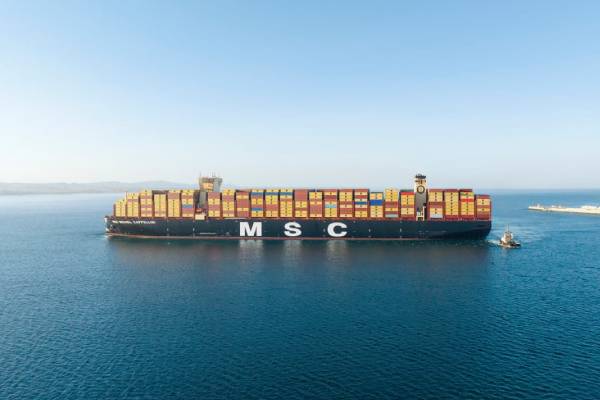
Swiss shipping firm MSC also called all of its vessels in and around the Persian Gulf to shelter, citing precautionary measures.
Financial consequences are in the mail
Transit disruptions in the Persian Gulf are already affecting oil prices worldwide, as supply from major producers, including Qatar and the UAE, has been severely impacted.
Prices in the US crude futures climbed 11 percent on Sunday, according to The Wall Street Journal, trading barrels for as high as $75. Meanwhile, the BBC reports Brent futures shot up 10 percent on Monday as three oil carriers were attacked by Iran near the Hormuz Strait.
Consequently, fees for transportation services, including maritime shipping, are expected to increase in the next few weeks.
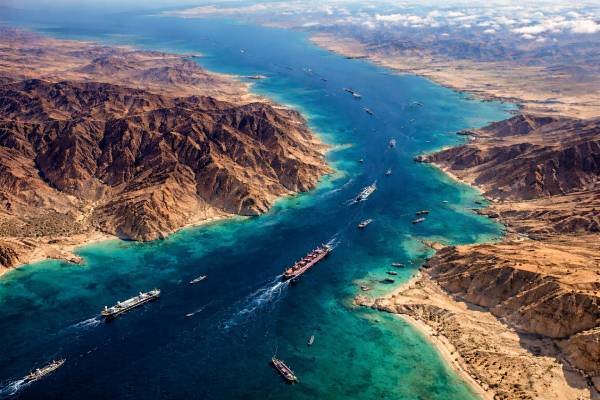
IA-generated image
CGA CGM already announced emergency surcharges on cargo navigating the Middle East, effective March 2. According to the notice, 20’ dry containers will have to pay an extra $2,000, which goes up to $3,000 for 40’ units, while reefers and special equipment will pay a $4,000 surcharge. This new fare affects services to and from Iraq, Bahrain, Kuwait, Yemen, Qatar, Oman, the UAE, Kingdom of Saudi Arabia, Jordan, Egypt, the Port of Ain Sokhna, Djibouti, Sudan, and Eritrea.
Experts also project insurance costs to rise significantly as the conflict continues. Some vessels, they say, would be practically uninsurable, especially those with commercial affiliations with the US and Israel.
The situation in the region is quickly developing, but the current level of uncertainty makes it impossible to accurately estimate how consumer prices and export costs will change in the coming weeks.
* Images courtesy of Maersk, Hapag-Lloyd, and MSC.
Related stories
Maersk and Hapag-Lloyd modify routing of one of their Gemini services
Hapag-Lloyd to acquire Israeli shipping line ZIM for $4.2 billion