


Chilean cherry sector seeks new balance as costs rise and returns tighten
 Add Fresh Fruit Portal to Google
Writing and reporting by Macarena Bravo | Lee esta noticia en Español.
The Chilean cherry sector is entering an adjustment period, with rising costs, weaker returns, and a shift toward efficiency setting the pace, said Pontifical Catholic University of Chile researcher Marlene Ayala. The new scenario could have implications for global buyers reliant on Chilean supply.

Chilean researcher Marlene Ayala.
Ayala said the industry faces margin pressure driven by low destination prices and higher input costs, but remains viable as it recalibrates production and commercial strategies.
“This does not mean the end of the business, but rather a reconfiguration,” she said.
Efficiency is the new core value
Since last season, producers have already begun adjusting to tighter margins, shifting toward precision management and cost control across orchards.
Ayala said growers must optimize inputs and timing to maintain returns, particularly as currency fluctuations, fertilizer prices, fuel costs, and geopolitical factors increase production costs.
She pointed to more targeted fertilizer use as one example, recommending applications align with peak tree absorption periods rather than broad, routine programs.
“Nutrients such as nitrogen, potassium, or calcium, which represent a significant expense, must be applied strategically to maximize their efficiency,” she noted.
Labor remains the largest cost center, often exceeding 50 percent of per-acre production costs. Growers have increased the use of precise, mechanical pruning and early crop load adjustments, while reducing tree size to streamline operations.
“Mechanization, even if only partial, can generate savings of around ten to 15 percent in labor costs. And in this scenario, every little bit helps,” Ayala noted.
Market dependence and orchard shifts reshape supply
Ayala said producers are also adopting preventive pest management to lower chemical use and reduce field passes, cutting both fuel and labor expenses.
“If a producer takes preventive measures, they can significantly reduce applications. Each pass of machinery has a cost, both in fuel and in time,” she said.
At the structural level, the sector is seeing orchard replacement and crop switching in less competitive regions. Older orchards and underperforming varieties are being removed, while some growers are exiting cherries altogether.
“Producers are waiting to see concrete results before investing. Today they prefer traditional varieties, which are better known and come without additional costs,” Ayala said, noting slower adoption of newer, royalty-bearing varieties.
Some growers are shifting to alternative crops such as stone fruit, kiwifruit, and European hazelnuts.
On the demand side, Chile’s heavy reliance on China remains a key risk factor for exporters and importers alike.
“Although new markets such as India, Europe, and North America are being explored, none of them can absorb the volumes or offer the prices that the Chinese market has historically provided,” the academic said. “China remains the best market, but it is no longer limitless. Furthermore, its own economy is also facing difficulties.”
The next steps forward
Ayala identified automation and technology adoption as central to improving competitiveness.
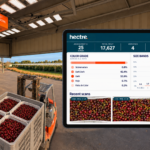
“Automated sorting systems and robotics allow for reduced labor costs and increased efficiency,” she said.
She added that further gains could come from packaging optimization, energy savings, and logistics improvements.
Despite current challenges, Ayala said the Chilean cherry sector retains key advantages, including established production expertise and steady global demand.
Related stories
New Chilean cherry aims to sweeten early-season window
Supply surge forces Chilean cherry industry to look beyond China
Chilean cherry sector urges caution as growers weigh switch to hazelnuts