FAO's new data domain tracks agricultural R&D trends worldwide
 Add Fresh Fruit Portal to Google
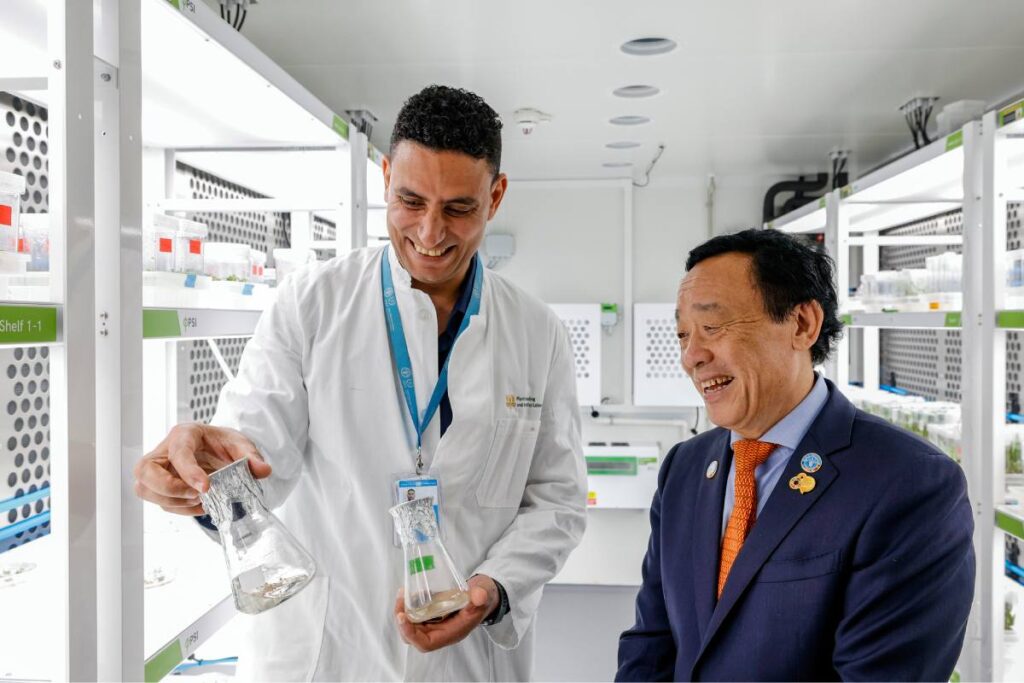
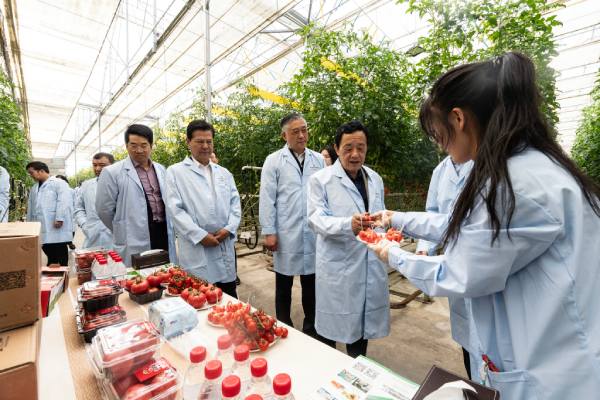
Publicly oriented agricultural research and development (R&D) systems have grown at an average annual rate of 1.8 percent over the past two decades, reaching $50.4 billion in 2023, while the number of agricultural researchers has grown even faster, says the Food and Agriculture Organization of the United Nations (FAO).
The findings come from a new data domain available on FAO’s FAOSTAT portal, the world’s most comprehensive database for agricultural themes.
©FAO/Qilai Shen
The new service represents the development, expansion of coverage and frequency, and technical improvements of a service that began in 1981 as a joint venture between the International Food Policy Research Institute (IFPRI) and the former International Service for National Agricultural Research (ISNAR). Thanks to a grant from the Gates Foundation, the platform has been returned to FAO to institutionalize it with member countries.
Agricultural Science and Technology Indicators (ASTI), such as those contained in FAOSTAT’s new domain, are in demand to assess research performance and impact, and to set policy and investment priorities to increase agricultural growth and productivity.
FAO's push for agricultural R&D
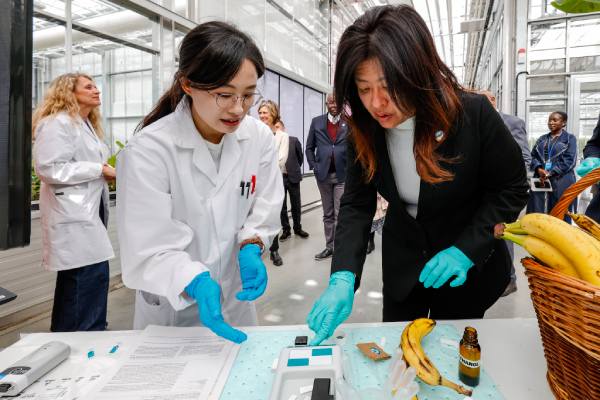
Agricultural R&D is associated with lowering food prices and high economic returns, and it is increasingly central to improving resource efficiency, lowering carbon footprints, and producing more output with fewer inputs.
“This new domain will strengthen evidence-based policymaking and advocacy for more effective agricultural research systems," said FAO Chief Statistician José Rosero Moncayo. "It addresses a longstanding gap by providing, for the first time, a regular, globally agreed framework to monitor agricultural R&D."
©FAO/Giuseppe Carotenuto
Moncayo added that this milestone will enable countries to recognize science and technology as global public goods, setting and tracking commitments on investment and research capacity through a harmonized measure of national efforts that generate benefits for all.
The platform comes with an analytical brief that presents global, regional, and country-level trends in public agricultural R&D from 2004 to 2023. Data is present for more than 120 FAO Member states, with more to be added later in the year.
The document also highlights changes over time in both research capacity and expenditure, as well as persistent disparities in the scale and intensity of investment across national agricultural research systems.
Key findings from FAOSTAT
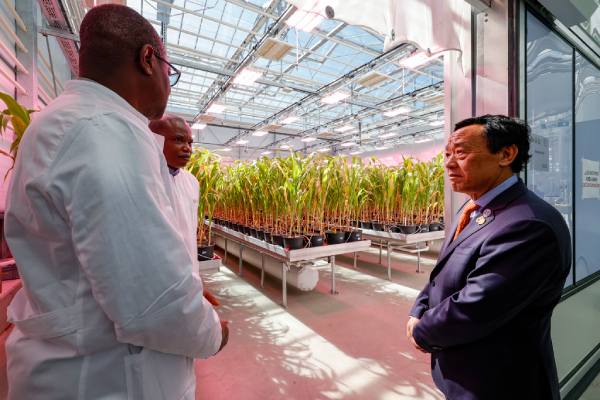
- Globally in 2023, the equivalent of 316,000 full-time experts were engaged in public agricultural R&D systems, up from 204,000 in 2004.
- Measured in constant 2015 purchasing power parities, global public expenditure in this sector amounted to $50.4 billion, up from $35.9 billion in 2004.
- Asia is home to 45 percent of the world’s agricultural researchers in 2023, followed by Europe at 24 percent, the Americas at 14 percent, Africa at 13 percent, and Oceania with 3 percent.
- Trends in this sector vary sharply: The highest growth rate over the period was in Central Asia reporting with the largest decline in Southern Africa.
- Spending on public agricultural R&D shows a broadly similar pattern, with Asia accounting for 48 percent of the global total, followed by the Americas at 22 percent, Europe at 20 percent, Africa at 8 percent, and Oceania at 3 percent.
©️FAO/Giuseppe Carotenuto
- The fastest growth in expenditures over the period was in Central Asia, followed by East and South Asia. Southern Europe recorded the largest decline.
- The ratio of agricultural researchers per 100,000 agricultural workers varies considerably around the world, ranging from 5 to 1,692, while countries spent on average around 1.3 percent of the value-added generated in their agricultural sectors on agricultural research, with a median of 0.6 percent. Countries with the highest values included Belgium, Denmark, Switzerland, the Republic of Korea, and Slovenia.
- Between-country variation reflects a host of variables, including national income levels, the size of a country’s agricultural sector, trade dynamics, and issues of scale.
The granular FAO data will allow for closer and more contextually robust analysis of needs and best practices in the pursuit of sustainable agrifood systems.
*All images courtesy of FAO.
Related stories
FAO warns of severe global food security risks from disruption to Strait of Hormuz
Ag-tech innovator BioPollen expands liquid pollination system across the Americas
Soil-mapping tech offers massive water savings for California citrus