








Agronometrics in Charts: US fresh produce prices jump 1.7 percent in April amid rising energy costs




Each week, the series ‘Agronometrics In Charts’ examines a different horticultural commodity, focusing on a specific origin or topic and visualizing the trade market factors driving change. Check out our entire archive.


Food-at-home inflation in the United States remained elevated in April, highlighting the continued cost pressures facing both consumers and the fresh produce supply chain.
According to the latest Consumer Price Index (CPI) data from the US Bureau of Labor Statistics, food-at-home prices increased 0.7 percent during the month and were up 2.9 percent over the past 12 months.
Fresh produce was among the categories seeing stronger inflationary pressure, with fruits and vegetables rising 1.7 percent in April alone.
Staples such as beef, poultry, fish, and eggs increased 1.3 percent, while dairy products rose 0.8 percent.
Input costs pressure food prices
In response to the data, FMI – The Food Industry Association pointed to broader instability in global energy markets as a key driver behind rising food costs.
“Food production is energy-intensive, from the field to the shelf to the table,” wrote Food Industry Association (FMI) Vice President of Tax, Trade, Sustainability and Policy Development, Andy Harig, in a statement. “Recent instability and uncertainty in global energy markets are contributing to rising production costs across the food supply chain.”
For the fresh produce sector, higher energy costs can impact nearly every stage of the value chain, including fertilizer production, irrigation, cold storage, transportation, packaging, and retail refrigeration. These pressures are particularly relevant for categories reliant on extended cold-chain logistics or imported supply programs.
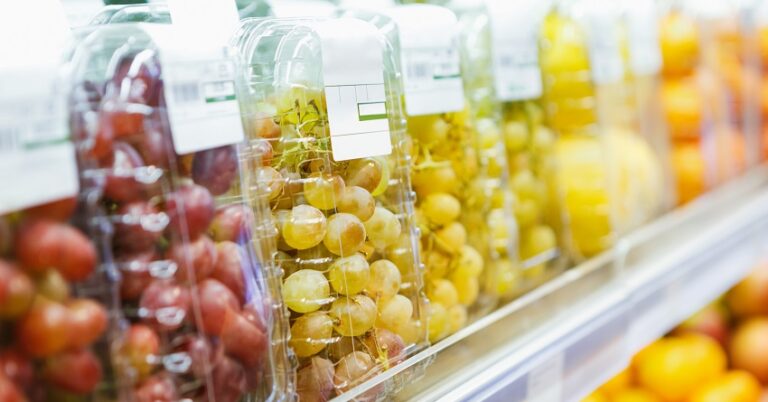
For retailers and suppliers alike, the challenge remains balancing higher operating costs while maintaining affordability and value perception for consumers. According to FMI, the industry continues working across the supply chain to manage costs and maintain stable food availability despite ongoing market volatility.
“These numbers are understandably frustrating for American families and grocers alike,” Harig wrote. “The food industry is doing everything it can to keep prices in check and support shoppers amid continued market uncertainties.”
As inflationary pressures persist, the fresh produce sector will likely remain focused on operational efficiency, supply chain resilience, and inventory management heading into the second half of the year.
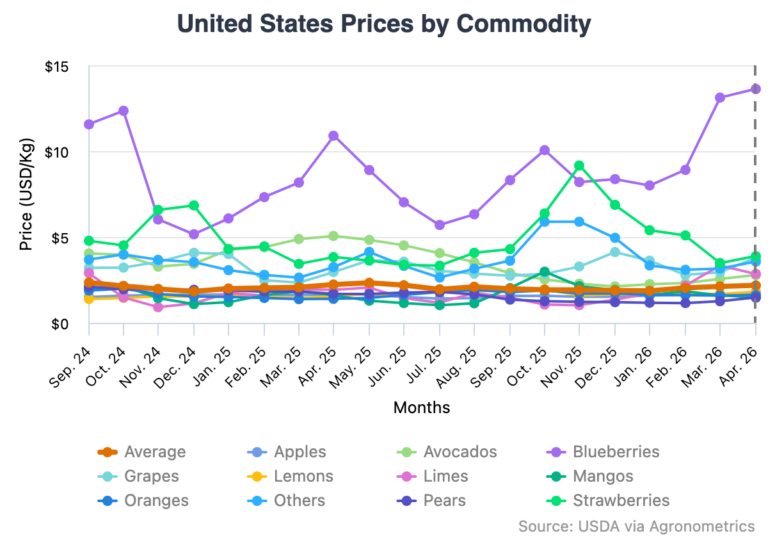
Source: USDA Market News via Agronometrics.
*Images are referential | Graph courtesy of Agronometrics.
Related stories
Two decades of price volatility in the US economy
Most US melons are kicking off 2026 with strong prices and plenty of optimism










Subscribe to our newsletter