







Scientists identify ‘mystery beetle’ attacking blueberry farms across North Carolina
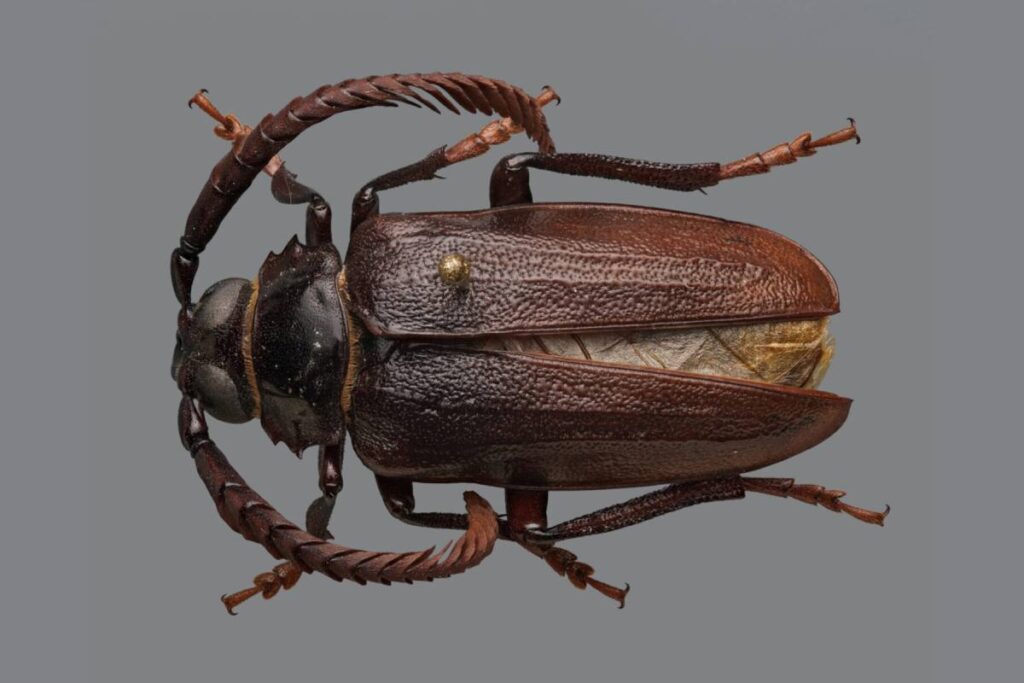



North Carolina’s blueberry farmers may have a beetle problem. A new study from North Carolina State University published in the Journal of Integrated Pest Management has identified destructive beetles inhabiting the state's blueberry fields as Prionus imbricornis, a species of longhorn beetle.


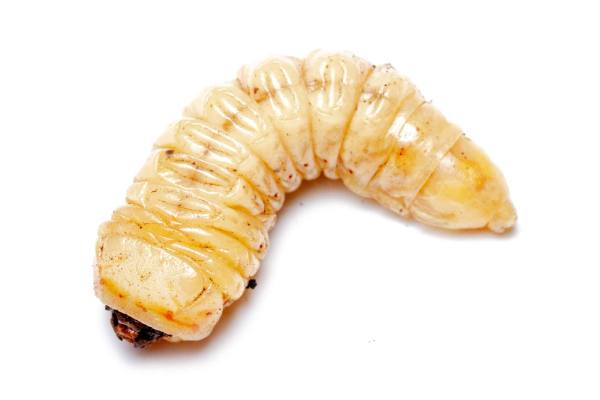
Female adults of this longhorned beetle species typically lay their eggs in the soil near the roots of hardwood trees. There, their larvae, which can grow up to five inches long, consume and destroy those roots, potentially killing the tree. North Carolina is the first state to report P. imbricornis actively feeding on blueberry bushes, though reports of unidentified Prionus larvae feeding on and damaging bush roots stretch back to 2010.
The challenging identification of the beetle
Despite these reports, identifying the specific species responsible had proven difficult because the larvae live near the roots of plants. Identification was made harder by the fact that different types of longhorn beetle larvae also look similar.
The lack of species identification complicated efforts to combat the pests, said Kenneth Geisert, a graduate student in the NC State College of Agriculture and Life Sciences and lead author of a paper on the new study.
“Before now, researchers often just assumed the species of Prionus on their commodities based on adult identification,” Geisert said in a statement to North Carolina State University. “If that guess was incorrect, it could mean using a treatment strategy that did not line up with the problem and incorrectly associating species and their hosts."
He explained that, for instance, while P. imbricornis attacks roots, another type of longhorn beetle might attack the trunk of a tree, or dead branches. Not knowing which insects growers are dealing with could lead to incorrect management and cause adverse effects on non-target insects that are beneficial to crop production, such as pollinators.
Researchers used a series of black panel traps scented with sex pheromones to attract and gather adults at six farms across Pender, Sampson, Bladen and New Hanover counties. They then used a technique called genetic barcoding to compare larval DNA with adult DNA, allowing the study team to confirm the exact species. The results matched P. imbricornis with 98 to 99 percent accuracy.
Lorena Lopez, assistant extension professor in NC State’s Department of Entomology and Plant Pathology and co-author of the paper, said this is both a good and bad thing.
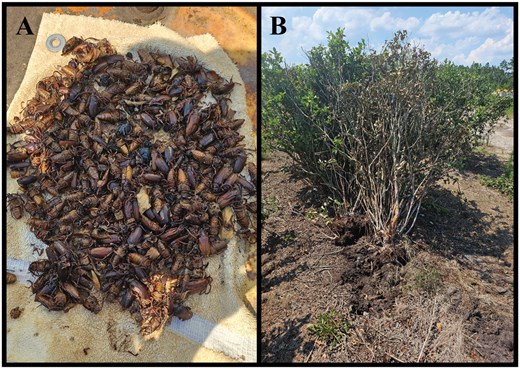
Photo by Lorena Lopez | Journal of Integrated Pest Management
“On one hand, it’s very important that we know which species we’re dealing with,” she said. “On the other hand, North Carolina was the first state to ever report Prionus infestation in blueberries, and there are no insecticides currently labeled against this pest in blueberries.”
To address this shortfall, Lopez has started conducting insecticide trials. By identifying effective insecticides and timing treatment regimens with P. imbricornis reproductive cycles, early larval development can be limited. This could prevent major root damage and provide growers with an effective management tool.
*All uncredited images courtesy of North Carolina State University.
Related stories
Swapping snacks for almonds improves overall diet, new research suggests
UF study shows why ‘aromatic’ blueberries taste better
Brazil registers newly discovered spontaneously emerging banana cultivar










Subscribe to our newsletter