WTO highlights agricultural economies most vulnerable to global fertilizer trade shocks

 Add Fresh Fruit Portal to Google
A recent World Trade Organization (WTO) report highlights how the recently reignited conflict in the Persian Gulf and its resulting maritime bottlenecks in the Strait of Hormuz continue to disrupt the global fertilizer trade.
The situation is leaving major agricultural nations exposed to severe supply vulnerabilities, including disrupted crop yields, increased input costs, and jeopardized long-term global food security.
Brazil and India among the most vulnerable
The WTO report emphasizes that exposure to regional shocks depends heavily on import reliance and geographic sourcing.
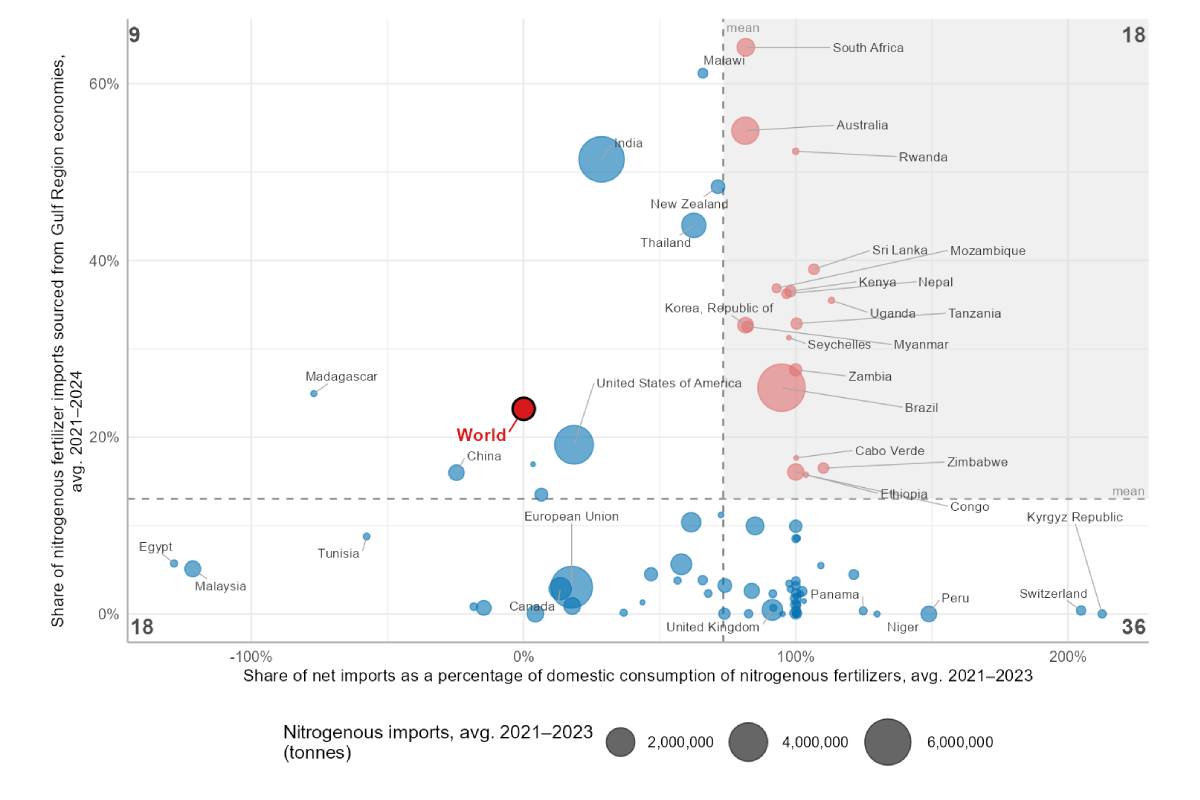
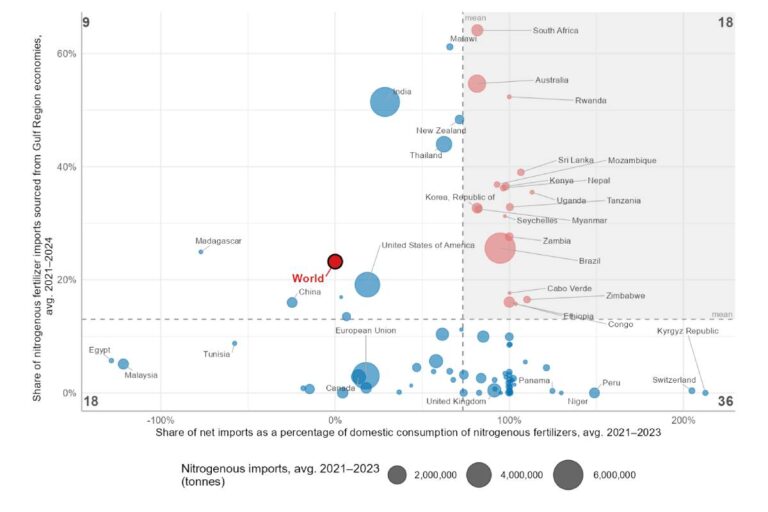
Among major agricultural economies, India represents one of the most directly exposed markets, sourcing nearly two-thirds of its nitrogen fertilizer imports from the Persian Gulf region. Similarly, Thailand relies on the Middle Eastern route for approximately half of its total nitrogen supply. Other major agricultural importers heavily affected by these shipping disruptions include Australia, Brazil, Morocco, and the United States.
Vulnerability is further magnified in nations where imported fertilizers dominate domestic consumption. Brazil presents a stark example of this structural exposure.
According to Datamar News reports, data from the Brazilian Confederation of Agriculture and Livestock (CNA) says the country’s imports covered 93 percent of its total domestic fertilizer consumption in 2025. This extreme dependency leaves local growers vulnerable to international price swings and shipping bottlenecks, complicating forward planning for the 2026-27 crop season.
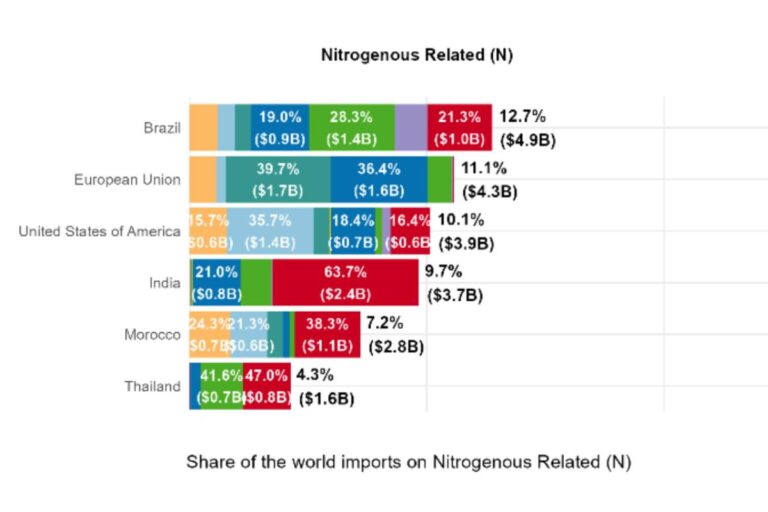
In terms of global market share, WTO figures show Brazil accounted for nearly 13 percent of global nitrogen fertilizer imports, 17 percent of phosphate imports, and close to 18 percent of potash imports. Meanwhile, India accounted for nearly 20 percent of global phosphate imports and 10 percent of nitrogen imports, while the European Union and the United States absorbed significant shares across all three main nutrient categories.
Tariffs and trade restrictions are worsening the situation
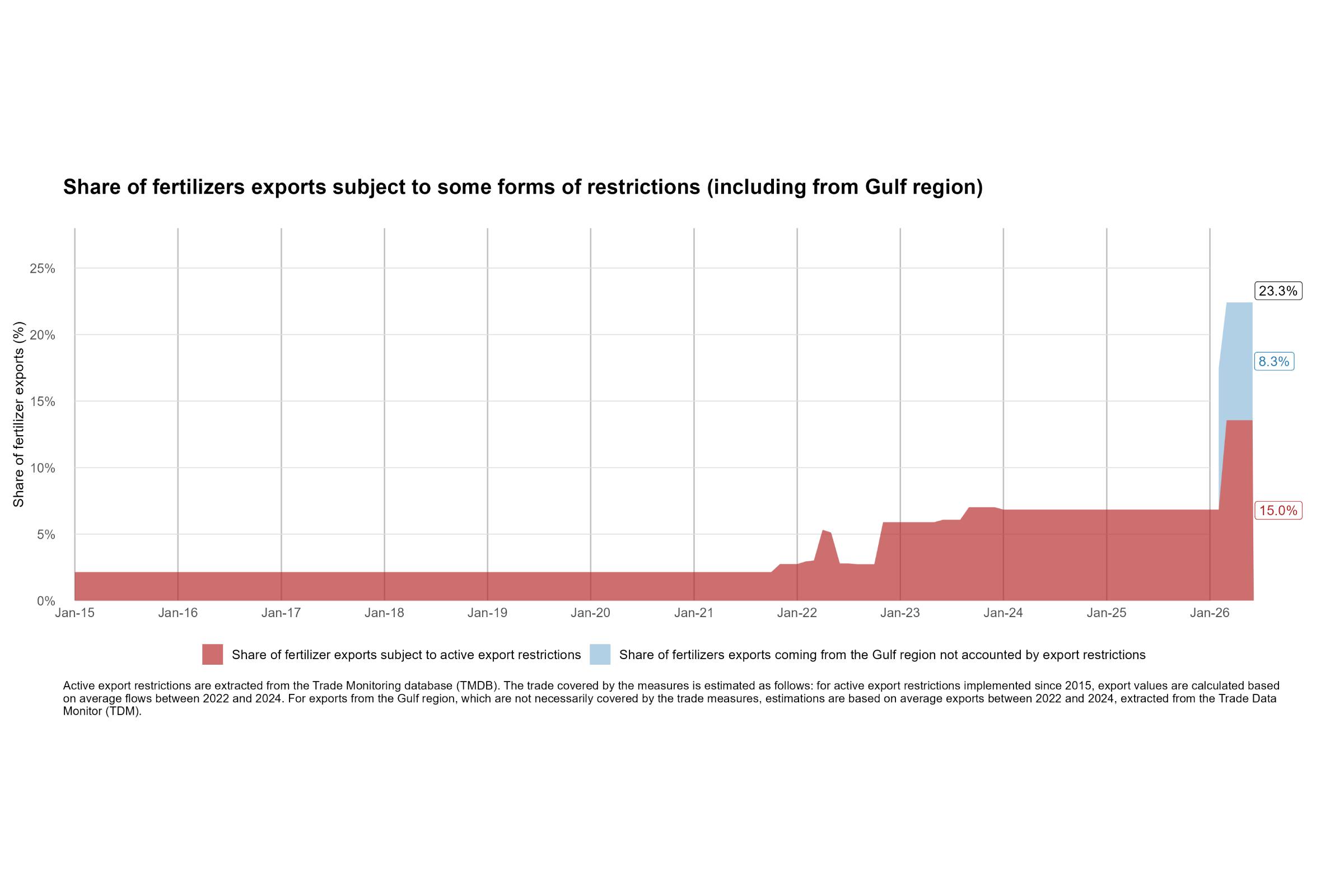
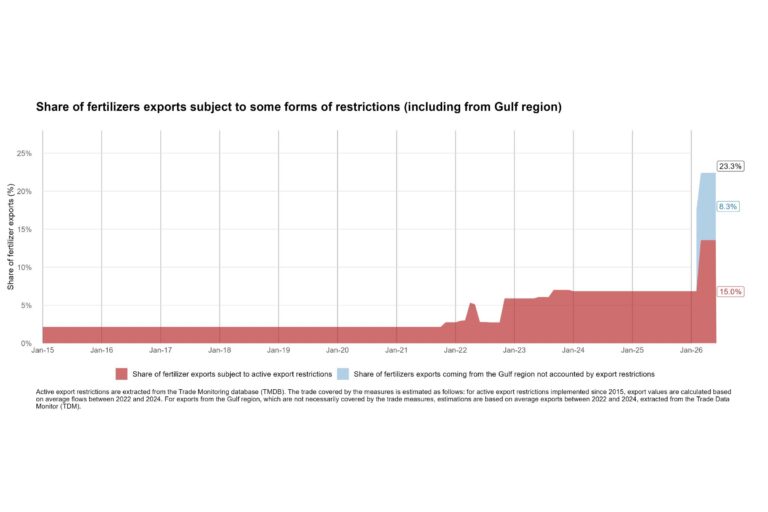
Compounding the crisis, key producing nations have instituted restrictive trade measures, which have affected up to 15 percent of the total fertilizer trade, says the WTO.
China tightened export controls on urea and sulfuric acid, later establishing a strict quota system. Russia imposed export quotas and suspended licenses for ammonium nitrate, while Türkiye placed temporary bans on sulfur exports.
Because sulfur and sulfuric acid are critical raw materials for phosphate production, the WTO explained that these policy restrictions tighten global availability even without directly targeting finished products.
In response, several governments have enacted interventionist measures to shield domestic agricultural sectors.
The European Union launched a Fertilizer Action Plan supported by over $616 million from its agricultural crisis reserve, while the United States pledged to expand domestic manufacturing capacity. India maintains a $4.5 billion subsidy scheme alongside natural gas allocations for domestic processing plants.
However, industry experts caution that delays in nutrient application due to trade disruptions threaten irreversible yield losses for upcoming harvests.
*All graphs courtesy of the WTO.
Related stories
Strait of Hormuz disruption sends fertilizer prices skyrocketing 30 percent